Accessibility adaptation
Living independently and safely at home becomes increasingly challenging when mobility limitations, visual impairments, or other physical conditions arise. For seniors and people with disabilities, everyday tasks like entering the house, navigating stairs, or using the bathroom can transform from simple routines into significant obstacles. Accessibility adaptation addresses these challenges by modifying living spaces and incorporating specialized equipment to create environments that support independence, dignity, and safety.
Whether you’re planning ahead for aging in place, recovering from an injury, or supporting a loved one with mobility limitations, understanding the full spectrum of accessibility adaptations empowers you to make informed decisions. This comprehensive resource explores the fundamental concepts of accessibility modification, examines practical solutions for different areas of the home, and guides you through the options available for assistive technology and financial support.
What Is Accessibility Adaptation and Why Does It Matter?
Accessibility adaptation refers to the process of modifying physical environments, incorporating assistive devices, and implementing design strategies that enable people with disabilities or age-related limitations to navigate and use spaces safely and independently. Think of it as removing invisible barriers—those steps, narrow doorways, and awkward layouts that most people never notice but that create daily challenges for millions.
The importance extends far beyond mere convenience. Proper accessibility adaptations reduce fall risks, which represent a leading cause of injury among older adults. A strategically placed grab bar or a well-designed ramp can mean the difference between maintaining independence and requiring assisted living. These modifications also support emotional wellbeing by preserving dignity and autonomy during activities of daily living.
Recent research indicates that individuals who implement proactive accessibility modifications maintain independent living arrangements significantly longer than those who wait until a crisis occurs. The concept encompasses both permanent structural changes—like widened doorways and zero-threshold showers—and adjustable solutions such as removable ramps or portable bathroom equipment. By addressing accessibility needs early, individuals and families can create living environments that adapt to changing capabilities rather than forcing difficult transitions during vulnerable moments.
Identifying Mobility Challenges and Accessibility Needs
Before implementing any modifications, a thorough assessment of current and anticipated needs forms the foundation of effective accessibility planning. This evaluation should consider physical capabilities, including balance, strength, range of motion, and sensory functions like vision and hearing. An occupational therapist can provide professional assessment, identifying specific challenges that might not be immediately obvious.
Common mobility challenges include difficulty with:
- Navigating stairs or elevated thresholds between rooms
- Standing for extended periods during cooking or bathing
- Reaching overhead cabinets or floor-level storage
- Operating standard door handles, faucets, or light switches
- Maintaining balance on slippery surfaces or uneven flooring
Consider both current limitations and potential future needs. A person managing arthritis today might face progressive mobility challenges, while someone recovering from surgery might need temporary adaptations that can be removed later. This forward-thinking approach prevents costly renovations down the road and ensures modifications remain useful as circumstances evolve. Document specific problem areas throughout the home, noting times of day when difficulties are most pronounced and whether challenges vary with weather, fatigue, or other factors.
Essential Home Modifications for Enhanced Accessibility
Transforming a standard home into an accessible living space requires strategic modifications that address movement, safety, and usability throughout the residence. These changes range from simple adjustments to comprehensive renovations, depending on individual needs and budget constraints.
Entryways and Doorways
The entrance sets the tone for accessibility throughout the home. Ramps with appropriate gradients (typically 1:12 ratio, meaning one inch of rise for every twelve inches of length) replace stairs, enabling wheelchair users and those with walkers to enter safely. Automatic door openers eliminate the need for gripping and pulling, while widening doorways to at least 32 inches accommodates wheelchairs and walkers comfortably. Lever-style door handles replace traditional knobs, requiring minimal hand strength and dexterity.
Flooring and Pathways
Smooth, continuous flooring eliminates tripping hazards created by raised thresholds, loose rugs, or transitions between materials. Non-slip surfaces provide traction without creating resistance for wheelchairs or walkers. Hardwood, vinyl, and low-pile carpet work well, while thick carpeting and uneven tiles pose challenges. Creating clear pathways with at least 36 inches of width allows easy navigation with mobility aids, requiring strategic furniture placement and possible room layout adjustments.
Lighting and Visibility
Adequate illumination becomes increasingly critical as vision changes with age. Layered lighting combining ambient ceiling fixtures, task lighting for specific activities, and motion-activated night lights creates safe navigation at all hours. Light switches placed at accessible heights (typically 42-48 inches from the floor) accommodate wheelchair users, while rocker-style switches offer easier operation than traditional toggles. Contrasting colors between walls, floors, and doorframes help those with visual impairments distinguish boundaries and navigate confidently.
Bathroom and Kitchen Adaptations
These high-use areas require specialized attention due to their complexity and the vulnerability associated with personal care and meal preparation activities.
Bathroom Safety Features
The bathroom presents unique challenges combining slippery surfaces, tight spaces, and privacy needs. Walk-in or roll-in showers with zero-threshold entries eliminate the dangerous step over traditional tub edges. Strategically placed grab bars near toilets, showers, and tubs provide stability during transfers and standing. Wall-mounted or handheld showerheads with long hoses offer flexibility for seated bathing, while shower benches or transfer seats enable safe washing without standing.
Raised toilet seats reduce the distance required for sitting and standing, particularly beneficial for those with hip or knee limitations. Non-slip mats and textured flooring provide traction, while adequate lighting—including night lights—prevents nighttime falls. Consider installing a comfort-height toilet (17-19 inches tall) rather than standard models, making transfers significantly easier.
Kitchen Accessibility Solutions
An accessible kitchen balances functionality with safety, enabling meal preparation without unnecessary strain. Lowered countertop sections (typically 28-34 inches high) accommodate wheelchair users, while pull-out shelves and lazy susans eliminate the need for deep reaching into cabinets. Side-opening ovens and front-control cooktops prevent reaching over hot burners. Lever-style faucets with pull-down sprayers simplify one-handed operation and dishwashing.
Adequate task lighting over work surfaces prevents accidents during food preparation. Open shelving or glass-front cabinets at accessible heights keep frequently used items visible and reachable. For those with limited standing tolerance, a rolling kitchen stool provides mobile seating during meal preparation.
Assistive Technology and Adaptive Equipment
Beyond structural modifications, a wide array of assistive devices and adaptive equipment enhances accessibility without requiring permanent changes to the home. These solutions often provide quick improvements while planning or saving for larger renovations.
Mobility aids include:
- Canes, walkers, and rollators that provide stability and support during ambulation
- Wheelchairs (manual or powered) for those unable to walk safely
- Transfer boards and lift systems for moving between surfaces
- Stairlifts or vertical platform lifts for multi-story homes
Daily living aids encompass specialized tools like reachers for grabbing items without bending, sock aids and dressing sticks for clothing management, and adaptive utensils with built-up handles for easier gripping. Voice-activated home automation systems control lighting, temperature, and door locks through simple commands, while emergency response systems provide peace of mind through wearable alert buttons.
The key lies in matching equipment to specific needs rather than accumulating gadgets. An occupational therapist can recommend appropriate devices and provide training for proper use, maximizing safety and effectiveness while preventing equipment abandonment due to complexity or inappropriateness.
Funding and Financial Support Options
The cost of accessibility adaptations varies dramatically, from inexpensive assistive devices to comprehensive home renovations requiring tens of thousands of dollars. Fortunately, various funding sources can offset these expenses, making adaptations more financially feasible.
Government programs often provide assistance based on eligibility criteria. Veterans may access grants specifically designed for home modifications through veterans’ affairs departments. Medicaid waiver programs in some regions cover certain accessibility improvements, particularly when they enable individuals to remain in home settings rather than entering institutional care. Tax deductions or credits for medical expenses sometimes apply to accessibility modifications when prescribed by healthcare providers.
Non-profit organizations and community programs offer grants, low-interest loans, or volunteer labor for accessibility projects. Local aging services agencies maintain resource directories connecting individuals with available assistance. Some insurance policies cover durable medical equipment and specific modifications, particularly when framed as medically necessary rather than merely convenient.
For those planning proactively, incorporating accessibility features during routine renovations proves more cost-effective than retrofitting later. Home equity loans or lines of credit provide funding options for those with property equity, while some contractors offer payment plans for accessibility projects. Research thoroughly and compare options, as programs and eligibility requirements vary significantly by location and individual circumstances.
Creating an accessible living environment represents an investment in independence, safety, and quality of life. By understanding the range of modifications available—from simple equipment additions to comprehensive structural changes—and exploring financial assistance options, individuals and families can develop realistic plans that address current needs while anticipating future requirements. The goal remains clear: spaces that adapt to people, not people struggling to adapt to spaces.

Smart Displays vs. Tablets: Which Device Best Helps Seniors Stay in Touch with Family?
For non-tech-savvy seniors, a dedicated smart display is decisively better than a tablet for maintaining family connections. Smart displays reduce “decision points” and cognitive load, making video calls as simple as a voice command. Features like automatic answering (“Drop-In”) eliminate…
Read more
Tub to Curbless Shower: A Specialist’s Guide to Flawless Subfloor Waterproofing
A successful curbless shower conversion hinges not on individual products, but on a complete, integrated waterproofing system that treats the entire shower area as a sealed envelope. Structural integrity is paramount; modifying floor joists correctly is non-negotiable to prevent floor…
Read more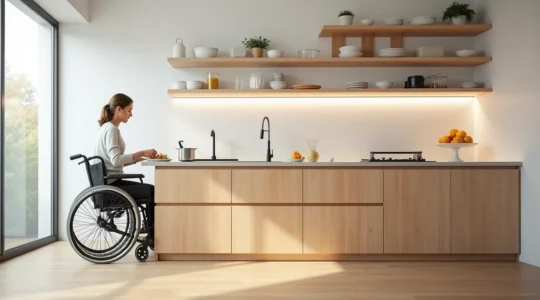
How to Adapt Kitchen Counters for Wheelchair Users—Without Sacrificing Storage
Creating a truly accessible kitchen is not about compromise; it’s about smart, ergonomic design that enhances utility for everyone. The foundation of an accessible kitchen is a 34-inch counter height combined with a clearly defined knee-space envelope for seated work….
Read more
How to Position Motion-Sensor Lighting to Prevent Nighttime Falls on Stairs?
Effective fall prevention isn’t about buying a motion light; it’s about engineering a fail-safe illumination system that anticipates where standard technology fails. Standard PIR sensors fail to detect slow movement in cold temperatures, creating a critical safety gap. A hybrid…
Read more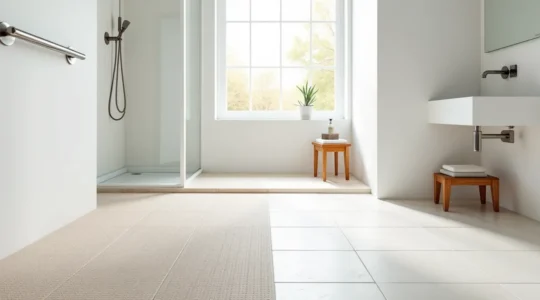
Anti-Slip Treatments vs. New Tiles: Which Solution Lasts Longer in Wet Rooms?
The longevity of a bathroom safety solution is not determined by product choice alone, but by engineering a compatible system of surfaces, maintenance, and user aids. New, correctly rated tiles (R10+) offer the most durable foundational safety, but only if…
Read more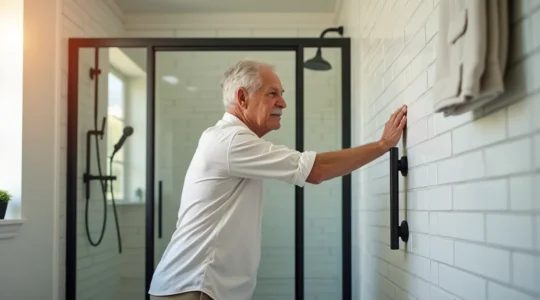
Where to Position and How to Anchor Grab Bars in a Tiled Shower for Maximum Leverage and Safety
A grab bar is only as strong as its installation; a poorly mounted bar is more dangerous than no bar at all. Leverage is determined by precise placement (vertical for pulling, horizontal for stabilizing) and requires understanding the load dynamics…
Read more
Structural Modifications for Accessibility: What Permits Do You Need Before Breaking Walls?
Undertaking structural modifications for accessibility is fundamentally a legal and engineering exercise, not merely a construction project. Removing any load-bearing wall is a material alteration that universally requires a building permit, architectural plans, and engineering oversight to maintain structural integrity….
Read more
How to Design a Barrier-Free Ground Floor for Full Wheelchair Access?
Achieving true ground-floor accessibility is not about isolated fixes, but designing a holistic system where every dimension and surface works in concert to ensure seamless mobility. Doorways must provide a minimum of 32 inches of clear width, with 36 inches…
Read more
Which Home Modifications Increase Property Value While Ensuring Safety for Seniors?
Strategic home modifications for seniors are not an expense, but a powerful investment that increases a property’s market value by creating universal, design-led appeal. Focus on “invisible accessibility”—features like zero-step entries and elegant bathroom updates that are stylishly integrated rather…
Read more