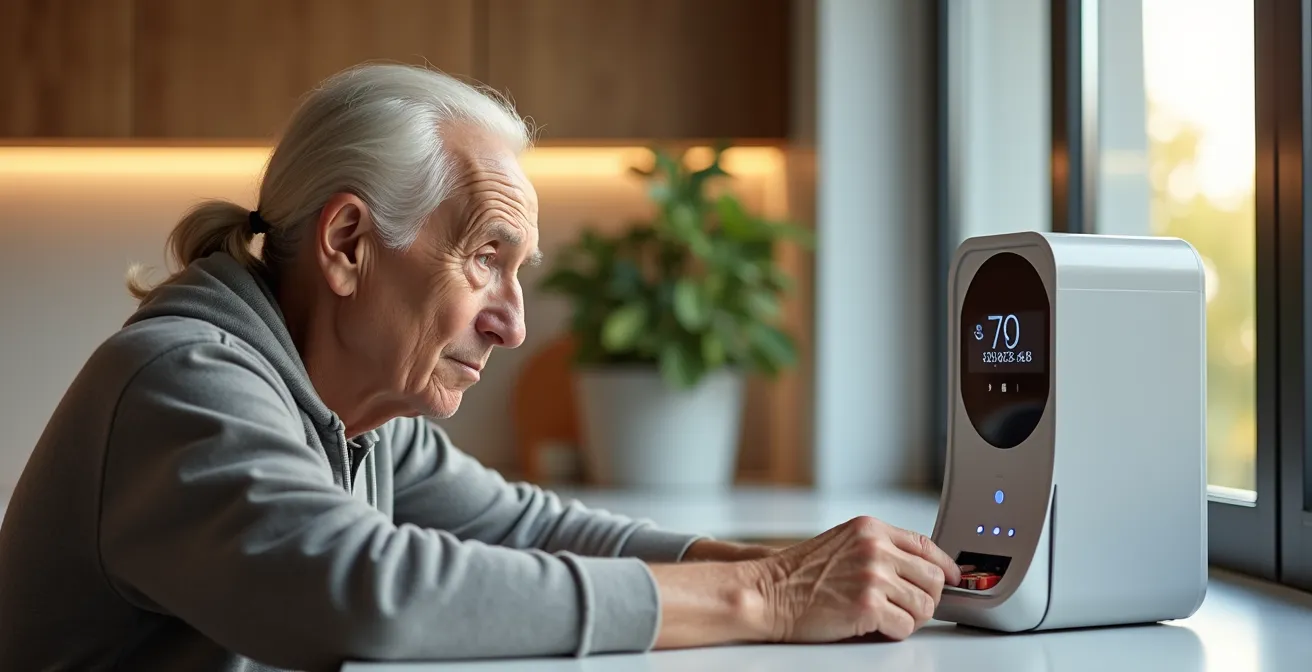
The choice between a subscription or a one-time purchase for a pill dispenser is not a financial one, but a clinical risk assessment of the patient’s needs.
- Subscription models with monitoring services excel at managing complex medication schedules and reduce the risk of human error during refills.
- One-time purchase devices can be effective for simpler regimens, provided a reliable and trained caregiver is consistently available for refills and oversight.
Recommendation: Before comparing prices, evaluate the patient’s specific medication complexity, cognitive status, and caregiver support system to identify the critical “points of failure” the device must solve.
When a family considers an automated pill dispenser for an aging loved one, the conversation often gravitates toward a simple question: should we buy a device outright or pay for a monthly subscription? From a geriatric pharmacist’s perspective, this focus on cost, while understandable, misses the more critical issue. The true decision is not about economics; it is about mitigating clinical risk. Medication non-adherence is a primary driver of hospitalization in seniors, and choosing the wrong tool can create a false sense of security while leaving dangerous gaps in the safety net.
The common advice is to weigh the upfront cost of a standalone device against the recurring fees of a monitored service. However, this overlooks the nuanced realities of senior healthcare. Factors like polypharmacy (the use of multiple medications), fluctuating cognitive abilities, and the complexity of a dosing schedule for conditions like Parkinson’s are far more important variables. An automated dispenser is not just a gadget; it is a critical component of a patient’s adherence ecosystem, which includes the patient, their family, their physicians, and their pharmacist.
This article reframes the debate. Instead of a cost comparison, we will conduct a clinical risk assessment. We will break down the specific “points of failure” in medication management—from timing errors to refill mistakes and security vulnerabilities—and analyze how each type of dispenser addresses them. By understanding the underlying risks, you can make an informed, health-focused decision that truly supports the safety and independence of your loved one, moving beyond the price tag to find the solution that provides genuine peace of mind.
This guide will walk you through the key clinical considerations for choosing the right automated medication management system. By understanding the risks and benefits associated with different models, you can select a solution that truly enhances patient safety and supports caregiver efforts.
Contents: A Clinical Assessment of Pill Dispenser Models
- Why Mixing Up Morning and Evening Meds Leads to 30% of ER Visits?
- How to Set Up Complex Dosing Schedules for Parkinson’s Medication?
- 28-Day Tray vs. Bulk Loading Dispensers: Which Suits Frequent Travelers?
- The ‘Tip-Over’ Flaw That Allows Addicts to Access Locked Meds
- When to Delegate Pill Refilling to a Pharmacist Instead of Family?
- The Polypharmacy Risk That Occurs When Specialists Don’t Communicate
- How to Structure a Daily Check-In Routine for Remote Caregivers?
- Integrated Health Solutions: How to Combine Conventional and Holistic Care for Seniors?
Why Mixing Up Morning and Evening Meds Leads to 30% of ER Visits?
The danger of medication errors is not theoretical; it has severe, measurable consequences. While the “30% of ER visits” figure is a commonly cited statistic, a more recent 2024 meta-analysis reveals an even more concerning reality: 36.3% of patients experience medication errors across various healthcare settings. For seniors living at home, a simple mix-up between a morning diuretic and an evening blood pressure pill can lead to falls, dizziness, or a hypertensive crisis. These are not minor inconveniences; they are direct threats to health and independence.
The underlying causes are often linked to the natural aging process. Research shows that managing multiple medications is especially difficult for seniors, with 40% reporting memory issues and 64% experiencing vision decline. These sensory and cognitive challenges make reading small print on prescription bottles, distinguishing between similar-looking pills, and remembering complex schedules a daily struggle. A simple automated dispenser with basic alarms can help, but a truly effective system must address these root causes with features like large, clear displays, distinct audible alerts, and a dispensing mechanism that requires minimal dexterity.
The primary clinical goal of any dispenser is to create a reliable barrier against these common human errors. It automates the “what” and “when” of medication-taking, reducing the cognitive load on the patient. For example, the Hero system directly tackles AM/PM confusion through automated dispensing paired with flashing lights and loud auditory reminders. By physically separating doses and presenting only the correct pills at the correct time, the device eliminates the possibility of a patient accidentally taking their evening medication in the morning, a frequent and preventable point of failure in manual medication management.
How to Set Up Complex Dosing Schedules for Parkinson’s Medication?
The challenge of medication adherence escalates dramatically with conditions like Parkinson’s disease (PD). For these patients, medication is not just a daily routine but a moment-to-moment necessity to manage symptoms like tremors and stiffness. PD medications, such as carbidopa-levodopa, have a short half-life and require strict, time-sensitive dosing throughout the day—sometimes four, five, or even six times daily—to maintain therapeutic levels and prevent debilitating “off” periods. A delay of just 30 minutes can significantly impact a patient’s mobility and quality of life.
This level of regimen complexity is where basic pill organizers fail and advanced automated dispensers become clinically essential. An 8-week study focusing on people with PD taking more than three medications found that using a dispensing system with alarms not only improved adherence but also enhanced quality of life. Systems like the Medido dispenser are specifically designed for this challenge, allowing for the programming of numerous, precise dosing times that would be nearly impossible for a patient with cognitive or motor difficulties to manage independently. They transform a complex, anxiety-inducing task into a simple, automated process.
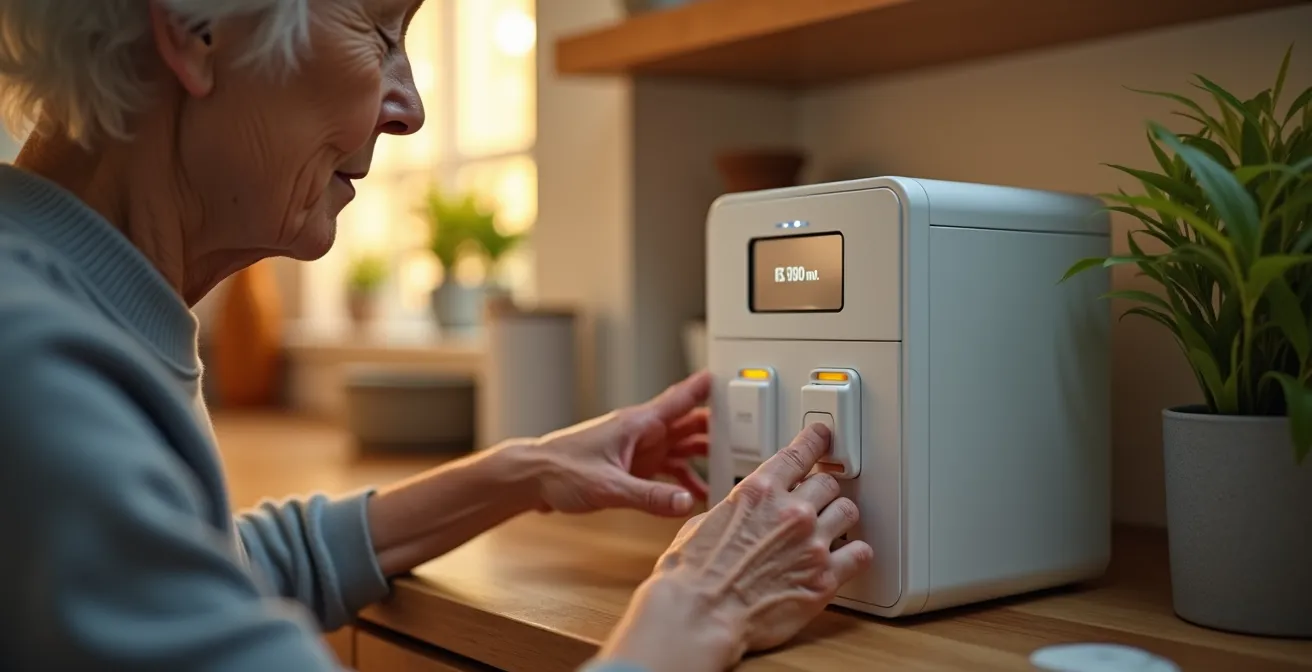
For families managing a loved one’s PD, the choice between a subscription and a one-time purchase device hinges on this need for complexity and reliability. A subscription service often includes software that makes programming these intricate schedules easier for caregivers via an app and provides alerts if a dose is missed. This remote oversight ensures the rigid schedule is followed, providing a crucial safety net. The right device empowers the patient, providing them with a sense of control and independence despite their challenging medication regimen.
28-Day Tray vs. Bulk Loading Dispensers: Which Suits Frequent Travelers?
A patient’s lifestyle, particularly their travel habits, is another critical factor in the clinical risk assessment of a pill dispenser. The two dominant designs—pre-sorted 28-day trays and large-capacity bulk loading systems—present a significant trade-off between convenience and portability. From a pharmacist’s standpoint, the primary goal is to ensure an uninterrupted and accurate medication supply, regardless of the patient’s location. A dispenser that is difficult to adapt for travel can become a point of failure, forcing a temporary and often error-prone return to manual pill sorting.
Traditional 28-day tray dispensers, often filled by a pharmacy or caregiver, are typically stationary and have a large footprint. Traveling with the entire unit is impractical, meaning the user must rely on a separate, manually-filled travel pill organizer. This reintroduces the very risk of human error the dispenser was meant to eliminate. In contrast, some bulk-loading dispensers, though also stationary, are designed to pre-dispense a specified number of doses (e.g., 7 days’ worth) into a travel-friendly container. This maintains the accuracy of the automated system while providing a portable solution.
The financial models often align with these designs. According to an analysis from SeniorLiving.org, automated pill dispensers can range from $75 for basic models to over $2,000 for high-tech, monitored systems. Bulk-loading dispensers typically fall on the higher end of this spectrum and are often associated with subscription models, which is a key consideration in the overall cost.
| Feature | 28-Day Tray Dispensers | Bulk Loading Dispensers |
|---|---|---|
| Portability | Generally stationary, large footprint | Stationary, requires power connection |
| Travel Solution | Requires separate travel pill organizer | Can pre-dispense 7 days for travel |
| Capacity | 28 compartments (4 times daily) | Up to 90-day supply for 10+ medications |
| Refill Frequency | Weekly to monthly | Every 1-3 months |
| Price Range | $75-$400 | $400-$2000 (plus monthly fees) |
| Power Requirements | Battery or plug-in | Continuous power needed |
For a senior who travels frequently, a bulk-loading system with a travel-dispensing feature offers a clinically superior solution by minimizing the risk of errors while away from home. While the cost may be higher, it effectively extends the safety net of automated dispensing beyond the confines of the house.
The ‘Tip-Over’ Flaw That Allows Addicts to Access Locked Meds
A critical, yet often overlooked, aspect of dispenser selection is security. This extends beyond simple alarms to robust, tamper-resistant designs. The risk profile of the patient is paramount here. For a senior with dementia, a lock prevents accidental double-dosing. For a household where there is a risk of medication diversion (e.g., by family members or visitors struggling with addiction), the lock must be able to withstand deliberate tampering. Early dispenser models had a notorious “tip-over” flaw, where inverting the device could cause multiple pills to fall out, bypassing the lock entirely.
Modern, high-quality dispensers have engineered solutions to these security challenges. For example, MedMinder incorporates a locking feature that only unlocks the specific compartment for the current dose time, preventing access to future medications. This is vital for patients with cognitive impairment who might become confused and try to take more pills. Furthermore, these systems often use cellular technology to create a digital audit trail. Caregivers can receive real-time alerts for missed doses, device tampering, or power failures, providing an immediate layer of remote supervision. Hero’s system, for instance, provides immediate notifications via text messages if a dose is missed.

This level of security is a key differentiator between basic one-time purchase devices and more advanced subscription models. While a simple locked box might seem sufficient, it lacks the dynamic monitoring and tamper alerts that are essential in high-risk situations. When assessing a device, families must honestly evaluate the risk of both accidental overdose and intentional medication diversion. The presence of controlled substances like opioids or benzodiazepines in the regimen drastically increases the need for a dispenser with proven, robust security features and a verifiable digital log of every dispense.
When to Delegate Pill Refilling to a Pharmacist Instead of Family?
The most significant point of failure in any non-subscription dispenser model is the manual refill process. Even the most sophisticated one-time purchase device is only as reliable as the person filling it. A well-meaning but distracted or tired family member can easily place the wrong medication in the wrong slot, creating a risk of serious adverse events for days or weeks. Delegating this task to a professional is a critical risk-mitigation strategy, and this is where subscription models offer a distinct clinical advantage.
Many subscription services are, at their core, pharmacy services. Companies like MedBox function as full-service pharmacies that pre-sort a patient’s prescriptions by dose into clearly labeled packets. These are then delivered directly to the patient’s home. This system completely eliminates the manual sorting task for the family, ensuring pharmaceutical-grade accuracy. It also centralizes medication management, as the service coordinates directly with physicians and insurance for refills, creating a more cohesive adherence ecosystem. These services often provide 24/7 access to pharmacists who can address any concerns.
This professional oversight comes at a cost, which is the basis of the subscription fee. For example, Hero’s membership model costs $29.99 monthly after an initial setup fee. The crucial question for families is whether the cost of this subscription is worth the near-total elimination of refilling errors. From a clinical safety perspective, if a patient is on multiple critical medications (e.g., blood thinners, insulin, seizure medication) and a reliable, trained caregiver is not consistently available to perform refills, then delegating this task to a pharmacy service is not a luxury—it is a medical necessity.
The Polypharmacy Risk That Occurs When Specialists Don’t Communicate
Polypharmacy—the concurrent use of multiple medications—is the norm, not the exception, in senior care. Research data shows that 44% of men and 57% of women over 65 take five or more medications weekly. The risk is compounded when these prescriptions come from different specialists (e.g., a cardiologist, a neurologist, a primary care physician) who may not have a complete picture of the patient’s full regimen. This lack of communication can lead to dangerous drug interactions, redundant therapies, and conflicting instructions, turning the medicine cabinet into a source of risk rather than healing.
An advanced automated dispenser can serve as a powerful tool for medication reconciliation—the formal process of creating the single most accurate list of all medications a patient is taking. The dispenser’s companion app becomes a centralized, living document of the entire regimen. When a family member enters all medications from every specialist into the app, it creates a consolidated list that can be shared with each provider at every appointment. This simple act closes the communication loop, enabling physicians to make prescribing decisions with full visibility.
This transforms the dispenser from a simple dispensing device into a central hub of the patient’s adherence ecosystem. Some advanced systems even offer integrated pharmacist reviews or flag potential drug-drug interactions, adding another layer of clinical safety. By leveraging the technology for more than just reminders, caregivers can take a proactive role in preventing the errors that arise from fragmented care.
Action Plan: Using a Dispenser App for Medication Reconciliation
- Consolidate All Medications: Methodically enter every prescription, over-the-counter drug, and supplement from all specialists into the dispenser’s companion app.
- Generate a Master List: Use the app’s reporting feature to generate a complete, printable medication list before every doctor’s visit.
- Share and Verify: Provide this consolidated list to each specialist and the primary care physician at every appointment, asking them to review it for accuracy and potential conflicts.
- Request Pharmacist Review: If the service offers it, request a formal medication review by an integrated pharmacist who can check for interactions across all prescribers.
- Update Immediately: As soon as a prescriber makes a change (adds, stops, or changes a dose), update the medication list in the app to maintain it as the single source of truth.
How to Structure a Daily Check-In Routine for Remote Caregivers?
For the millions of adults caring for aging parents from a distance, the fear of a missed dose or a medical emergency can be a constant source of anxiety. Technology cannot replace human connection, but it can make that connection more informed and meaningful. The monitoring features built into many subscription-based dispensers provide the data needed to structure an effective and reassuring daily check-in routine.
Instead of a generic “Did you take your pills?” call, a caregiver can use the app’s dashboard to have a specific, data-driven conversation. The Hero app, for instance, alerts designated caregivers if a dose is missed, allowing for immediate follow-up. A check-in call can then start with, “Hey Mom, I got an alert that you might have missed your 9 AM pills. Is everything okay?” This transforms the caregiver’s role from one of nagging to one of proactive support, helping to identify the root cause of the missed dose—was the patient asleep, not feeling well, or away from home?

This adherence data provides valuable conversation starters that go beyond medication. A pattern of missed morning doses might indicate poor sleep, while missed evening doses could signal “sundowning” in a patient with dementia. These observations, gleaned from the dispenser’s data, can be shared with the patient’s physician to provide a more complete picture of their overall health and well-being. Ultimately, the technology serves to strengthen the caregiving relationship, fostering trust and enabling seniors to maintain their independence at home for longer, all while providing the remote caregiver with tangible peace of mind.
Key Takeaways
- The decision between dispenser models is a clinical risk assessment, not just a financial one.
- Regimen complexity, patient cognitive/physical ability, and security needs are the primary decision factors.
- Subscription models shift the risk of refilling errors from the family to a professional pharmacy service, which is critical for complex regimens.
Integrated Health Solutions: How to Combine Conventional and Holistic Care for Seniors?
The final piece of the puzzle is creating a truly integrated health solution. A senior’s regimen rarely consists only of prescription medications. It often includes a variety of vitamins, supplements, and other over-the-counter products. A dispenser’s ability to manage this entire “pill burden” is a measure of its utility in a real-world, holistic care plan. The goal is to have a single system that can safely and reliably manage every pill the patient takes, whether it was prescribed by a doctor or recommended for general wellness.
Platforms like Hero are designed as end-to-end medication management solutions, allowing users to track both the medications stored inside the device and up to 10 additional pills managed outside of it (such as injectables, inhalers, or refrigerated items). This comprehensive tracking is vital. It ensures that when a caregiver or physician reviews the adherence report, they see the complete picture, which is crucial for identifying potential interactions between prescription drugs and supplements. This integrated approach helps prevent the adverse drug events that, according to the CDC, lead to over 600,000 emergency visits for older adults each year.
Ultimately, the “best” automated pill dispenser is the one that fits seamlessly into a comprehensive adherence ecosystem. It must be chosen based on a rigorous clinical assessment of the patient’s specific needs—their regimen complexity, their physical and cognitive state, their lifestyle, and the level of caregiver support available. The debate over subscription versus purchase becomes clear: if the risk assessment reveals significant points of failure (complex schedule, polypharmacy, high-risk medications, limited caregiver availability), then a professionally managed subscription service is a sound clinical investment in patient safety.
To determine the most appropriate medication management strategy for your loved one, the essential next step is to conduct this clinical risk assessment with a healthcare professional. Discuss their full medication list, cognitive status, and your family’s caregiving capacity with their pharmacist or primary care physician to identify the safest and most effective solution.
Frequently Asked Questions About Automated Pill Dispensers
How do caregivers receive alerts about missed doses?
Most automated dispensers send real-time notifications via text, email, or app alerts when a dose is missed, allowing immediate intervention.
Can multiple family members monitor the same patient?
Yes, systems like MedMinder and Hero allow multiple caregivers to access monitoring dashboards and receive alerts simultaneously.
What data can caregivers see remotely?
Caregivers can view adherence history, missed doses, medication schedules, and some systems provide weekly compliance reports.