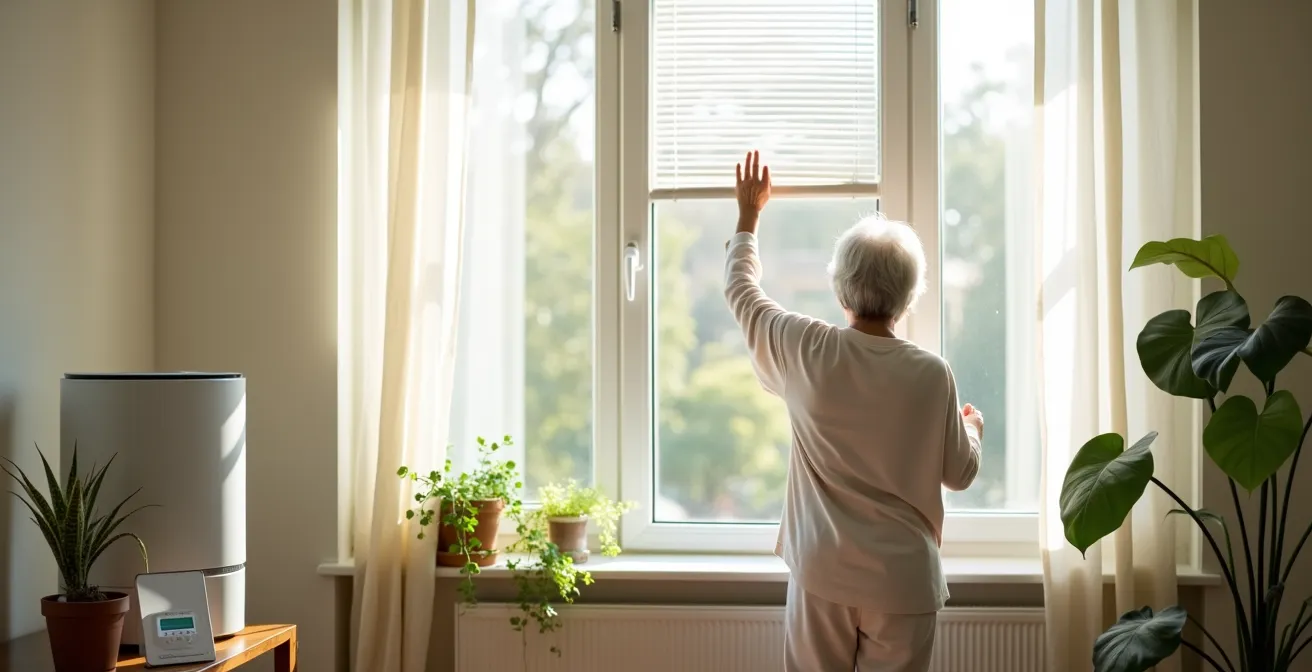
Many symptoms dismissed as “normal aging”—like fatigue, brain fog, and poor sleep—aren’t inevitable; they’re often triggered by your home environment.
- Your home’s air quality, light exposure, and layout can directly mimic medical symptoms, leading to unnecessary medication.
- Simple, non-invasive “environmental tweaks” can produce faster and more sustainable energy gains than diet or exercise alone.
Recommendation: Instead of asking “What pill can I take?”, start by asking “What in my environment can I change?”. This article shows you how to conduct that environmental diagnosis.
As we age, it’s easy to accept fatigue, restless nights, and a general sense of decline as an unavoidable part of the journey. The typical response often involves a trip to the doctor, leading to a new prescription. This cycle of treating symptoms with medication is so common that we rarely question it. We’re told to eat better, stay active, and ensure our homes are safe from falls, but these well-intentioned tips barely scratch the surface.
But what if the true culprit for many of these persistent issues isn’t a medical deficiency but the very environment we live in? What if the air we breathe indoors is making us lethargic, or the light in our bedroom is sabotaging our sleep? This is the concept of symptom mimicry, where environmental factors create physical and cognitive issues that look exactly like signs of aging or disease. The risk is a “prescription cascade,” where a side effect, often environmentally induced, is treated with another drug, creating a domino effect of over-medication.
The solution lies not in another pill bottle, but in an environmental diagnosis of your living space. This article shifts the focus from managing decline to actively optimizing vitality. We will move beyond medicine to explore how strategic, low-cost tweaks to your home’s air, light, and routines can reverse common aging symptoms. This is about reclaiming control and using your environment as a powerful, non-invasive tool for wellness.
This guide provides a roadmap to transform your home from a passive backdrop into an active partner in your health. Explore the sections below to uncover specific strategies for enhancing your well-being.
Summary: Beyond Medicine: How to Optimize Geriatric Wellness Through Environmental Tweaks?
- Why Indoor CO2 Levels Cause Lethargy in Seniors?
- How to Blackout a Senior Bedroom for Deeper Restorative Sleep?
- Diet Changes vs. Mobility Work: What Yields Faster Energy Gains?
- The ‘Prescription Cascade’ Risk That Mimics Aging Symptoms
- When to Expose Yourself to Sunlight to Reset Your Internal Clock?
- How to Integrate Smart Home Features Without Rewiring an Old House?
- Why Dust Accumulation Exacerbates Senior Respiratory Issues?
- Integrated Health Solutions: How to Combine Conventional and Holistic Care for Seniors?
Why Indoor CO2 Levels Cause Lethargy in Seniors?
That persistent feeling of drowsiness or “brain fog” you experience indoors might not be fatigue—it could be the air you’re breathing. We exhale carbon dioxide (CO2), and in poorly ventilated homes, it accumulates. While not acutely toxic at typical indoor levels, elevated CO2 directly impacts cognitive function. It displaces oxygen in the air, meaning every breath delivers slightly less of what your brain and body need to function optimally. For seniors, whose respiratory systems may already be less efficient, this effect is amplified, leading to lethargy, headaches, and difficulty concentrating.
The common assumption is that these are signs of aging or an underlying health issue. However, they are often a direct environmental response. Research consistently shows a link between CO2 levels and mental performance. Even at concentrations considered “normal” for indoor spaces, there’s a slight association between higher CO2 and poorer cognitive performance. The solution isn’t a stimulant; it’s a window.
Monitoring and managing indoor air is a foundational step in an environmental diagnosis. Before attributing fatigue to age, assess your air. Simply opening windows for 10-15 minutes, twice a day, can “flush” the air and dramatically lower CO2 levels. This simple, free intervention can have a more immediate impact on energy levels than many supplements or dietary changes. It’s a perfect example of addressing the root cause rather than medicating a symptom.
How to Blackout a Senior Bedroom for Deeper Restorative Sleep?
Deep, restorative sleep is not a luxury; it is a biological necessity. During sleep, our brains clear out metabolic waste and consolidate memories. However, this process is highly sensitive to light. Even minute amounts of light—from a streetlamp, a digital clock, or a hallway nightlight—can penetrate the eyelid and suppress the production of melatonin, the key hormone for sleep regulation. For seniors, who often experience naturally lighter sleep, this sensitivity is even more pronounced, leading to fragmented rest and next-day fatigue.
The goal is to create a “sleep cave”—a bedroom that is as close to absolute darkness as possible. This is a critical environmental tweak that directly combats insomnia and poor sleep quality. Standard curtains are often insufficient. The focus should be on solutions that achieve near-total light-blocking. While a sleep mask is a personal solution, modifying the room itself provides a more passive and reliable benefit, ensuring darkness throughout the entire night without requiring adjustment.
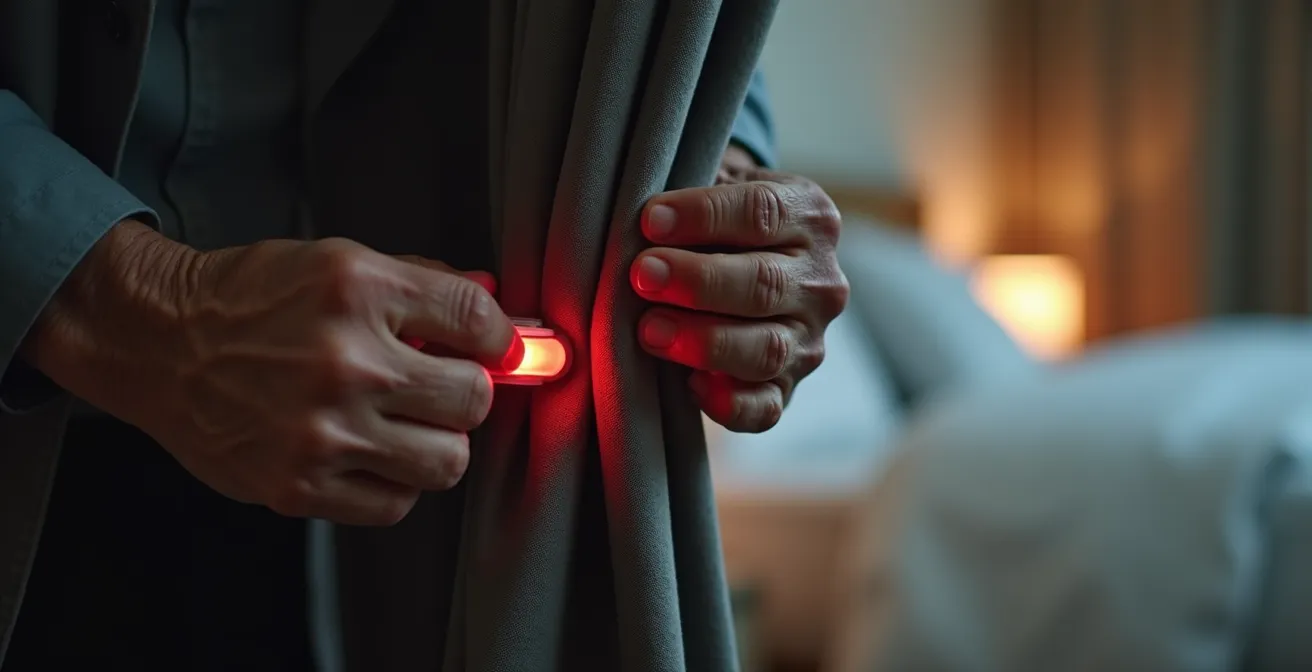
As you can see, even the small details matter. For necessary nighttime navigation, standard blue or white nightlights should be avoided as they are potent melatonin suppressors. Instead, opt for motion-activated, low-wattage red-wavelength lights placed near the floor, which are far less disruptive to your internal clock. The following table compares common blackout solutions, helping you choose the best fit for your needs and capabilities.
This comparative data, based on an analysis of indoor environmental quality factors, helps illustrate the trade-offs between different solutions. As highlighted by recommendations from organizations focused on healthy living, such as the American Lung Association’s advice on indoor air, controlling environmental factors is key to overall wellness.
| Solution | Installation Difficulty | Cost Range | Effectiveness | Senior-Friendly Features |
|---|---|---|---|---|
| Blackout Curtains | Moderate (requires drilling) | $30-100 | 95% light blocking | One-time setup, no daily handling |
| Window Film | Easy (peel & stick) | $15-40 | 85% light blocking | No maintenance, removable |
| Sleep Masks | None | $10-30 | 100% personal blocking | May shift during sleep, requires adjustment |
Diet Changes vs. Mobility Work: What Yields Faster Energy Gains?
When battling fatigue, the two most common recommendations are to “eat better” and “move more.” But this advice is too generic to be effective. For seniors seeking a tangible energy boost, the question is about prioritization and synergy. Should you focus on overhauling your diet or starting an exercise routine? The answer is nuanced: for rapid results, the key is sequential implementation and symptom-specific interventions. Immediate energy gains often come from addressing the most acute deficiency first, whether it’s hydration, fuel, or activation.
Mental fatigue, characterized by brain fog and poor concentration, often points to a nutritional issue like unstable blood sugar. In this case, dietary tweaks—such as introducing small, frequent protein snacks—will yield the fastest results. Conversely, physical fatigue, felt as muscle weakness or heavy limbs, is best countered with “micro-movements.” These aren’t strenuous workouts but short, 5-minute sessions of gentle stretching or walking in place every couple of hours to reactivate circulation and combat stagnation. By identifying the type of fatigue, you can apply a more targeted and effective solution.
Case Study: The 72-Hour Vitality Jumpstart
A structured 3-day energy restoration plan demonstrates the power of sequencing. Day 1 focuses solely on hydration optimization, with participants consuming 8-10 glasses of mineral-rich water. Day 2 introduces 10-minute morning mobility sessions, like chair exercises. Day 3 implements a protein-rich breakfast (20-25g) within an hour of waking. This step-by-step approach systematically breaks the fatigue cycle by layering nutritional fuel on top of physical activation, showing measurable energy improvements in just three days.
Ultimately, diet and mobility are not competing priorities; they are two sides of the same coin. The most powerful approach is to combine them. For instance, pairing every micro-movement session with a hydration check creates a synergistic effect, where improved circulation enhances nutrient delivery. This holistic method moves beyond generic advice to a personalized, diagnostic system for energy management.
The ‘Prescription Cascade’ Risk That Mimics Aging Symptoms
One of the greatest hidden risks in senior healthcare is the “prescription cascade.” This dangerous cycle begins when a side effect from a medication is misinterpreted as a new medical condition and treated with yet another drug. For example, a medication causing dizziness might lead to a prescription for anti-nausea pills, whose side effects are then treated with another medication, and so on. What’s often overlooked is that many of these initial “side effects” are not caused by the drug itself but are symptoms of a poor environment that the medication simply exacerbates.
This is the ultimate form of symptom mimicry. Is your dizziness from your blood pressure medication, or is it from dehydration and a stuffy, high-CO2 room? Is your confusion a sign of cognitive decline, or the result of a bedroom filled with low-level light pollution that prevents restorative sleep? Before accepting a new symptom as a medical issue requiring another pill, it is crucial to conduct an environmental audit. Many common complaints attributed to aging or medication can be resolved by simple, non-invasive tweaks to your surroundings.
This approach empowers you and your doctor to make more informed decisions. By tracking symptoms alongside environmental data (like air quality and sleep patterns), you can help distinguish between a true medication side effect and an environmental trigger. Presenting this information to a physician can prevent the prescription cascade before it starts. The table below illustrates how common symptoms can have both pharmaceutical and environmental causes, offering simple tests to investigate the root cause.
By understanding these overlaps, as detailed in studies on cognitive function and environmental factors, you can take a proactive role. An analysis of environmental stressors’ impact on cognitive function shows that untangling these factors is key to accurate diagnosis and effective care.
| Symptom | Common Medication Causes | Environmental Causes | Simple Test |
|---|---|---|---|
| Dizziness | Blood pressure medications, sedatives | Dehydration, high CO2 (>1000ppm) | Check hydration & room ventilation |
| Fatigue | Beta blockers, antihistamines | Poor air quality, insufficient light | Monitor CO2 levels & light exposure |
| Confusion | Benzodiazepines, anticholinergics | High indoor CO2, poor sleep environment | Test cognitive function at different times/locations |
| Insomnia | Decongestants, corticosteroids | Light pollution, bedroom temperature | Audit bedroom darkness & temperature |
When to Expose Yourself to Sunlight to Reset Your Internal Clock?
Your body runs on an internal 24-hour clock known as the circadian rhythm. This master clock, located in the brain, orchestrates nearly every bodily process, from hormone release and digestion to alertness and sleep. The single most powerful signal for synchronizing this clock is light—specifically, morning sunlight. When bright light hits your retinas in the morning, it sends a direct signal to your brain to suppress melatonin, ramp up cortisol (the alertness hormone), and start the “daytime” program. This sets a countdown for sleep, ensuring you feel tired at the appropriate time later that evening.
For seniors, whose circadian rhythms can become less robust with age, this morning light signal is non-negotiable for maintaining energy and sleep quality. The timing is crucial. The goal is to get this exposure as early as possible after waking. Official health research indicates that 15-20 minutes of sun exposure before 10 AM powerfully stimulates the production of cortisol and serotonin, which improves mood and daytime alertness. Forgoing sunglasses for the first 5-10 minutes is recommended to allow the full spectrum of light to reach your eyes.
This simple, free ritual can be more effective than a cup of coffee for shaking off morning grogginess. Even on cloudy days, the ambient outdoor light is significantly brighter and more effective than indoor lighting. If getting outside is difficult, positioning yourself by a wide-open window for 30 minutes or using a 10,000-lux “SAD” lamp can provide a similar benefit. Just as important is what you do in the evening: dimming all lights and avoiding screens for two hours before bed allows melatonin to rise naturally, preparing your body for a night of deep, restorative sleep.
How to Integrate Smart Home Features Without Rewiring an Old House?
The term “smart home” often conjures images of expensive, complex systems requiring professional installation and a complete rewiring of the house. For seniors, this can seem intimidating and impractical. However, a new generation of “plug-and-play” devices makes it possible to reap the wellness benefits of home automation without any of that hassle. The key is to focus on simple, non-invasive tools like smart plugs, smart bulbs, and motion sensors that work with your existing infrastructure.
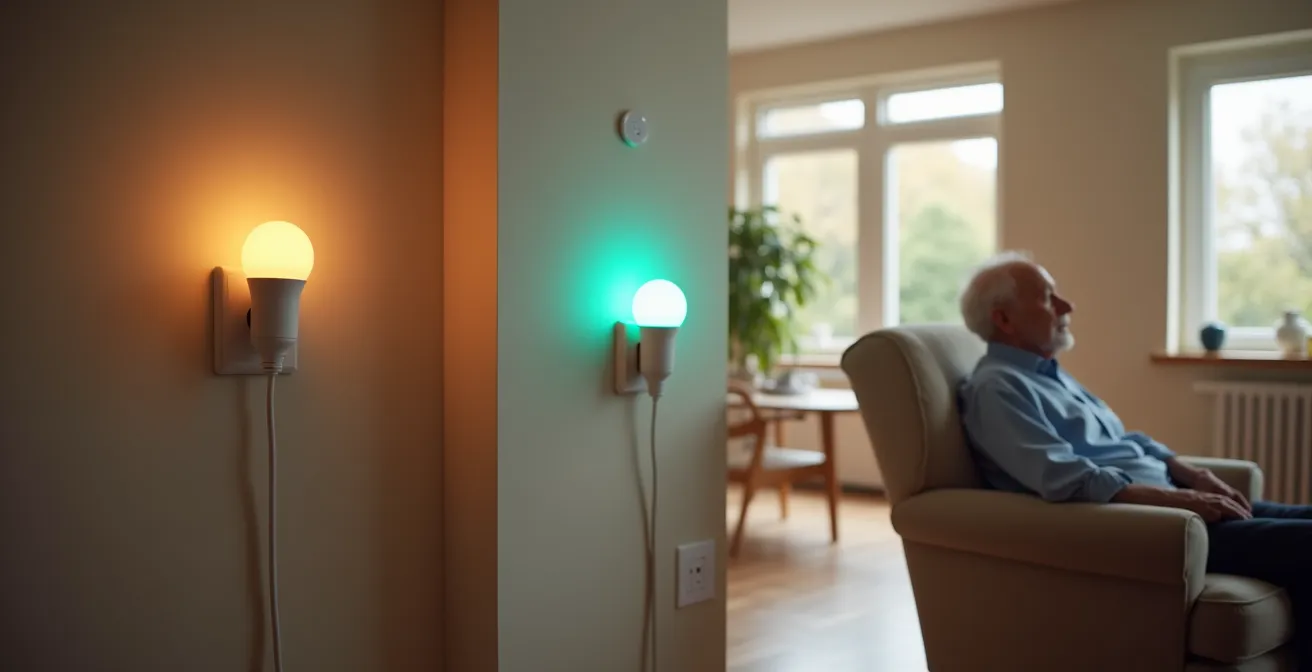
These devices are not about novelty; they are powerful tools for environmental wellness. A smart bulb can be programmed to gradually brighten in the morning, mimicking a natural sunrise to gently wake you and support your circadian rhythm. A smart plug connected to a space heater can ensure it’s never accidentally left on, reducing both fire risk and anxiety. Motion sensors can automatically turn on low-level pathway lighting at night, drastically reducing the risk of falls during bathroom trips. These are not just conveniences; they are proactive health and safety interventions.
Case Study: The Smart Home Wellness Starter Kit Under $100
A practical setup shows just how accessible this technology is. Using two smart plugs ($25 each), two smart bulbs ($15 each), and a basic voice assistant ($20), a resident created powerful wellness routines. A “sunrise alarm” gently brightens the bedroom before wake-up time. A “bedtime” scene automatically dims all lights at 9 PM to encourage melatonin production. An “I’m leaving” voice command turns off all connected appliances, providing peace of mind. This simple, affordable kit improved both sleep quality and daily anxiety within the first week.
The table below summarizes some of the most effective and easy-to-install smart home solutions for enhancing senior wellness. These devices empower independent living by creating an environment that is not just comfortable, but actively supportive of health.
| Device Type | Installation Method | Health Benefit | Cost Range |
|---|---|---|---|
| Smart Plugs | Plug into existing outlets | Prevents leaving appliances on, reduces fire risk | $10-25 each |
| Smart Bulbs | Screw into existing fixtures | Circadian rhythm support, fall prevention lighting | $10-20 each |
| Smart Thermostat | Replace existing (30-min install) | Optimal sleep temperature, energy savings | $100-200 |
| Motion Sensors | Stick-on battery powered | Automatic pathway lighting, fall prevention | $15-30 each |
Why Dust Accumulation Exacerbates Senior Respiratory Issues?
Household dust is more than just an unsightly nuisance; it’s a complex mixture of particles, including skin cells, fabric fibers, pollen, mold spores, and dust mites. For seniors, whose respiratory and immune systems may be more vulnerable, this accumulation can be a significant health hazard. When inhaled, these microscopic particles can trigger or worsen a range of respiratory issues, from allergies and asthma to chronic obstructive pulmonary disease (COPD). The body’s inflammatory response to these irritants can lead to chronic coughing, wheezing, and shortness of breath.
This constant, low-level assault on the respiratory system drains energy and can be easily mistaken for a worsening of a pre-existing condition or simply a consequence of aging. While regular cleaning is important, it’s often not enough, as dusting and vacuuming can temporarily stir particles back into the air. The most effective environmental intervention for controlling airborne particulates is a High-Efficiency Particulate Air (HEPA) filter. These purifiers are designed to capture 99.97% of particles as small as 0.3 microns, effectively removing dust, pollen, and other allergens from the air you breathe.
Choosing and using a HEPA purifier correctly is key to its effectiveness. It’s not enough to simply buy one and plug it in. The unit must be properly sized for the room it’s in, a metric known as the Clean Air Delivery Rate (CADR). As a general rule, the CADR should be at least two-thirds of the room’s square footage. For maximum benefit, the purifier should be placed in the room where you spend the most time—typically the bedroom—and positioned away from walls or corners to ensure optimal airflow. According to sources on indoor air quality, maintaining a humidity level between 40-60% also helps, as it causes dust particles to clump together and fall out of the air more quickly.
Key Takeaways
- Many “aging symptoms” like fatigue and brain fog are actually environmental responses that can be reversed.
- Your home’s air, light, and routines are powerful health tools that can reduce the need for medication.
- A systematic, data-driven approach to your environment allows for targeted interventions with rapid results.
Integrated Health Solutions: How to Combine Conventional and Holistic Care for Seniors?
The future of senior wellness lies in bridging the gap between conventional medicine and holistic environmental care. It’s not about choosing one over the other, but about creating an integrated system where both work in synergy. This begins with a paradigm shift: viewing your home environment not as a passive space, but as a source of valuable health data. By tracking how you feel in response to changes in your air quality, light exposure, and daily routines, you transform anecdotal feelings into actionable information.
This data-driven, “Environment-First” approach empowers both you and your healthcare provider. When you can tell your doctor, “My fatigue disappears when I ventilate my living room,” it provides a crucial clue that might prevent an unnecessary prescription for a stimulant. A study on remote workers, including seniors, showed that those who presented environmental data to physicians received more targeted interventions, reducing unnecessary medications by helping distinguish between environmental factors and true medical conditions. This collaborative model turns your doctor into a partner in your holistic wellness plan.
Implementing this integrated approach can feel overwhelming, so it’s best to start with a structured plan. The “Foundational Five” roadmap below breaks down the most impactful environmental tweaks into a manageable, 10-week program. By focusing on one area at a time—from sleep to light to air—you can systematically build a healthier environment and measure the results along the way.
Your Foundational Five Environmental Wellness Roadmap
- Weeks 1-2: Blackout Sleep. Install room-darkening solutions, remove all LED light sources from the bedroom, and establish a consistent sleep and wake schedule.
- Weeks 3-4: Morning Light Protocol. Get 15-20 minutes of outdoor light exposure before 10 AM each day. Open all curtains immediately upon waking to let daylight in.
- Weeks 5-6: Air Quality Optimization. Install a CO2 monitor in your main living area. Establish a routine of “air flushing” by opening windows for 15 minutes every morning and evening. Add an air purifier if needed.
- Weeks 7-8: Hydration System. Set up dedicated water stations in each main room to serve as visual reminders. Track your daily intake with a simple chart and consider adding electrolytes if you are very active.
- Weeks 9-10: Daily Micro-Movement. Incorporate 5-minute sessions of simple movement (stretching, walking in place) for every two hours of sitting. Use TV commercials as a trigger to get up and move.
Start your own environmental diagnosis today. By taking these small, deliberate steps to recalibrate your living space, you are taking the most powerful step of all—reclaiming control over your own vitality and paving the way for a healthier, more vibrant life with fewer medications.