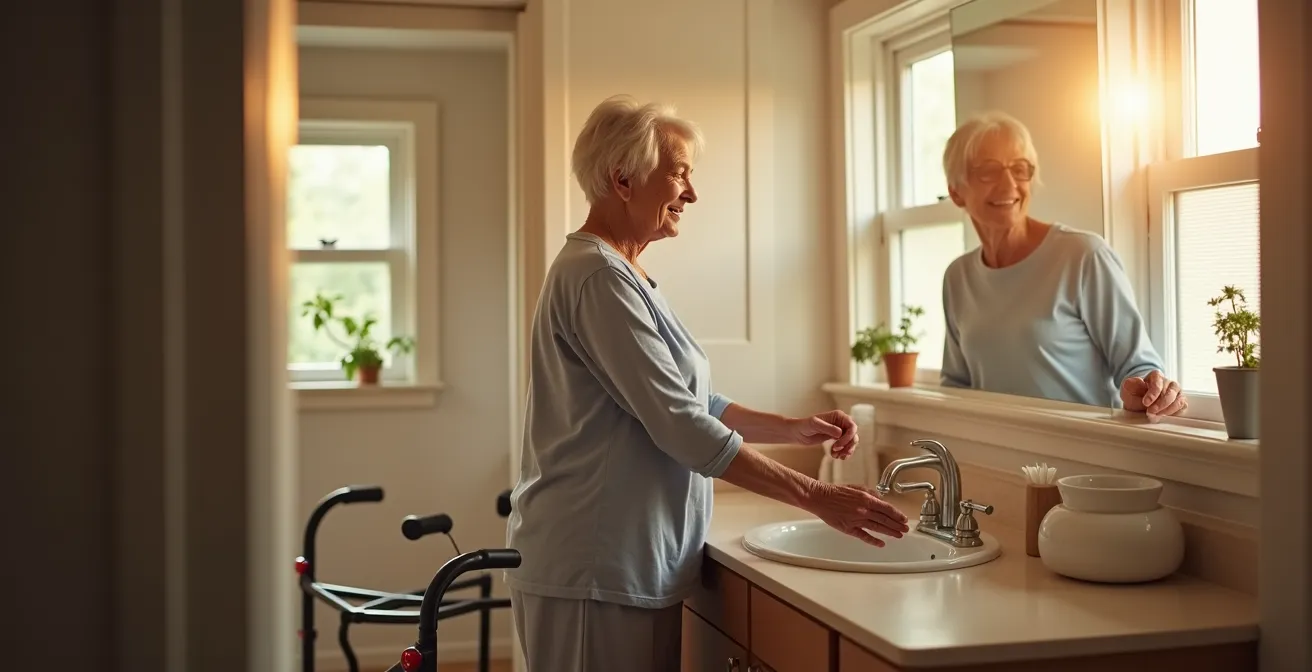
The key to lasting independence after a stroke is not pushing harder, but working smarter by managing your energy as a finite resource.
- Chronic fatigue is a real physiological challenge; battling it with brute force leads to burnout, not progress.
- Accepting targeted help (like meal delivery) is a strategic choice to conserve energy for critical tasks like rehabilitation and personal hygiene.
Recommendation: Start tracking your daily activities not by time, but by energy cost, to build a sustainable routine that fosters true autonomy.
The road to recovery after a stroke is often described as a marathon, not a sprint. You are told to do your exercises, eat well, and stay positive. But what happens when, despite your best efforts, you feel like you’re taking two steps forward and three steps back? You face the crushing weight of chronic fatigue, the well-intentioned but sometimes suffocating help from family, and the fear that your progress has stalled. The standard advice often overlooks the most critical currency you have: your energy. This isn’t just about willpower; it’s about physiological limits that must be respected and managed.
But what if the path to long-term independence wasn’t about a relentless battle to do everything yourself? What if, paradoxically, the secret was to strategically accept small, targeted forms of help to preserve your strength for the things that truly build your autonomy? This guide is not another checklist of exercises. It is a strategic manual for re-engineering your daily life around the principle of energy economics. We will dismantle the “over-caring” trap, explore the science of muscle loss to understand the stakes, and provide you with a disciplined framework to build consistency over intensity. This is your new playbook for winning the long game of independence.
In the following sections, we’ll break down this strategic approach. We will explore everything from structuring your day to conserve energy, to finding the right kind of support systems and maintaining the functional mobility you need to live life on your own terms.
Summary: The Disciplined Path to Sustained Stroke Recovery
- Why Accepting Small Help Early Preserves Total Autonomy Longer?
- How to Structure a ‘Energy Conservation’ Schedule for Chronic Fatigue?
- Group Classes vs. Solo Practice: Which Builds Better Consistency?
- The ‘Over-Caring’ Mistake Families Make That Reduces Senior Ability
- When to Introduce Meal Delivery Services to Conserve Energy for Hygiene?
- Why Sarcopenia Accelerates Rapidly After Two Weeks of Bed Rest?
- How to Find Local Senior Groups That Aren’t Just ‘Bingo and Bridge’?
- How to Maintain Functional Mobility After 70 with Low-Impact Home Exercises?
Why Accepting Small Help Early Preserves Total Autonomy Longer?
The desire to be fully independent after a stroke is a powerful motivator. However, this drive can lead to a counterproductive mindset: the belief that accepting any help is a sign of failure. This is a myth. True, lasting autonomy is not about doing everything yourself; it’s about having the strategic control to do what matters most. Think of your daily energy as a strict budget. You have a finite amount to spend each day. If you exhaust your entire budget on low-return tasks like complex meal preparation or heavy cleaning, you have nothing left for the high-return investments: your rehabilitation exercises, personal hygiene, or connecting with loved ones.
This is the concept of strategic dependence. By consciously delegating or simplifying certain tasks, you are not giving up. You are making a calculated business decision about your recovery. You are buying back energy and reinvesting it into activities that directly build your strength, mobility, and confidence. For example, using a grocery delivery service isn’t a weakness; it’s a strategic move that saves you the two hours and significant energy a supermarket trip would cost, freeing up that exact resource for a focused, 30-minute session of vital home-based therapy. This shift in perspective is the first and most crucial step toward sustainable independence.
How to Structure a ‘Energy Conservation’ Schedule for Chronic Fatigue?
To implement the strategy of energy economics, you need a practical tool. The “Spoon Theory” provides an excellent framework. Imagine you wake up each day with a limited number of spoons, each representing a unit of physical and mental energy. Every single activity, from getting dressed to making a phone call, costs a certain number of spoons. A healthy person may have an unlimited supply, but for a stroke survivor, the supply is finite and must be managed with discipline.
Structuring your day becomes a process of budgeting these spoons. The first step is to identify the cost of your common activities. For one or two weeks, keep an honest log. How many spoons does a shower cost? A doctor’s visit? A conversation with a friend? You will quickly see patterns. You’ll also identify activities that *give* you spoons, like a nap, meditation, or quiet time. With this data, you can build a schedule that balances high-cost activities with rest and low-cost tasks. This isn’t about restriction; it’s about empowerment through planning. It allows you to consciously decide, “Today, I will spend my spoons on my therapy and a call with my grandchild, and I will delegate the laundry.”
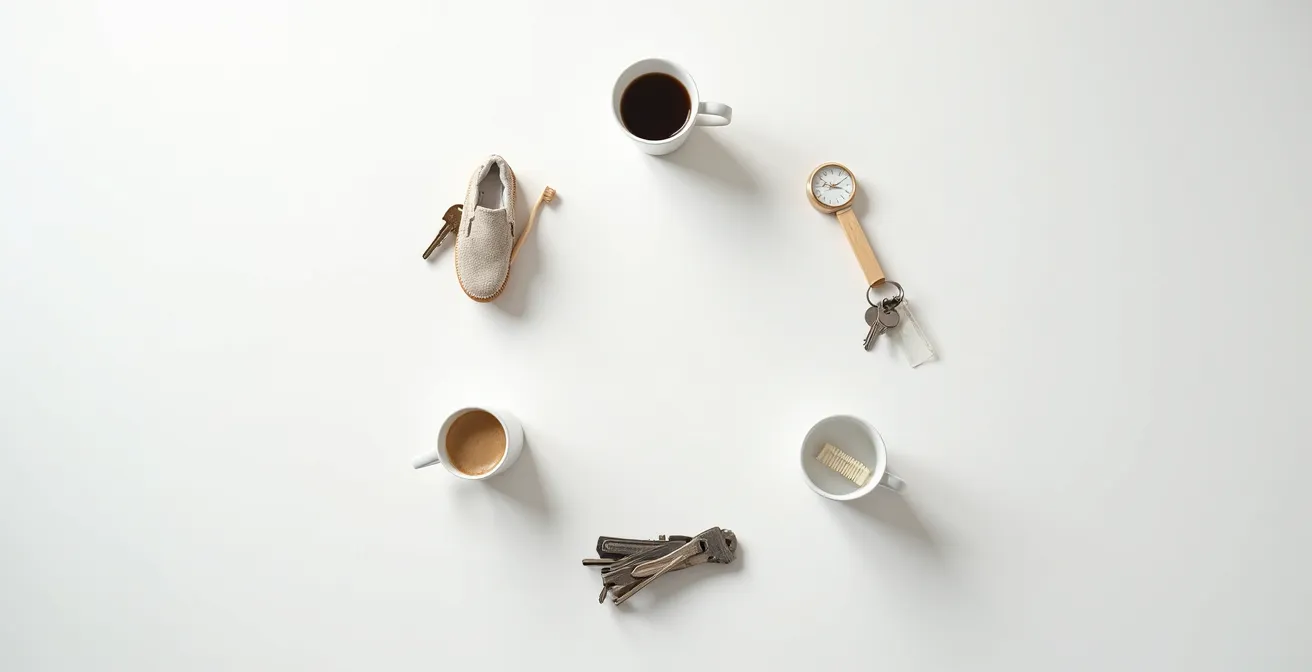
This visual approach helps transform the abstract feeling of fatigue into a manageable budget. The table below, adapted from an analysis of the Spoon Theory, illustrates how different activities carry different energy costs, forcing a strategic approach to daily planning.
| Activity Type | Energy Cost (Spoons) | Planning Strategy |
|---|---|---|
| Shower | 1-3 spoons | Not enough to cook a meal (3 spoons), visit doctor (4 spoons), or socialize (3 spoons), but enough for watching TV (1 spoon) or reading (2 spoons) |
| Work (Part-time) | 4-6 spoons | Plan cooking and socializing on non-working days when not doing high energy activities like driving or working |
| Light Housework | 3 spoons | Careful planning necessary to avoid over-exertion, unlike healthy people with enough spoons for any combination |
| Doctor Visit | 4 spoons | If fatigue is from too many activities, prioritize most important activities and make a schedule as the best management technique |
Group Classes vs. Solo Practice: Which Builds Better Consistency?
Having a plan is one thing; executing it day after day is another. Consistency is the engine of recovery. But what environment best fuels that engine? The answer depends entirely on your personality and needs. There is no single “best” way, only the way that works for you. The choice between a structured group class and a disciplined solo practice is a critical one.
Group classes, whether in-person or online, provide accountability and community. The simple act of having a scheduled time and a group of peers waiting for you can be a powerful motivator on days when your internal drive is low. You share struggles, celebrate victories, and learn from others on the same journey. Conversely, solo practice offers flexibility and personalization. You can exercise when your energy is at its peak, focus on specific movements that you need to improve, and progress at your own pace without feeling rushed or held back. The key is to be brutally honest with yourself. Do you thrive on social energy, or do you need quiet focus to connect with your body?
Case Study: The Different Strokes Online Exercise Programme
To address this very issue, the UK charity Different Strokes created a structured online programme for stroke survivors. It features 12-session modules focused on key areas like mobility, cardio, strength, and core stability. Crucially, it offers five different levels, allowing participants to start where they are comfortable. This model provides the structure of a group class with the flexibility of solo, at-home practice, demonstrating a hybrid approach that builds consistency by offering choice and clear progression paths.
Ultimately, the environment matters less than the commitment. As one stroke survivor on the Mayo Clinic Connect forum powerfully stated, this is the unvarnished truth:
Your dedication to your recovery is the determining factor. If you don’t work at it, you will not improve. And if you stop working at it, you’ll lose the progress you’ve made. The good news is that with effort and determination, improvement will continue, even years later.
– Stroke Survivor, Mayo Clinic Connect Forum
The ‘Over-Caring’ Mistake Families Make That Reduces Senior Ability
One of the most sensitive and challenging dynamics in stroke recovery is the role of family. Driven by love and fear, family members can fall into the “over-caring” trap. This is when they do too much for the survivor, inadvertently stripping them of opportunities to practice, struggle, and ultimately regain functional skills. Rushing to help with dressing, cutting up food, or answering questions on their behalf might seem kind in the moment, but it fosters dependence and can accelerate a decline in ability.
Every task that is done *for* the survivor is a lost opportunity for them to engage their brain and body in the recovery process. The struggle to button a shirt is not just a struggle; it is a complex neurological and fine motor skill exercise. When a family member does it for them, that exercise is cancelled. The goal for families should be to transform from “carers” into “coaches.” A coach doesn’t play the game for the athlete; they create a safe environment, provide tools, offer encouragement, and know when to step back and let the athlete try, and even fail, as part of the learning process.
This means allowing more time for tasks, modifying the environment (e.g., providing adaptive tools instead of doing the task), and celebrating effort, not just perfect outcomes. It requires immense patience from the family and a clear conversation about goals.
I was able to get up. I always got up and dressed myself and wash and dress myself in hospital, so that was a great help when I came home because I’d always done it. I didn’t stop doing it. Sometimes it was very hard. Sometimes it took me half an hour. I am very over confident for my age and I think that’s the thing that you see, some people my age and older, they just lie in bed as long as they can and they don’t make much of an effort to help themselves.
– A Stroke Survivor’s Experience
When to Introduce Meal Delivery Services to Conserve Energy for Hygiene?
The question posed in the title is not just about food; it’s the perfect real-world test of the “energy economics” mindset. Cooking a meal is a surprisingly high-cost activity. It involves planning, shopping, standing, chopping, lifting, and cleaning—each a drain on your limited “spoon” budget. For many, this process can consume the majority of their energy for the day, leaving them too exhausted for a proper shower or their essential rehabilitation exercises.
Herein lies the strategic trade-off. Personal hygiene is a non-negotiable cornerstone of dignity, health, and self-esteem. It is a foundational daily activity. Rehabilitation exercises are the direct investment in your long-term physical improvement. When the energy cost of meal preparation consistently prevents you from accomplishing one or both of these critical tasks, it is no longer a productive activity. It has become a barrier to your progress. This is the precise moment to strategically introduce a meal delivery service.
Viewing this service not as a luxury or a defeat, but as a rehabilitation tool, is key. You are not “giving up” on cooking. You are purchasing time and energy. You are reallocating the 3-5 spoons that cooking would have cost and investing them into the 1-3 spoons a shower requires and the 2-4 spoons your physical therapy demands. This calculated decision ensures that you are consistently able to perform the most vital tasks for your recovery and well-being, which is the ultimate definition of smart, sustainable independence.
Why Sarcopenia Accelerates Rapidly After Two Weeks of Bed Rest?
To understand the absolute necessity of consistent, daily movement, we must face a harsh biological reality: sarcopenia. Sarcopenia is the progressive loss of skeletal muscle mass and strength. While it’s a natural part of aging, it accelerates at a terrifying rate after a stroke due to neurological deficits and immobility. This isn’t a slow, gentle decline; it’s a rapid downward spiral. In fact, the process of disuse atrophy begins within hours of a stroke, with a measurable decrease in motor units in the affected limb.
The danger is most acute during periods of inactivity. Even just a week or two of significantly reduced mobility, such as being mostly bedridden after a fall or illness, can trigger a dramatic loss of muscle. This creates a vicious cycle: muscle loss leads to weakness, which increases the risk of falls and fatigue, which in turn leads to more inactivity and further muscle loss. The prevalence of sarcopenia in stroke patients admitted to rehabilitation hospitals is as high as 51%, highlighting its role as a primary obstacle to recovery. This is not just about being “weaker”; it’s about losing the functional threshold of strength required for basic daily tasks like getting out of a chair or climbing a single step.
This scientific reality is not meant to scare you, but to focus you. It underscores why “taking a few days off” can be so detrimental and why a little bit of movement every single day is non-negotiable. It is the disciplined, daily defense against the rapid advance of sarcopenia.
Your Action Plan: Sarcopenia Prevention Checklist
- Prioritize Resistance: Make resistance exercises your primary treatment. This includes using bands, light weights, or your own body weight to build muscle.
- Combine Exercise Types: Incorporate a mix of resistance, aerobic (for heart health), and flexibility components into your weekly routine for a holistic approach.
- Focus on Function: Ensure your exercises support your ability to participate in rehabilitation. The goal is to maintain enough strength to keep making progress.
- Fuel Your Muscles: Confirm with your doctor that you are getting appropriate nutritional supplementation. Key nutrients like B vitamins are crucial for energy metabolism and muscle repair.
- Stay Consistent: Understand that consistency is the most powerful weapon. A short, daily session is infinitely more effective than a long, sporadic one.
How to Find Local Senior Groups That Aren’t Just ‘Bingo and Bridge’?
Recovery is not just a physical journey; it’s a social and emotional one. Isolation is a significant risk after a stroke, and while traditional senior centers are valuable, their offerings may not align with the active, rehabilitative mindset you’re trying to cultivate. The goal is to find groups that provide social connection while also supporting your physical and mental recovery, moving beyond sedentary activities.
The search for these groups requires a new vocabulary. Instead of looking for “senior clubs,” search for specific, activity-based programs. Look for local community centers, YMCAs, or hospitals that offer things like:
- Tai Chi for Balance: Often recommended for fall prevention, these classes are excellent for improving stability, coordination, and mindful movement.
- Chair Yoga or Adaptive Yoga: These programs modify traditional yoga for various ability levels, improving flexibility and reducing stiffness without requiring you to get on the floor.
- Water Aerobics/Aqua Therapy: The buoyancy of water supports your body, reducing impact on joints while providing resistance for a full-body workout.
- Stroke Support Groups with an Active Component: Some support groups are now incorporating gentle exercise, guest speakers on nutrition, or group walks into their meetings.
When evaluating a group, look for an instructor who understands post-stroke considerations. Ask if the program is adaptable and allows you to work at your own pace. Many organizations, like Different Strokes, have moved online, offering specialized classes via platforms like YouTube. These can be an excellent way to join a community and access high-quality, specialized instruction from the comfort of your home, ensuring you can find a group that fits your needs and ability level perfectly.
Key Takeaways
- Lasting independence is built on smart energy management, not just brute-force effort.
- Accepting targeted help is a strategic choice to conserve energy for what truly matters: rehabilitation and dignity.
- Consistency is paramount; even short, daily low-impact exercises are crucial to prevent the rapid muscle loss (sarcopenia) that follows inactivity.
How to Maintain Functional Mobility After 70 with Low-Impact Home Exercises?
At the heart of all these strategies is the physical work itself. Maintaining functional mobility is the bedrock of independence. This isn’t about becoming a bodybuilder; it’s about having the strength and coordination to perform Activities of Daily Living (ADLs) safely and confidently. It’s the ability to get up from the toilet, carry a bag of groceries, reach a high shelf, and walk across a room without fear of falling. The key is low-impact, high-repetition exercise that can be done consistently at home.
The principle of neuroplasticity, the brain’s ability to rewire itself, is fueled by repetition. Your goal should be to achieve a high volume of quality movements daily. This is where gamified therapy devices can be transformative. For example, some home therapy tools help survivors accomplish an average of 400 repetitions in just half an hour by making the exercises engaging. This is a volume of practice that is nearly impossible to achieve through willpower alone.
Case Study: The ‘Rhythm Over Intensity’ Home Program
A successful home exercise program is built on a sustainable daily rhythm, not on grueling, infrequent sessions. A great starting point is 20-30 minutes of focused work each day. Consider a structure like this: In the morning, perform gentle range-of-motion exercises. In the afternoon, tackle one task-based challenge, like practicing sit-to-stand from a sturdy chair 10 times. In the evening, focus on mental practice or light stretching. This consistent, multi-faceted approach makes progress feel achievable and embeds recovery into the fabric of your daily life. It proves that consistency, not perfection, is the true driver of progress.
Your home is your new gymnasium. Simple tools like resistance bands, stress balls, and even household items can be used for effective, low-impact exercises. Focus on movements that mimic daily life: standing up and sitting down, reaching, gripping, and taking stable steps. It is this daily, disciplined practice that builds and maintains the functional strength that defines true independence.
Frequently Asked Questions on Supporting Independence After Stroke
When should families step in to help with daily activities?
Rehabilitation is key in rebuilding strength, capability, and confidence. The goal is to help the survivor continue daily activities despite the effects of the stroke. Support should be focused on enabling them, not replacing their own efforts. New routines will become second nature with practice.
How can families support without over-helping?
A great method is to allow the survivor to set their own goals. Give them the option to choose the type of things they want to achieve and work towards. This fosters a sense of ownership and collaboration rather than dependence.
What are signs that someone needs more independence?
Generally, when people are encouraged to do things for themselves, they see it as being for their own benefit to help them become independent as quickly as possible. If a survivor is expressing frustration at being “helped,” it is a strong sign they are ready and willing to try more on their own. Listen to these cues.