
The true value of a senior health benefit isn’t its premium, but the mathematical value you actually use; a low premium plan can be the most expensive option if its benefits go unused or lead to inferior outcomes.
- High-cost items like dental implants often provide a better long-term return on investment than cheaper, short-term fixes, despite insurance categorizations.
- “Cheaper” Over-the-Counter (OTC) hearing aids can become mathematically more expensive per hour of use than professionally-fitted devices due to high abandonment rates.
Recommendation: Before renewing or enrolling, calculate the “Annualized Cost of Quality” and the “Effective Cost of Use” for each benefit to make a purely financial decision.
For any senior navigating the labyrinth of health insurance, a familiar frustration emerges. You diligently pay premiums for “enhanced” dental, vision, and hearing coverage, only to find that the one procedure you truly need—a dental implant, progressive lenses, a quality hearing aid—is either rejected, barely covered, or requires an astronomical co-pay. The standard advice to “read your plan carefully” feels hollow when the language seems designed to obscure rather than clarify.
The marketplace is flooded with generalities about Medicare Advantage plans offering “extra benefits,” but this tells you nothing about their real-world financial value. This analysis will not rehash those platitudes. Instead, we will adopt the cold, hard perspective of a healthcare economist. The central question is not *if* you have coverage, but what its mathematical worth is to you. This involves understanding concepts insurers prefer you ignore, like the ‘dead money’ of waiting periods and the crucial calculation of Annualized Cost of Quality.
This article will dissect the three major areas of supplemental coverage—dental, optical, and audio—through this rigorous financial lens. We will analyze the economic traps, identify the leverage points for maximizing claims, and provide a framework to calculate whether a specific benefit is a sound investment or a financial drain. It’s time to move beyond the benefit brochure and into a bottom-line analysis of what your healthcare dollars are actually buying.
To navigate this complex financial landscape, this article breaks down each critical decision point. The following summary outlines the key economic calculations and strategic considerations we will explore to determine the true value of your coverage.
Summary: A Financial Breakdown of Senior Health Benefits
- Why Implants Are Categorized as Cosmetic and Not Covered?
- How to File a Claim for Progressive Lenses Without Rejection?
- 100% Health Basket vs. Free Choice: Which Offers Better Quality Prosthetics?
- The 6-Month Waiting Period Trap for New Dental Contracts
- When to Replace Hearing Aids to Maximize Insurance Contribution Cycles?
- OTC Hearing Aids vs. Prescription Devices: Are You Missing Crucial Tuning?
- 28-Day Tray vs. Bulk Loading Dispensers: Which Suits Frequent Travelers?
- Digital Hearing Aids: Why Do 40% of Seniors Buy Them but Never Wear Them?
Why Implants Are Categorized as Cosmetic and Not Covered?
From a healthcare economist’s viewpoint, the classification of dental implants as “cosmetic” by many insurance plans is a strategic financial decision, not a medical one. Insurers view implants through the lens of cost-containment; with a single implant costing between $3,000 to $6,000 per tooth, they represent a significant liability. The existence of cheaper alternatives like bridges or dentures allows insurers to argue that the functional need for a tooth is met, rendering the premium implant solution a “lifestyle choice.” This logic systematically ignores the long-term economic argument.
However, this short-term view is often financially flawed for the patient. While the initial outlay for an implant is higher, its longevity and lower maintenance costs frequently result in a lower total cost over a lifetime compared to alternatives that require periodic replacement and may damage adjacent teeth. An economic analysis must consider the total cost of ownership, not just the upfront price tag.
The following table demonstrates this principle clearly. While a denture appears cheapest initially, its short lifespan means you could pay for it three or four times over during the lifespan of a single implant. A bridge, while closer in initial cost, also has a finite life and a higher 10-year cost ceiling. For a senior planning for the next 15-25 years, the implant often represents the most economically sound investment, despite its “cosmetic” label.
| Treatment Option | Initial Cost | Lifespan | 10-Year Total Cost |
|---|---|---|---|
| Dental Implant | $3,000-$6,000 | 25+ years | $3,000-$6,000 |
| Bridge | $1,500-$5,000 | 10-15 years | $3,000-$10,000 |
| Denture | $600-$1,200 | 5-7 years | $1,800-$2,400 |
How to File a Claim for Progressive Lenses Without Rejection?
Securing coverage for progressive lenses is less about vision and more about strategy. Insurers’ systems are often designed to default to the lowest-cost option, making automatic rejections for “premium” lens features common. To overcome this, you must shift the narrative from a preference to a documented medical necessity. Your claim must build an undeniable case that progressive lenses are essential for performing daily activities safely and effectively, transforming them from a convenience into a required medical device.
This involves proactive collaboration with your optometrist to gather specific diagnostic codes that justify the need for complex lenses. Codes for presbyopia are standard, but adding codes for astigmatism or even citing specific work-related visual demands strengthens your case significantly. Furthermore, a well-crafted letter of medical necessity can be the deciding factor, explicitly stating how progressive lenses are required for tasks like safely navigating stairs, driving, or using a computer without causing postural strain. It’s about demonstrating that single-vision lenses would create a functional impairment.

As the image illustrates, the fitting process is precise and patient-specific. Your claim documentation should reflect this level of detail. By understanding your plan’s formulary and separating claims for frames and lenses where beneficial, you can navigate the system’s inherent biases. The key is to pre-emptively address the insurer’s potential objections with robust medical and functional evidence.
Your Action Plan: Maximize Progressive Lens Coverage
- Gather Ammunition: Request all applicable ICD-10 diagnosis codes from your optometrist, including presbyopia, astigmatism, and any work-related vision needs.
- Check the Formulary: Verify your plan’s lens formulary before ordering—check if ‘standard progressives’ are covered differently than ‘premium progressives’.
- Split the Claim: Submit separate claims for frames and lenses if your plan has distinct allowances for each category, maximizing both benefits.
- Argue Necessity: Include a letter of medical necessity emphasizing how lenses improve safety in daily tasks like stair navigation and computer use.
- Pre-Authorize: For premium lens options (e.g., high-index, anti-glare), consider seeking pre-authorization to avoid an automatic rejection and fight it on the front end.
100% Health Basket vs. Free Choice: Which Offers Better Quality Prosthetics?
The choice between a “100% covered” prosthetic and a “free choice” option with a co-pay is a classic economic trap. While “free” is an alluring price point, it often masks a significant compromise in material quality and long-term durability. From a bottom-line perspective, the 100% covered option is designed to meet the insurer’s minimum liability, not to provide the patient with the best long-term outcome. This is where understanding the Annualized Cost of Quality becomes a critical tool for financial decision-making.
The “100% covered” prosthetics typically utilize older, less durable materials. In dentistry, this means standard porcelain-fused-to-metal (PFM) crowns, which lack the strength and aesthetic qualities of modern zirconia. The shorter warranties offered on these products are a clear market signal of their inferior longevity. Choosing the “free choice” option, while requiring an upfront co-pay, often grants access to superior materials like high-translucency zirconia and titanium implants, which have proven biocompatibility and are backed by much longer warranties.
Case Study: Material Quality and Long-Term Value
An analysis of 2025 dental prosthetic materials reveals that 100% covered options typically use standard porcelain-fused-to-metal (PFM) crowns. In contrast, “free choice” tiers offer access to high-translucency zirconia. While the vast majority (93%) of implants are titanium due to its superior biocompatibility, the quality of the attached prosthetic varies. Labs providing 100% covered prosthetics often offer minimal 1-2 year warranties, whereas labs for premium free-choice options frequently provide 5-7 year warranties, indicating a significant difference in expected lifespan and manufacturing quality.
This difference in quality has direct financial consequences. As noted by one dental finance expert, the calculation is simple but profound.
The ‘Annualized Cost of Quality’ calculation reveals that a $500 co-pay for a prosthetic lasting 7 extra years costs only ~$71/year for superior quality and fewer replacements.
– Dr. Erin Cox, Dental Implant Cost Guide 2025
This demonstrates that paying a co-pay is not an expense, but an investment in reduced future costs and fewer trips to the dentist. The truly “expensive” option is often the one that needs to be replaced sooner.
The 6-Month Waiting Period Trap for New Dental Contracts
Waiting periods in new dental insurance contracts are a purely financial mechanism designed to protect the insurer. The logic is to prevent individuals from signing up for a plan, receiving an expensive procedure immediately, and then canceling. While this makes business sense for the insurer, for the senior patient, it represents a period of paying for a service you cannot fully use. This creates a category of expense I call ‘dead money’ premiums. These are payments that provide no concurrent benefit for major procedures.
Based on average monthly premiums for senior dental plans, these waiting periods can be a significant sunk cost. An analysis based on average premiums shows that 6-month waiting periods can result in $180-$400 in ‘dead money’ premiums before major benefits are even accessible. For a senior on a fixed income, this is a non-trivial amount to pay for the mere potential of future coverage. It’s a calculated risk, and the odds are structured to favor the house.
However, being aware of this trap allows for strategic navigation. You are not entirely powerless during this period. By understanding the rules, you can mitigate the financial drag and position yourself to maximize benefits the moment the waiting period expires. These strategies transform a passive waiting game into an active preparatory phase.
- Seek a Waiver: If you’ve had continuous dental coverage from a previous insurer, always ask for a waiting period waiver. Many plans will grant one to attract and retain knowledgeable consumers.
- Time Your Enrollment: If possible, time your enrollment so the waiting period concludes at the beginning of a new calendar year. This allows you to use your full annual maximum immediately.
- Get Pre-Treatment Estimates: Use the waiting period to get all necessary diagnostics and pre-treatment estimates submitted. This way, you can schedule the work and file the claim on day one of eligibility.
- Split Treatment Strategically: For complex procedures, plan with your dentist to split the treatment across two calendar years to take advantage of two separate annual maximums, effectively doubling your benefit for a single course of treatment.
When to Replace Hearing Aids to Maximize Insurance Contribution Cycles?
For seniors with hearing aid coverage, the most common financial mistake is waiting for the device to fail or become obsolete before seeking a replacement. This reactive approach fails to leverage the structure of insurance benefit cycles. A healthcare economist’s approach is to practice Benefit Cycle Optimization. This means viewing your hearing aid replacement not as a response to a problem, but as a proactive financial transaction timed to coincide perfectly with your insurance plan’s renewal period.
The key is knowing your plan’s specific contribution cycle. According to a 2024 Medicare coverage analysis, most plans offer hearing aid benefits every 36 or 60 months. This is your window of opportunity. Waiting until month 38 or 62 to address a failing device means you have left potential money on the table and endured a period of diminished hearing. The optimal strategy is to schedule an audiology appointment and select a new device in the months leading up to your eligibility renewal.
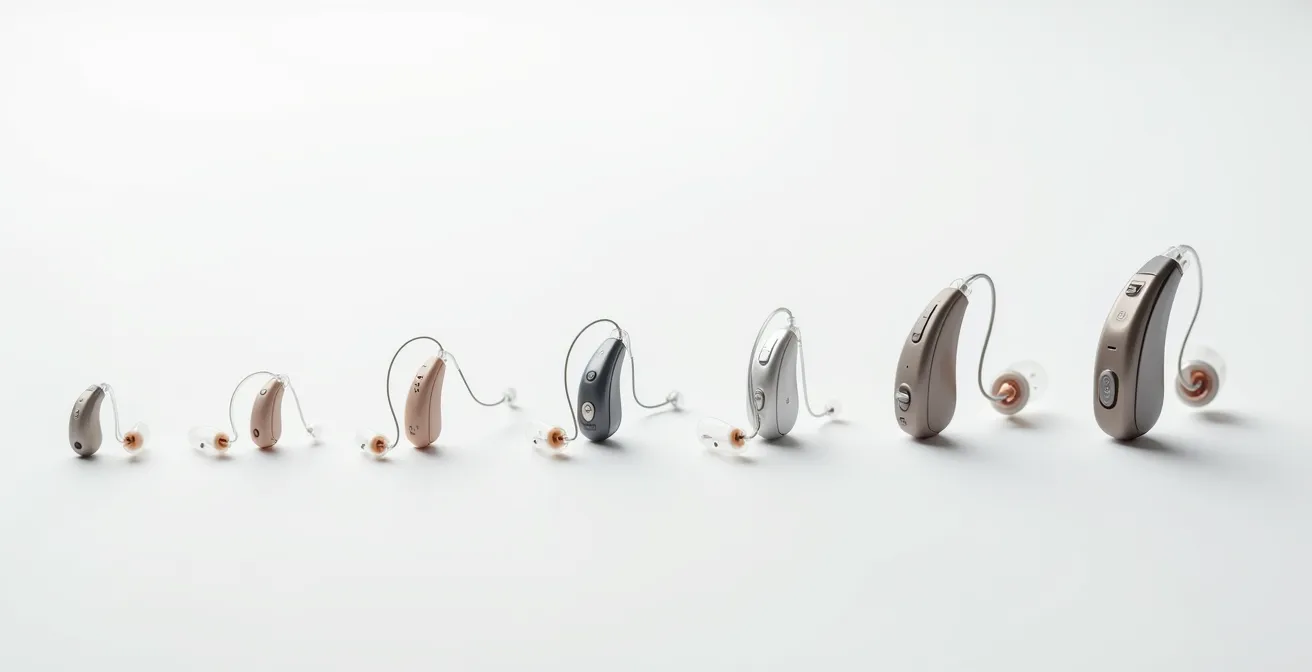
As technology evolves rapidly, a device that was top-of-the-line three to five years ago is likely surpassed by newer models with superior sound processing, Bluetooth connectivity, and rechargeability. By timing your replacement to the insurance cycle, you ensure two things: you capture the full financial contribution you are entitled to, and you continuously upgrade to the best available technology your plan will support. This transforms your insurance benefit from a simple replacement policy into a structured technology upgrade plan.
OTC Hearing Aids vs. Prescription Devices: Are You Missing Crucial Tuning?
The introduction of Over-the-Counter (OTC) hearing aids appears to be a clear win for consumers, offering a lower entry price point. However, a purely financial analysis must look beyond the sticker price and evaluate the Effective Cost per Use Hour. When this metric is applied, the “cheaper” OTC option can paradoxically become the more expensive one due to one critical missing component: professional tuning and follow-up care.
Prescription hearing aids come with a bundled price that includes the expertise of an audiologist—initial fitting, real-ear measurement, and, most importantly, several follow-up sessions for fine-tuning. This process is crucial for acclimatizing the brain to a new world of sound. OTC devices place this entire burden on the user, who lacks the tools and expertise to properly adjust the device for their specific hearing loss profile. This often leads to frustration and device abandonment.
The table below presents a stark cost-benefit analysis. While the initial cost of OTC is lower, the drastically lower usage rate means the cost per hour of actual benefit received can be surprisingly high. The high usage rate of prescription devices, driven by professional support ensuring comfort and effectiveness, leads to a much better return on investment over the device’s lifetime. Furthermore, with a reported 97% of 2025 Medicare Advantage plans offering some form of dental, vision, and hearing benefits, the accessibility of prescription devices is greater than ever, making the financial case for professional fitting even stronger.
| Feature | OTC Hearing Aids | Prescription Devices |
|---|---|---|
| Average Cost | $200-$1,000 | $1,000-$6,000 per pair |
| Professional Tuning | No | Yes (3-5 sessions included) |
| Speech in Noise Performance | Limited | Advanced with Real Ear Measurement |
| Typical Usage Rate | 20% of time | 90% of time |
| Effective Cost per Use Hour | $3,000 | $3,333 |
28-Day Tray vs. Bulk Loading Dispensers: Which Suits Frequent Travelers?
While not directly an insurance benefit, the choice of medication dispenser for a frequent traveler is a critical economic decision rooted in risk management. The potential cost of losing or damaging a week’s worth of medication is an inconvenience; the cost of losing an entire 60- or 90-day supply can be a financial and medical crisis, especially when abroad. Therefore, the analysis must weigh the convenience of bulk-loading against the security of partitioned supplies.
The bulk-loading dispenser offers flexibility, providing a buffer of weeks or months. This is convenient for home use but creates a single point of failure during travel. A lost bag, a security confiscation, or damage from humidity can wipe out the entire supply. The 28-day tray system, while more rigid, inherently mitigates this risk. A traveler can pack one or two trays, leaving the rest of their supply safely at home. The loss is contained and far more manageable.
The decision-making process for a traveler should be guided by a clear risk/reward analysis, as outlined in the comparative table below. The primary factors for a traveler—TSA ease, risk of total loss, and protection from environmental factors—all lean in favor of the partitioned tray system. The “flexibility” of the bulk loader becomes a liability outside the controlled environment of one’s home.
| Factor | 28-Day Tray | Bulk Loading Dispenser |
|---|---|---|
| TSA Security | Easy, discreet | May require explanation |
| Loss Risk | Low (1 week supply) | High (entire supply) |
| Flexibility | Rigid schedule | 60-90 day buffer |
| Humidity Protection | None | Sealed compartments |
| Pre-loading Option | Self only | Pharmacist/caregiver possible |
Key Takeaways
- The most financially sound decision is often not the cheapest upfront, but the one with the best “Annualized Cost of Quality.”
- Proactively manage benefit cycles and waiting periods to minimize “dead money” premiums and maximize returns on your insurance investment.
- The value of professional service (audiologist tuning, medical necessity letters) is a quantifiable economic benefit that can prevent costly failures and claim rejections.
Digital Hearing Aids: Why Do 40% of Seniors Buy Them but Never Wear Them?
The statistic that 40% of seniors who purchase hearing aids end up not wearing them is a catastrophic financial failure. It represents billions in wasted healthcare spending and, for the individual, a multi-thousand-dollar investment that yields zero return. The primary culprit is not device failure, but a process failure known as the “Acclimatization Failure Phenomenon.” This is the single most important, and most overlooked, economic factor in the hearing aid market.
When a person with hearing loss is fitted with aids, their brain is suddenly inundated with sounds it has learned to ignore over years—the hum of a refrigerator, the rustle of clothing, the sound of their own footsteps. This can be overwhelming and unpleasant. The brain requires weeks, sometimes months, of gradual exposure and fine-tuning to re-learn how to process this new auditory input. Success is almost entirely dependent on this acclimatization process.
The Acclimatization Failure Phenomenon
Research from 2024-2025 shows that the brain requires a significant period to re-learn how to process sounds after years of hearing loss. Most new users expect immediate, perfect hearing but instead get overwhelmed by background noises. The key to success is a series of 3-5 follow-up tuning appointments with an audiologist, which are typically included in the bundled price of prescription devices. However, these crucial appointments are often unused, with patients feeling they are “bothering” the audiologist. This failure in the follow-up process, not a failure of the device itself, is the primary driver behind the 40% abandonment rate.
This phenomenon provides the ultimate economic argument for prescription devices over OTC options. The bundled price of a prescription device is not just for the hardware; it is an insurance policy against acclimatization failure. Those 3-5 included appointments are the most valuable part of the purchase, ensuring the user navigates the difficult initial period and ultimately achieves a high usage rate, thus realizing the full value of their investment. The 40% who fail to do so end up with the most expensive paperweight they’ve ever bought.
The logical next step is to move from analysis to action. Applying this economic framework to your specific plan choices is the only way to ensure your premiums are an investment in your health, not just a recurring expense.