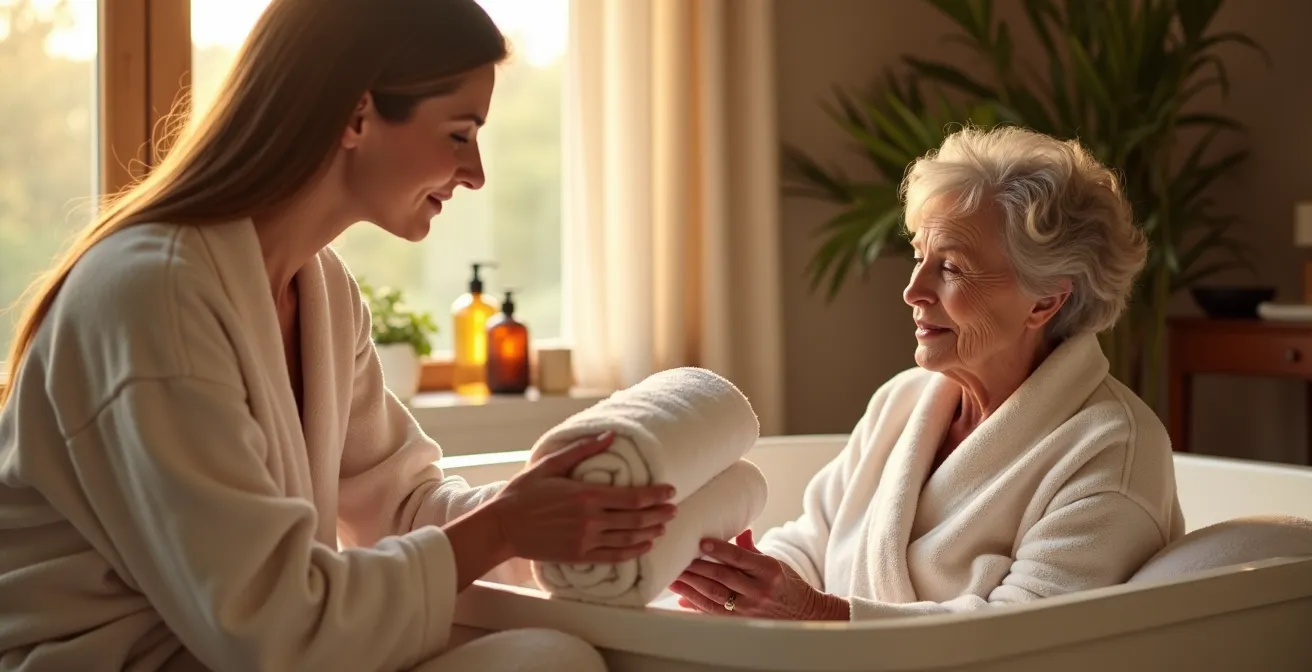
Confronting a parent’s refusal to bathe isn’t about winning an argument over hygiene; it’s about restoring their lost sense of dignity.
- Shifting the conversation from personal failings to objective science (like skin pH) removes shame and builds trust.
- Transforming the bathroom into a “therapeutic spa” and the routine into a planned, comfortable experience gives back control.
Recommendation: Stop persuading and start re-engineering the environment and interaction to be a source of comfort, safety, and autonomy.
Watching a parent struggle with personal hygiene is a deeply painful experience for any adult child. The conversation is fraught with tension, and their refusal to accept help can feel like stubbornness or a rejection of care. It’s natural to want to explain the health risks, to plead, or to insist. But this approach often backfires, deepening the very shame that causes the resistance. The core of the issue is rarely about hygiene; it’s a profound crisis of dignity, a silent protest against the loss of independence and the vulnerability of an aging body.
The standard advice—to be patient, to set a routine—is well-meaning but incomplete. It fails to address the psychological root of the problem. This guide offers a different path. Instead of focusing on persuasion, we will explore a strategy of “dignity engineering.” It’s a sensitive, psychological approach that reframes assisted bathing not as a task to be completed, but as a therapeutic experience designed to restore a sense of control, comfort, and self-respect. We’ll show you how to depersonalize the conversation, transform the environment, and meticulously plan the process to honor your parent’s autonomy.
This article will guide you through this compassionate framework. We will begin by shifting the focus to objective science, then explore how to create a calming, spa-like atmosphere. We’ll delve into specific techniques for different needs, including dementia care, and finally, look at how permanent home modifications can become silent partners in upholding your parent’s dignity for the long term.
Table of Contents: A Dignity-First Approach to Assisted Personal Care
- Why Senior Skin Needs Different pH Products Than Adult Skin?
- How to Create a ‘Spa-Like’ Bathing Routine to Reduce Resistance?
- Sponge Bath vs. Shower Chair: Which Is Less Stressful for Dementia Patients?
- The Water Temperature Mistake That Can Scald Thin Senior Skin
- When to Schedule Grooming to Align with Pain Medication Effectiveness?
- Why a Linear Drain Is Superior for Large Format Tiles in Showers?
- Why Vertical Bars Help Entry While Horizontal Bars Aid Balance?
- Converting a Tub to a Curbless Shower: How to Waterproof the Subfloor Correctly?
Why Senior Skin Needs Different pH Products Than Adult Skin?
The most effective way to begin a difficult conversation is to remove the personal element. Instead of saying, “You need help staying clean,” you can reframe it as, “I’ve been researching the best way to care for mature skin, and it’s fascinating.” This shifts the focus from a perceived personal failing to objective, expert knowledge. Senior skin undergoes significant changes; it becomes thinner, produces less oil, and its protective barrier, known as the acid mantle, is more fragile. This mantle has a naturally acidic pH (around 5.5), which is crucial for fighting off bacteria and retaining moisture.
Many standard soaps are alkaline, which can strip this protective layer, leading to dryness, irritation, and increased vulnerability to infection. Introducing pH-balanced products isn’t about criticizing their current habits; it’s about providing a scientifically superior solution for their comfort. By presenting it as a professional, dermatologist-recommended upgrade, you position yourself as a caring advocate, not a critic. This approach respects their intelligence and transforms the conversation into a collaborative effort to improve their physical well-being. It is the first and most crucial step in building a foundation of trust.
You can even share the specific pH numbers of the products you’ve chosen, making it an educational and empowering moment. Frame the change around preventing future discomfort, such as itching or rashes, which are common complaints. This proactive, science-based approach is a form of psychological draping, protecting your parent’s ego while introducing a necessary change.
How to Create a ‘Spa-Like’ Bathing Routine to Reduce Resistance?
Once you’ve opened the door with a less personal conversation about products, the next step is to transform the process itself. For someone feeling vulnerable, the clinical, task-oriented nature of assisted bathing can heighten anxiety. The goal is to shift the experience from a functional necessity to a therapeutic ritual. Creating a “spa-like” environment is a powerful tool for reducing resistance and restoring a sense of being pampered rather than managed. This starts before the water is even turned on. Ensure the bathroom is warm and the lighting is soft and inviting, not harsh and clinical.
This is where the “Menu of Control” approach, a concept highlighted by senior care experts, becomes invaluable. As A Place for Mom suggests, maintaining a consistent schedule and using their favorite items—specific towels, soaps, or shampoos—can provide a powerful sense of normalcy and control. You are not dictating the process; you are facilitating their preferences. Offering choices, even small ones, is key: “Would you like a cup of tea afterward?” or “Which towel feels softest today?”
During the bath or shower, use bath blankets or large, warm towels to cover areas of the body not being actively washed. This simple act of “strategic draping” provides immense psychological comfort and protects their modesty. Communicate openly about every step and allow them to wash whatever parts of their body they can manage safely. This empowers them and reinforces that this is a partnership. The goal is to make the routine so comfortable and respectful that it becomes something to look forward to, a moment of warmth and care in their day.
Sponge Bath vs. Shower Chair: Which Is Less Stressful for Dementia Patients?
For a parent living with dementia, the sensory experience of a shower can be overwhelming. The noise, the feeling of water spraying from above, and the multiple steps involved can trigger fear and anxiety, sometimes being perceived as an attack. In this context, choosing the right bathing method is a critical act of sensory compassion. The goal is to minimize stress and confusion, and often, a sponge bath offers a gentler, more controlled alternative.
As the Alzheimer’s Association wisely advises, rushing someone with dementia can cause significant distress. This is a core principle to remember when planning any personal care.
Plan plenty of time when dressing or grooming someone with Alzheimer’s. Rushing the person can cause anxiety and frustration.
– Alzheimer’s Association, Alzheimer’s Association Caregiving Guidelines
The choice between a sponge bath and a shower chair involves a trade-off between sensory load and physical stability. A sponge bath has a much lower sensory footprint; it’s quiet, localized, and can be broken down into tiny, manageable steps. Crucially, it allows for superior privacy protection through strategic draping, as only one small area of the body is exposed at a time. This predictability and control can dramatically reduce anxiety, as this comparative guide for dementia care illustrates.
| Aspect | Sponge Bath | Shower Chair |
|---|---|---|
| Sensory Load | Quiet, localized, predictable – reduces overload | Shower spray can be perceived as attack |
| Task Complexity | Can be broken into tiny steps (‘wash hands now’) | Multiple sequential actions required |
| Privacy Protection | Strategic draping – only one area exposed at a time | More body exposure typically required |
| Anxiety Level | Deep bath water may cause less anxiety | Overhead showers can cause fear and anxiety |
| Control Options | Handheld shower as alternative provides more control | Shower chairs provide stability and safety |
While a shower chair provides excellent stability, the experience can be more demanding. However, a handheld showerhead can return a degree of control to the person, mitigating some of the fear associated with overhead spray. The best choice depends entirely on the individual’s specific anxieties and cognitive state.
The Water Temperature Mistake That Can Scald Thin Senior Skin
An older adult’s skin is not only thinner but also has a reduced ability to sense temperature accurately, coupled with slower reaction times. This creates a dangerous combination where water that feels pleasantly warm to a caregiver can be hot enough to cause a serious scald. Ensuring the water temperature is safe is a non-negotiable foundation of trust. A single painful experience can undo months of progress in building a comfortable routine and reinforce a parent’s fear of bathing. The risk is not just about comfort; it’s about health, as research shows skin infections are one of the most common infections in the elderly, and broken skin from a burn provides an entry point.
Therefore, a strict safety protocol is not optional. Always test the water temperature on a sensitive part of your own skin, like your wrist, before your parent has any contact with it. A verbal confirmation technique builds trust: as you test it, say “This feels nice and warm, not too hot.” Then, allow them to test it with their own finger or hand. This small step gives them agency and reassurance.

For a permanent solution, consider installing anti-scald devices on faucets and showerheads. These devices automatically mix hot and cold water to a pre-set safe maximum temperature, providing an invaluable layer of protection. Throughout the bathing process, remain vigilant for any non-verbal signs of discomfort, such as wincing or pulling away. Protecting your parent from physical pain is one of the most powerful ways to show you are a trustworthy and compassionate partner in their care, reinforcing the safety of the therapeutic environment you are building.
When to Schedule Grooming to Align with Pain Medication Effectiveness?
Resistance to bathing is often misinterpreted as emotional stubbornness when it is, in fact, a rational response to physical pain. Arthritis, chronic back pain, or post-surgical soreness can make the movements required for bathing—bending, lifting limbs, and standing—an excruciating ordeal. A key component of “dignity engineering” is to look beyond the observable behavior and plan around the person’s invisible reality. This is the essence of pain-informed care.
Rather than forcing a bathing schedule that fits your day, work to create one that fits their body’s needs. This requires careful observation and communication. Start by mapping their day: document when their pain seems to be at its peak and, crucially, when their pain medication provides the most relief. This window of optimal comfort is the ideal time to schedule bathing. Introducing personal care during a period of peak pain is setting everyone up for failure and will only cement the association of bathing with suffering.
This “comfort timeline” should also consider cognitive patterns. For someone with memory issues, there may be certain times of day when they are more lucid and cooperative. Building a routine within these optimal windows of both physical and cognitive comfort dramatically increases the chances of success. It’s also vital to build in flexibility. On “bad days,” when pain is unmanageable, it is better to skip a full bath and opt for a minimal cleanup than to force a traumatic experience. This demonstrates that you are responsive to their needs and that their comfort is the highest priority, further strengthening the bond of trust.
Why a Linear Drain Is Superior for Large Format Tiles in Showers?
As we shift from process to the physical environment, it’s clear that home modifications can be powerful, silent partners in preserving dignity. The design of a bathroom can either scream “disability” or whisper “spa.” For an older adult ashamed of their changing body and abilities, avoiding a clinical, institutional aesthetic is paramount. A curbless, zero-barrier shower entry is one of the most significant changes you can make. It eliminates a major trip hazard and allows easy access for walkers or shower chairs. However, the choice of drain is what elevates this functional feature into a sophisticated design statement.
A traditional center drain requires the shower floor to be sloped from all four directions, which complicates tiling and often necessitates small, mosaic-style tiles that can look dated or busy. A linear drain, by contrast, allows the entire floor to be pitched in a single, gentle plane. This simple change has a profound aesthetic impact: it enables the use of beautiful, large-format tiles that create a seamless, modern, and spa-like appearance. The drain itself can be subtly integrated along a wall or even made nearly invisible with a tile-in grate.
This isn’t just about looks; it’s about psychology. A bathroom with a linear drain and large tiles doesn’t look “adapted for an old person.” It looks like a high-end, modern bathroom. This helps normalize the need for assistance and preserves the feeling of being in a home, not a facility. Given that bathing assistance ranks among the top three most difficult daily activities caregivers help with, designing a space that is both beautiful and highly functional is a worthy goal. It’s a prime example of how thoughtful design can serve dignity.
Why Vertical Bars Help Entry While Horizontal Bars Aid Balance?
Grab bars are the most common bathroom safety feature, but their placement is often an afterthought. To truly empower your parent and enhance their safety, grab bars should be installed not just as a precaution, but as a strategic tool that works with the body’s natural mechanics. The orientation of the bar—vertical vs. horizontal—serves two very different biomechanical purposes, and understanding this difference is key to creating a truly supportive environment.
A vertical bar installed at the shower entrance is ideal for assisting with entry and exit. When a person steps over a small threshold or into the shower, their natural motion is to pull themselves up and forward. A vertical bar allows them to maintain a “hand-over-hand” motion, similar to climbing a ladder, which utilizes arm strength (biceps and back muscles) effectively and keeps the wrist in a stronger, more neutral position. It provides a secure anchor point for the pulling motion needed to initiate movement.
Once inside the shower, horizontal bars along the side and back walls become crucial. Their role is to provide lateral stability. As a person stands, shifts their weight, or reaches for a shampoo bottle, a horizontal bar offers a long, stable surface to hold onto or lean against. This helps maintain balance and prevents side-to-side swaying, which is a common cause of falls. As organizations like Social Services often provide home adaptations to assist with making toileting easier, such as handrails and raised toilets, it is wise to consult with an occupational therapist. They can recommend precise placement based on your parent’s height, reach, and specific mobility challenges, ensuring these aids offer maximum empowerment.
Key Takeaways
- Reframing bathing from a hygiene task to a therapeutic ritual of dignity is the most effective way to reduce resistance.
- Depersonalize difficult conversations by focusing on objective science, such as the unique pH needs of senior skin.
- Engineer the environment for comfort and autonomy by creating a spa-like atmosphere, offering choices, and making smart design decisions like linear drains and strategic grab bars.
Converting a Tub to a Curbless Shower: How to Waterproof the Subfloor Correctly?
The conversion of a traditional bathtub into a curbless, walk-in shower is arguably the single most impactful home modification for senior safety and independence. It eliminates the high-risk action of stepping over a tub wall. However, the long-term success and safety of this project depend entirely on something you will never see: the waterproofing of the subfloor. Improper waterproofing can lead to slow leaks, mold growth, and catastrophic structural damage, turning a safety feature into a hidden hazard.
Ensuring the job is done right is the ultimate expression of care, creating a foundation of safety upon which trust can be built. Research consistently shows that small home modifications help ensure safer bathing practices, and this is the most critical of all. The process must begin with creating a proper slope in the subfloor—a minimum of 1/4 inch per foot—that directs all water toward the drain. This is not negotiable. Next, a waterproof membrane, either a physical pan liner or a liquid-applied system, must cover the entire shower floor and extend at least six inches up the walls to create a sealed “pan.”
Before any tile is laid, a 24-hour water test is essential. The drain is plugged, and the pan is filled with water to check for any leaks. Only after it passes this test should the final, non-slip tile surface be installed. Entrusting this job to a qualified professional who understands these critical steps ensures the shower will remain a safe, reliable, and dignifying space for years to come. It is the invisible bedrock of a truly therapeutic environment.
Action Plan: Ensuring a Safe Curbless Shower Conversion
- Verify the Slope: Confirm with the contractor that a minimum slope of 1/4 inch per foot towards the drain is engineered into the shower pan.
- Inspect the Membrane: Ensure a continuous waterproof membrane is applied to the entire floor and extends at least 6 inches up the walls without any punctures.
- Mandate a Leak Test: Insist on a documented 24-hour flood test before any tile is installed to guarantee the integrity of the waterproof pan.
- Choose Non-Slip Surfaces: Select tiles with a high coefficient of friction (COF) rating specifically designed for wet areas to reduce fall risk.
- Review Sealing and Grout: Check that all corners, seams, and plumbing fixtures are meticulously sealed with high-quality, mold-resistant silicone caulk after tiling.
By shifting your focus from the task of bathing to the mission of restoring dignity, you transform a moment of potential conflict into an opportunity for profound connection and care. Start today by implementing one small change to engineer a more compassionate and empowering experience for the person you love.