
Effective senior healthcare isn’t about choosing between conventional and holistic—it’s about creating a single, coordinated system where they work together.
- True integration uses data-driven strategies to reduce medication risks like polypharmacy.
- The key is a designated “Care Quarterback” who manages a unified health plan for all providers.
Recommendation: Start by creating a master medication list and a central “Health Dashboard” to track vitals and lifestyle metrics, then share it with your entire care team.
For many seniors, managing health feels like a full-time job. It often involves juggling appointments with multiple specialists, trying to decipher conflicting advice, and navigating a growing collection of pill bottles. The result is fragmented care, where the cardiologist rarely speaks to the rheumatologist, and neither has a complete picture of the patient’s lifestyle or overall well-being. In an effort to regain control, many turn to “holistic” approaches, adding supplements, yoga, or dietary changes to their regimen.
However, treating holistic care as a separate, optional add-on often misses the point and can even introduce new risks. The common advice to “eat better” or “reduce stress” is too vague to be effective. But what if the real solution isn’t about simply *adding* more things to your to-do list, but about fundamentally *integrating* them? What if you could build a unified, data-driven system where your doctor, physical therapist, and nutritionist all work from the same playbook, with lifestyle interventions and medical treatments acting in synergy?
This is the core of a truly integrated health strategy. It’s about moving from a chaotic collection of treatments to a coordinated plan designed to improve long-term functional outcomes. This guide provides a practical framework for building that system. We will explore how to make telehealth a strategic tool, create a personal health dashboard, make informed decisions about pain management, and, most importantly, orchestrate your care team to prevent dangerous medication errors and unlock a higher quality of life.
This article provides a structured path to building a truly integrated health plan. The following sections break down the key components, from leveraging technology to coordinating your care team, ensuring every piece of your health puzzle fits together seamlessly.
Summary: Integrated Health Solutions: How to Combine Conventional and Holistic Care for Seniors?
- Why Telehealth Consultations Reduce Infection Risks for Immuno-Compromised Seniors?
- How to Create a ‘Health Dashboard’ to Track Vitals at Home?
- Physical Therapy vs. Pain Management Injections: Which Yields Long-Term Results?
- The Polypharmacy Risk That Occurs When Specialists Don’t Communicate
- When to Adjust Vitamin D Intake to Counteract Winter Deficiency?
- Why Mixing Up Morning and Evening Meds Leads to 30% of ER Visits?
- Diet Changes vs. Mobility Work: What Yields Faster Energy Gains?
- How to Maintain Functional Mobility After 70 with Low-Impact Home Exercises?
Why Telehealth Consultations Reduce Infection Risks for Immuno-Compromised Seniors?
For seniors, especially those with compromised immune systems, a trip to a clinic or hospital waiting room is more than an inconvenience—it’s a significant health risk. These environments are breeding grounds for opportunistic infections. Telehealth transforms this dynamic by shifting routine consultations from a high-risk setting to the safety of one’s own home. This isn’t merely about convenience; it’s a strategic pillar of an integrated care plan focused on proactive risk mitigation.
By eliminating unnecessary travel and exposure, telehealth directly supports the primary goal of maintaining health and avoiding complications. This approach has seen a massive uptake, with recent research showing that 82% of seniors aged 65-69 now use the internet for telehealth, effectively bypassing the risk of hospital-acquired infections for follow-ups, medication reviews, and monitoring chronic conditions. This allows in-person visits to be reserved for when they are absolutely necessary, such as for physical examinations or procedures.
Integrating telehealth allows for more frequent, low-stakes check-ins. A quick video call to discuss a new symptom or review blood pressure readings is far more accessible than a full-day excursion to a doctor’s office. This increased frequency enhances the partnership between patient and provider, ensuring that the care plan remains dynamic and responsive to the patient’s evolving needs without introducing the avoidable threat of infection.
How to Create a ‘Health Dashboard’ to Track Vitals at Home?
An integrated health plan runs on data, but that data is often scattered across different devices, apps, and doctors’ notes. A “Health Dashboard” solves this by creating a single, centralized hub for all your health information. This dashboard combines conventional medical data (like blood pressure and blood glucose) with holistic wellness metrics (like sleep quality, mood, and pain levels). It transforms abstract feelings into concrete data points that you and your care team can use to identify trends, measure the effectiveness of interventions, and make more informed decisions.
Creating this dashboard is simpler than it sounds. The first step is to choose a central platform like Apple Health or Google Fit, which can automatically aggregate data from various sources. Then, you connect your smart devices: a Bluetooth blood pressure monitor, a glucose meter, a fitness tracker for activity and sleep, and a smart scale. The key is to augment this automated data with manual entries for metrics that devices can’t capture, such as a daily mood score (1-10) or minutes spent meditating. This combination provides a 360-degree view of your health.
This visual tool is fundamental for bridging the communication gap between different providers and putting you in control of your health narrative. The image below illustrates how various monitoring tools can feed into a unified digital interface, creating a clear and comprehensive overview.
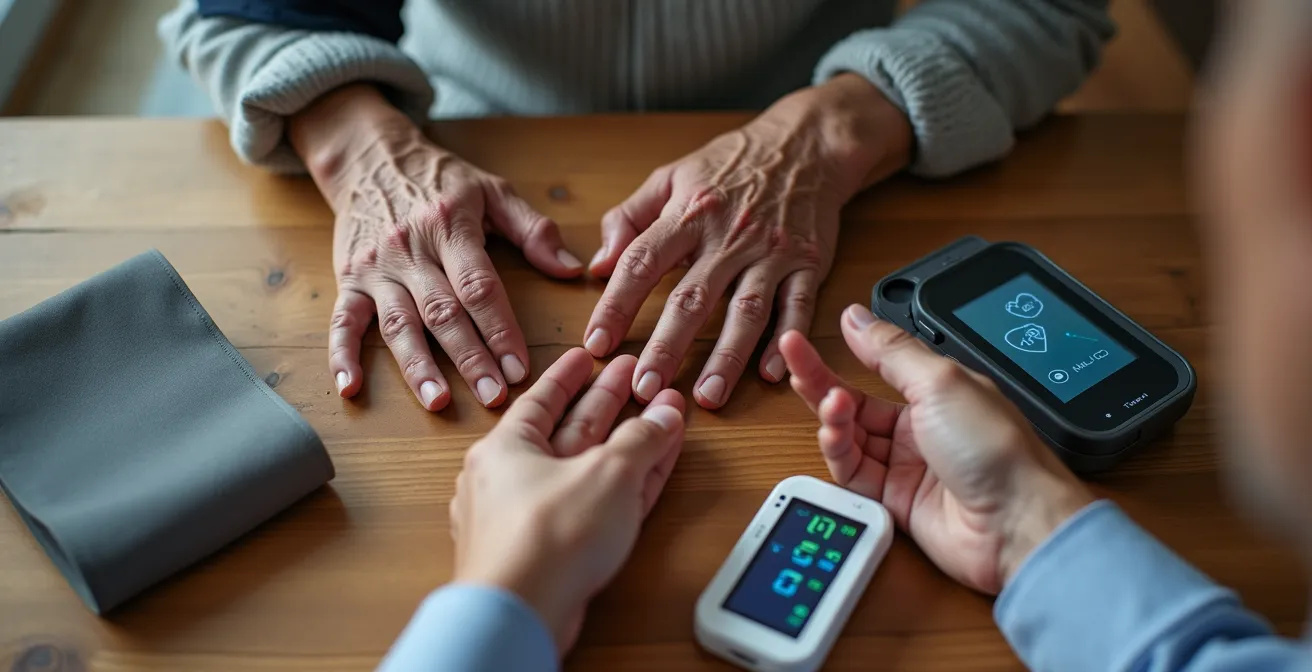
With this dashboard, you no longer walk into an appointment with vague statements like “I’ve been feeling tired.” Instead, you can show your doctor, “As you can see, my sleep quality has dropped by 20% since starting this new medication, and my morning energy levels have followed the same pattern.” This level of specific, tracked information empowers evidence-based conversations and collaborative adjustments to your care plan.
Physical Therapy vs. Pain Management Injections: Which Yields Long-Term Results?
When dealing with chronic pain, seniors are often presented with a choice between immediate relief and a long-term solution. Pain management injections, like corticosteroids, can offer rapid, powerful relief, but their effects are often temporary. Physical therapy (PT), on the other hand, builds foundational strength and mobility for lasting results, but the process is gradual. A truly integrated approach doesn’t see these as an “either/or” choice but asks: how can we use them together?
The most effective strategy is to use injections to create a “therapeutic window.” An injection can reduce pain and inflammation enough to make meaningful physical therapy possible. Without the severe pain, a patient can engage more fully in exercises, leading to greater functional gains. This synergistic approach leverages the short-term benefit of conventional medicine to unlock the long-term benefit of a holistic therapy. It transforms the injection from a temporary patch into a strategic enabler.
The following table, based on an analysis of chronic condition management, illustrates the distinct advantages of each approach and the superior outcomes of combining them.
| Aspect | Physical Therapy | Pain Injections | Combined Approach |
|---|---|---|---|
| Initial Relief Speed | 4-6 weeks | 1-3 days | 1-3 days |
| Duration of Benefits | Long-term (months to years) | 3-6 months | Long-term enhanced |
| Cost Over 5 Years | $3,000-5,000 total | $10,000-20,000 | $8,000-12,000 |
| Functional Improvement | Progressive, sustained | Limited | Optimal |
| Side Effects Risk | Minimal | Moderate | Reduced with PT focus |
Case Study: Integrated Pain Management at Lake Forest Place
Lake Forest Place implemented a synergistic approach where pain injections were used strategically to create a ‘therapeutic window’ for physical therapy. Residents who received injections followed by intensive PT showed 45% better functional outcomes at 12 months compared to either treatment alone. The program emphasizes matching interventions to specific functional goals—whether gardening for 30 minutes or walking to the mailbox independently, demonstrating the power of a coordinated strategy.
This model reframes the goal from simply “managing pain” to “restoring function.” By using both modalities intelligently, patients can achieve faster relief and more sustainable improvements in their quality of life, ultimately reducing the need for repeated injections and a reliance on pain medication.
The Polypharmacy Risk That Occurs When Specialists Don’t Communicate
Polypharmacy—the simultaneous use of multiple medications—is one of the greatest risks facing seniors today. When a patient sees multiple specialists who don’t communicate, each may prescribe drugs without a full picture of the patient’s regimen. This can lead to dangerous drug interactions and a phenomenon known as a “prescribing cascade,” where a new drug is prescribed to treat the side effects of another medication. The problem is compounded when over-the-counter drugs and herbal supplements are included, as many patients don’t think to mention them. In fact, data reveals that while 12% of seniors use herbal supplements, nearly 50% never discuss these with their doctors.
The solution is to designate a “Care Quarterback.” This person—whether it’s the patient, a family member, or a dedicated geriatric care manager—is responsible for coordinating all medical information. They maintain a master list of every single substance being taken, including prescriptions, vitamins, supplements, and OTC drugs. This master list is brought to every single appointment with every single provider.
The Care Quarterback’s role is to ask critical questions, such as, “How does this new prescription interact with what Mom is already taking?” or “Is this new symptom a side effect of an existing medication rather than a new condition?” By acting as the central hub of information, the quarterback ensures that all providers are working from the same complete and accurate data set, effectively preventing the communication gaps that lead to polypharmacy and prescribing cascades.
Your Action Plan: The Care Quarterback Checklist
- Designate one person as the ‘Care Quarterback’ to coordinate all medical information.
- Create a master medication list including ALL prescriptions, OTC drugs, supplements, and herbs.
- Bring the complete ‘Brown Bag’ of all medications to an annual pharmacy review.
- At every appointment, ask: ‘Is this new medication treating a side effect of another drug?’
- Request medication reconciliation whenever transitioning between care settings (e.g., hospital to home).
This proactive management model shifts the responsibility from a fragmented system to a single, empowered point person, making it the most critical defense against medication-related harm.
When to Adjust Vitamin D Intake to Counteract Winter Deficiency?
Vitamin D is crucial for bone health, immune function, and mood, yet deficiency is common among seniors, especially during the winter months when sun exposure is minimal. The standard advice is often a generic “take a vitamin D supplement.” However, an integrated, evidence-based approach requires a more personalized and proactive strategy. It’s not just about *whether* to supplement, but *when*, *how much*, and in concert with what other factors.
The process should be a data-driven cycle, not a one-time guess. It begins with a baseline blood test (25-hydroxy vitamin D) in early autumn, typically September. This test provides a clear picture of your vitamin D status before the dark months set in. Based on these results, you and your doctor can calculate a personalized daily dose designed to maintain optimal levels throughout the winter. This is far more effective than a one-size-fits-all dosage.
A holistic strategy also recognizes that vitamin D doesn’t work in a vacuum. Its effectiveness is enhanced by synergists like magnesium, vitamin K2, and healthy fats. Therefore, a winter wellness plan should include increasing intake of magnesium-rich foods (leafy greens, nuts) and K2 sources (fermented foods, egg yolks). This can be complemented by daily light therapy with a 10,000-lux lamp to help regulate circadian rhythms and mood. The final step is to re-test in January to verify the plan’s effectiveness and make any necessary adjustments.

This proactive, cyclical approach—Test, Supplement, Support, and Re-test—transforms vitamin D supplementation from a passive action into an active, intelligent part of your overall health strategy, ensuring you have the resilience to thrive during winter.
Why Mixing Up Morning and Evening Meds Leads to 30% of ER Visits?
A significant percentage of emergency room visits among seniors are caused by medication errors, and a common culprit is mixing up morning and evening doses. Taking a diuretic at night or a statin in the morning can not only render the medication ineffective but also cause serious adverse effects. The underlying reason for this confusion is often a system that relies solely on memory. A truly integrated approach builds a “system of inevitable success” where the right choice is the easiest choice.
This goes beyond simple pill organizers. It involves understanding chronotherapy—the science of administering medication at the time of day it will be most effective and best tolerated. For example, statins are often best taken at night when the body’s cholesterol production is highest. Explaining this “why” to patients can dramatically improve adherence; studies show 45% better medication adherence when patients understand chronotherapy principles. A visual cue card next to the pillbox stating, “Take at night when your body makes cholesterol,” provides a powerful cognitive link.
The next layer is to create environmental triggers, or “medication anchors.” This means physically linking the medication to an unmissable daily routine. Place morning medications directly next to the coffee maker or breakfast bowl. Position evening medications by the toothbrush or on the bedside table. For an even higher level of safety, smart pill dispensers can be programmed to release specific pills at set times, sending alerts to both the senior and a designated caregiver if a dose is missed. By designing the environment, you remove the burden from memory and make adherence nearly automatic.
Diet Changes vs. Mobility Work: What Yields Faster Energy Gains?
When seniors experience low energy, the debate often centers on whether diet or exercise is the faster fix. Should you focus on adding protein and hydration, or on building endurance through movement? An integrated health perspective reveals this is a false choice. The fastest, most sustainable energy gains come from a synergistic approach that combines both from day one. Diet provides the immediate fuel, while mobility work builds the engine to use that fuel efficiently over the long term.
Immediate dietary changes, like ensuring adequate hydration and including protein at breakfast, can provide a noticeable energy boost within days by stabilizing blood sugar. However, without a corresponding increase in physical activity, these gains can plateau. Conversely, starting mobility work without proper nutritional support can feel exhausting and discouraging.
The magic happens when you pair small dietary tweaks with equally small bursts of movement. For example, on Day 1, you add a glass of water upon waking and perform five seated leg extensions. On Day 2, you add a protein-rich breakfast and do five wall push-ups. This combined approach creates a positive feedback loop: better nutrition fuels more movement, and more movement improves metabolic efficiency and the body’s ability to generate energy. The following table highlights how this synergy builds over time, as detailed in an analysis of wellness activities.
| Timeframe | Diet Changes | Mobility Work | Combined Approach |
|---|---|---|---|
| Day 1-3 | Quick energy from hydration, protein | Minimal change | Immediate boost from diet |
| Week 1 | Blood sugar stabilization | Improved circulation | Synergistic energy increase |
| Week 2-4 | Plateau without exercise | Building endurance | Accelerated improvements |
| Month 2-3 | Weight changes visible | Mitochondrial adaptation | Sustained high energy |
| Long-term (6+ months) | Dependent on adherence | Permanent metabolic gains | Optimal energy production |
This strategy of “stacking” small, manageable habits from both domains is far more effective than attempting a major overhaul of either one alone. It builds momentum and delivers both immediate and lasting improvements in vitality.
Key Takeaways
- Designate a “Care Quarterback” to manage all health information and prevent dangerous medication interactions.
- Use conventional treatments like pain injections strategically to create a “therapeutic window” for long-term holistic therapies like physical therapy.
- Combine dietary improvements with “movement snacking” for synergistic energy gains, rather than treating them as separate interventions.
How to Maintain Functional Mobility After 70 with Low-Impact Home Exercises?
For seniors, the goal of exercise is not abstract fitness; it’s functional mobility. It’s the ability to perform daily tasks safely and independently: getting out of a deep chair, carrying groceries, reaching for an item on a high shelf, and walking without fear of falling. Generic exercises often fail because they don’t directly translate to these real-world movements. An integrated approach focuses on “life-specific” exercises that mimic the exact motions needed for daily independence.
Instead of doing isolated bicep curls, you practice “grocery carry” farmer’s walks with light weights. Instead of using a leg press machine, you practice “deep chair escape” squats, strengthening the exact muscles needed to stand up. This method builds not just strength, but also the specific motor patterns required for everyday life. Furthermore, advanced programs incorporate dual-task training, such as walking in a figure-eight pattern while naming fruits. This combines a physical challenge with a cognitive one, which is proven to be highly effective in reducing fall risk because real-life falls often happen when we are distracted.
The most effective way to integrate this is through “movement snacking”—sprinkling short, 1-2 minute bursts of functional exercise throughout the day. This approach is more sustainable than scheduling a full workout and continuously reinforces the strength needed for daily tasks. Examples include doing calf raises while waiting for coffee to brew (strengthening muscles for walking) or practicing standing on one leg while brushing your teeth (improving balance). By linking these mini-workouts to existing routines, they become an effortless and highly effective part of a lifestyle geared toward maintaining independence and vitality.
The journey to integrated health begins with a single, decisive step: taking control of your health information and coordinating your care. Start today by designating your “Care Quarterback” and creating your master medication list and health dashboard. This foundational action will empower you to build a collaborative, effective, and truly holistic plan for a healthier future.