Watching a grieving parent retreat into isolation is heartbreaking, and common advice often fails. The key isn’t to push them into activities, but to build a compassionate “social scaffold” around them. This means understanding their fears, starting with low-pressure passive participation, and gradually reintroducing them to community life at a pace they can handle. This guide offers a strategic, step-by-step approach to help your parent rebuild their confidence and connections.
It’s a scene many adult children know all too well: the deafening quiet in a home that once bustled with life. After the loss of a spouse, a parent’s world shrinks. Well-meaning suggestions to “get out more” or “join a club” often fall on deaf ears, leaving you feeling helpless and your parent feeling misunderstood. The common mistake is to focus on the destination—a busy social life—without building a safe bridge to get there. The truth is, reintegration after profound loss is not a single leap but a series of small, supported steps.
This isn’t about simply filling their calendar. It’s about understanding the deep-seated fears and physiological changes that accompany long-term solitude. Forcing a grieving person into a loud, crowded room can be as counterproductive as doing nothing at all. The real solution lies in a more strategic and empathetic approach: methodically rebuilding their “social scaffolding.” This framework provides temporary support, allowing them to reconnect with the world at their own pace, with their dignity and comfort as the highest priority.
This article will guide you through that process. We will explore the science behind why isolation is so physically damaging, how to find genuinely engaging activities, and the crucial difference between passive presence and active participation. We’ll also address the very real fear of social overwhelm and provide a roadmap for helping your parent not just exist in the world again, but truly live in it.
In this guide, we will break down the essential components of helping your parent reconnect with their community, moving from understanding the problem to implementing practical, compassionate solutions.
Summary: A Guide to Reintegrating a Widowed Senior
- Why Perceived Isolation Affects Immunity?
- How to Find Local Senior Groups That Aren’t Just ‘Bingo and Bridge’?
- Active Participation vs. Passive Presence: Which is a Better First Step?
- The ‘Crowd Panic’ Risk After Long Periods of Solitude
- When to Encourage Socializing After a Spouse’s Death?
- Phone Befriending vs. Letter Writing: Which Volunteer Role Suits Introverts?
- Why Losing Transport Leads to a 30% Drop in Social Contacts?
- How to Remain Socially Active When Mobility Issues Limit Travel to Community Centers?
Why Perceived Isolation Affects Immunity?
The feeling of loneliness isn’t just an emotional state; it’s a physiological stressor that directly impacts physical health. When a senior feels disconnected, their body can enter a state of chronic alert, which has profound consequences for their immune system. This isn’t just a vague notion; scientific research shows a tangible link between social isolation and markers of inflammation in the body. It’s a crucial reason why addressing isolation is a matter of health, not just happiness.
Specifically, social isolation is associated with increased C-reactive protein and fibrinogen levels, which are key indicators of inflammation. This low-grade, chronic inflammation can weaken the body’s ability to fight off infections and can exacerbate existing health conditions like heart disease or arthritis. In essence, the body interprets prolonged loneliness as a threat, keeping its defense systems on a high-alert status that eventually wears them down. This makes your parent more vulnerable to illness and can slow their recovery time.
Understanding this biological impact is vital. It reframes the issue from “Mom is sad” to “Mom’s health is at risk.” The feeling of being isolated triggers a primal stress response, a remnant of our evolutionary past when being separated from the tribe was a literal life-or-death situation. The body doesn’t differentiate between being hunted by a predator and the profound loneliness of a quiet house; the stress response can be alarmingly similar.

The delicate, almost paper-thin quality of aging skin, as seen in the intricate details of an older person’s hands, serves as a poignant visual metaphor for this vulnerability. It reminds us that the fight against isolation is also a fight for physical resilience and well-being. Helping your parent reconnect is a powerful form of preventative healthcare, strengthening their body by nurturing their spirit.
Therefore, every small step taken to reduce their sense of isolation is a direct investment in their long-term health, bolstering their immune defenses in a way no medicine alone can.
How to Find Local Senior Groups That Aren’t Just ‘Bingo and Bridge’?
One of the biggest hurdles in helping a parent socialize is the stereotype of “senior activities.” The image of bingo halls or card games can be deeply unappealing to someone who has never identified with those pastimes. The key is to shift the focus from age-based activities to interest-based communities. Your parent is the same person they were before their loss, with the same passions and curiosities. The goal is to reconnect them with those interests in a new social context.
Start by brainstorming what your parent genuinely loves, or even what they used to love. Did they enjoy gardening? Was there a passion for history, art, or classic films? Today, community offerings are far more diverse than ever before. Look for:
- University or College Extension Courses: Many offer auditing options for seniors on subjects from astronomy to literature, attracting a multigenerational group of learners.
- Specialized Clubs: Think walking or hiking groups, book clubs hosted at local libraries, or even repair cafes where people with practical skills can gather.
- Volunteer Opportunities: Animal shelters, local museums, and historical societies are often in need of volunteers, providing a sense of purpose and structured interaction.
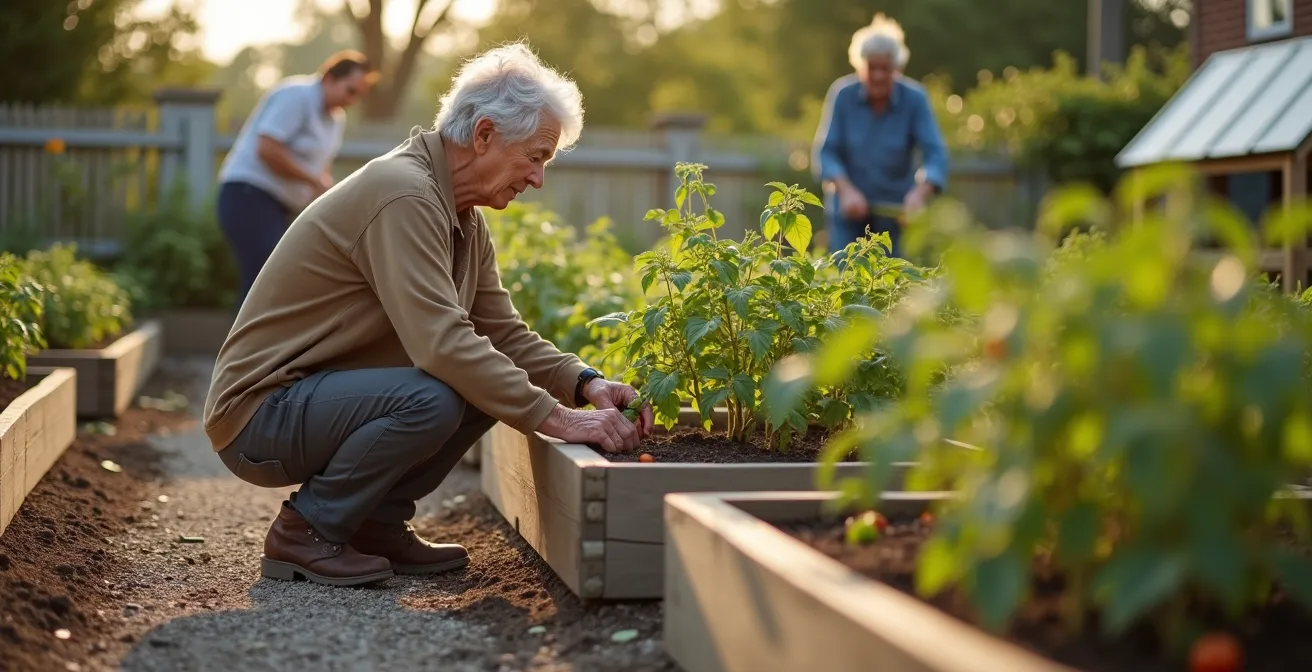
The goal is to find an environment where the activity is the focus, and the social interaction is a natural byproduct. This lowers the pressure to “make friends” and instead allows connections to form organically around a shared passion. As one community program found, simple activities can be incredibly effective. For example, community gardens and nature walks offer a perfect blend of gentle physical activity and casual social engagement, allowing participants to interact as much or as little as they feel comfortable.
Don’t just search online for “senior groups.” Instead, search for “community gardening club,” “local history lecture series,” or “amateur bird-watching group.” This reframing can uncover a world of possibilities that align with your parent’s true identity, making the prospect of “getting out there” feel less like a chore and more like an authentic extension of who they are.
By focusing on passion over age, you provide an opportunity for them not just to pass the time, but to feel like themselves again.
Active Participation vs. Passive Presence: Which is a Better First Step?
When a person has been in isolation, the thought of jumping into a conversation or a group activity can be utterly paralyzing. We often underestimate the energy required to actively engage. For this reason, passive presence is almost always a better first step. It’s a foundational concept in building social scaffolding. The initial goal is not for your parent to become the life of the party, but simply to become comfortable being in a social space again, without any demand to perform.
Passive presence means being part of a group without the pressure of direct, sustained interaction. It allows a person to absorb the ambient social energy and reacclimate to the presence of others on their own terms. Think of it as the shallow end of the pool; it lets them get used to the water before they try to swim. This approach respects their emotional state and gives them a crucial sense of control, which is often lost during bereavement.
What does this look like in practice? It could be attending a free concert in the park, sitting in a coffee shop with a book, or going to a library lecture. In these settings, they are surrounded by people but not obligated to speak to anyone. It validates the idea that it’s okay to be part of a community without being the center of it. This low-stakes exposure helps to gently lower the brain’s hyper-vigilance and rebuilds the confidence needed for the next step: active participation.
Only after they are comfortable with passive presence should you gently encourage small, active roles. This progression from observer to participant is the core of a successful reintegration strategy. The following checklist offers structured, low-interaction roles that can serve as a bridge between simply being there and actively engaging.
Your Action Plan: Finding Low-Pressure Social Roles
- Start as a timekeeper for debate clubs or community meetings, a role with clear duties and minimal spontaneous interaction.
- Volunteer as an usher at a community theater or local concert, where interactions are brief, scripted, and purposeful.
- Attend library programs or author talks, initially as a silent observer with no expectation to ask questions.
- Join a walking group where conversation is optional and can ebb and flow naturally without pressure.
- Participate in structured activities with clear, defined roles and expectations, such as a community choir or a volunteer assembly line for a charity.
This patient, tiered approach honors their journey and dramatically increases the chances of a lasting and positive reintegration into community life.
The ‘Crowd Panic’ Risk After Long Periods of Solitude
For someone who has spent months or years in the quiet solitude of their home, a bustling environment can trigger an intense, visceral reaction that feels like panic. This “crowd panic” isn’t just social awkwardness; it’s a genuine neurological response. After prolonged isolation, the brain’s threat-detection system can become hypersensitive. A crowded room, with its barrage of noise, movement, and social cues, can be overwhelming and perceived as a threat, even when there is no real danger.
In fact, neuroscience research shows that chronic isolation can lead to hyper-sensitization of the amygdala, the part of the brain responsible for processing fear and threats. This means your parent isn’t being “difficult” or “antisocial”; their brain is literally screaming “danger!” in a situation that feels perfectly normal to you. Pushing them into such an environment can reinforce their belief that the outside world is unsafe and stressful, causing them to retreat even further.
The antidote to this is a strategy psychologists call graduated exposure. This involves reintroducing social stimuli in small, manageable doses, allowing the brain to recalibrate its threat response slowly. The goal is to create a series of small social “wins” that build confidence and retrain the amygdala to understand that these situations are safe. This is a critical piece of the social scaffolding you are building.

The process should start in a place of calm solitude within a public space. A quiet corner of a library, a park bench on a weekday morning, or a small, sparsely populated museum are perfect starting points. These environments offer the feeling of being “out” in the world without the sensory overload of a crowd. It’s a peaceful, controlled setting where they can observe the world from a safe distance, allowing their nervous system to adjust.
By respecting this biological reality and using a graduated approach, you can help them navigate their way back to social comfort, one quiet, peaceful step at a time.
When to Encourage Socializing After a Spouse’s Death?
One of the most delicate questions is one of timing. How long should you wait before encouraging a grieving parent to socialize? There is no one-size-fits-all answer, and pushing too soon can feel like you are dismissing the magnitude of their loss. The first and most important rule is to let the initial stages of grief unfold without pressure. Grief is not a problem to be solved; it’s a process to be honored. The initial focus should be on providing support and comfort, not social opportunities.
However, it’s also a misconception that complete solitude is best. In fact, bereavement often naturally triggers a different kind of social connection. Insightful Australian longitudinal research reveals that spousal death is strongly associated with increased loneliness, but it also, paradoxically, increases interactions with close friends and immediate family. This suggests the initial instinct is to circle the wagons and draw comfort from the closest, most trusted relationships. Your role in this early stage is to be a reliable part of that inner circle.
The signal to gently encourage broader socializing often comes from your parent themselves. Look for small cues: Are they starting to express boredom? Are they mentioning a friend they haven’t seen in a while? Are they showing interest in news from the outside world? These are openings. The best approach is not to suggest an activity, but to offer to facilitate one. Instead of saying, “You should call Mary,” try, “I was thinking of Mary the other day. Would you like me to drive you over for a cup of tea next week?” This removes logistical barriers and turns a suggestion into a concrete, supported plan.
For many, a crucial bridge can be a group that understands exactly what they’re going through. As experts Malani and Gerlach from Michigan Medicine note, “Grief-support groups can help you navigate grief while also providing social support during that time.” These groups are not about “moving on” but about sharing the experience of loss with others who truly get it. It’s a form of peer-based social connection that can feel safer and more validating than any other social activity.
Ultimately, your role is to be a patient facilitator, opening doors gently without ever pushing them through.
Phone Befriending vs. Letter Writing: Which Volunteer Role Suits Introverts?
As your parent begins to regain some social footing, they might eventually feel a desire to contribute again. Volunteering can be a powerful way to rebuild a sense of purpose and identity. However, for an introverted person or someone still wary of face-to-face interaction, choosing the right role is critical. Remote options like phone befriending or letter writing offer a way to connect and combat loneliness—both for your parent and someone else—from the safety of home. But they are not created equal in terms of social and cognitive demands.
Phone befriending offers immediate, personal connection through real-time conversation. The warmth of a human voice can be incredibly powerful in dispelling loneliness. However, it carries a high cognitive load. It requires active listening, spontaneous responses, and the social energy to sustain a conversation. For an introvert, this can be draining, even if it’s rewarding.
Letter writing, on the other hand, is an asynchronous activity. It allows for a thoughtful, reflective connection built over time. The cognitive load is low, as your parent can take hours or even days to compose their thoughts. This format removes the pressure of an immediate response, which can be a huge relief. It provides a steady, low-cost form of social reward and can lead to a surprisingly deep connection as two people share their stories at their own pace.
To help decide which might be a better fit, it’s useful to compare the demands of each role. The following table, based on an analysis of social connection programs, breaks down the key differences.
| Aspect | Phone Befriending | Letter Writing |
|---|---|---|
| Cognitive Load | High – real-time conversation | Low – asynchronous, time to think |
| Social Energy Cost | High cost, high reward | Low cost, steady reward |
| Flexibility | Scheduled times required | Write at own pace |
| Connection Depth | Immediate, personal | Thoughtful, reflective |
| Technology Required | Phone only | None or email option |
For a highly introverted parent, or one just beginning their journey out of isolation, letter writing often presents a gentler, more sustainable path to re-establishing a meaningful connection with the world.
Key Takeaways
- Reconnecting a widowed parent is a gradual process of building “social scaffolding,” not pushing them into activities.
- Start with “passive participation” in low-pressure environments before encouraging active engagement.
- Focus on interest-based groups that align with your parent’s lifelong passions, rather than generic “senior” activities.
Why Losing Transport Leads to a 30% Drop in Social Contacts?
The moment an older adult gives up their car keys is often a major turning point, and not just for practical reasons. While the title’s “30% drop” is a stark figure, the underlying reality is that the loss of independent transportation can sever social lifelines in a profound way. It’s not simply about the inability to get from Point A to Point B; it’s a deep psychological blow that reshapes one’s sense of self and their place in the world.
For many seniors, driving is synonymous with freedom, spontaneity, and self-reliance. The ability to decide to visit a friend, go to the library, or attend a community event on a whim is a cornerstone of independence. When that ability is gone, they become dependent on the schedules and goodwill of others—family, friends, or public transport. This immediately erects a barrier to spontaneous social connection. Every outing now requires planning, coordination, and often, the feeling of being a burden.
This psychological impact cannot be overstated. As researchers Adler & Rottunda noted in the Canadian Journal on Aging:
When older adults were often reluctant to give up driving, it was because they viewed it as a loss of independence and autonomy, therefore leading to feelings of depression or to feeling that they were a burden to family and/or friends.
– Adler & Rottunda, Canadian Journal on Aging
This feeling of being a burden is a powerful deterrent to asking for help, leading to a quiet withdrawal. They may decline invitations not because they don’t want to go, but because the effort of arranging a ride feels too great. Over time, the invitations may slow down, and their social circle inevitably shrinks. This logistical hurdle quickly becomes a wall of isolation, proving that mobility is a critical component of social health.
Solving the transportation issue, therefore, is not just about logistics; it’s about restoring a sense of agency and dignity that is essential for a healthy social life.
How to Remain Socially Active When Mobility Issues Limit Travel to Community Centers?
When getting out of the house becomes a major logistical or physical challenge, the strategy must shift. Instead of trying to bring your parent to the community, the focus becomes about bringing the community to your parent. This can be done by transforming their home into a gentle social hub or by leveraging technology to bridge the distance. The goal is to create consistent, predictable opportunities for connection that don’t depend on transportation.
One powerful approach is to help them host small, single-purpose gatherings. These are not large parties, but low-key events centered around a specific activity. This structure removes the pressure of open-ended conversation. Consider suggesting:
- A monthly book club with one or two neighbors.
- A weekly puzzle afternoon where a jigsaw is left out for anyone to contribute to.
- A “tea tasting” club or a rotating “front-porch visit” schedule with a consistent day and time.
These small, recurring events create a rhythm of social contact that your parent can look forward to without the stress of travel. The key is consistency and predictability, which helps rebuild a sense of a structured, socially engaged life.
Case Study: The Telesenior Program
For homebound older adults, digital tools, when used correctly, can be a lifeline. A study on the Telesenior program demonstrated how nurses provided digital psychosocial support and education through video-telephone calls. Based on principles of contact, safety, and care mediation, the program was highly effective in reducing loneliness. It created a network where older adults felt accepted, found common interests, and received help and support, proving that virtual intervention from a trusted source can foster a powerful sense of community and belonging even for those who are physically isolated.
The success of programs like Telesenior highlights that digital connection is most effective when it’s facilitated and purposeful. Instead of just suggesting your parent “get on Zoom,” help them find a structured online activity. This could be an online book club, a virtual museum tour, or a digital class. As with in-person activities, focusing on a shared interest makes the technology a tool for connection, rather than the focus itself. By creatively using both in-person hosting and facilitated digital tools, you can build a robust social life for your parent right within the four walls of their home.
Now that you have a complete toolkit of strategies, from understanding the ‘why’ to solving the ‘how’, you are equipped to act as a compassionate and effective architect of your parent’s new social world. The next step is to begin building that first piece of social scaffolding.