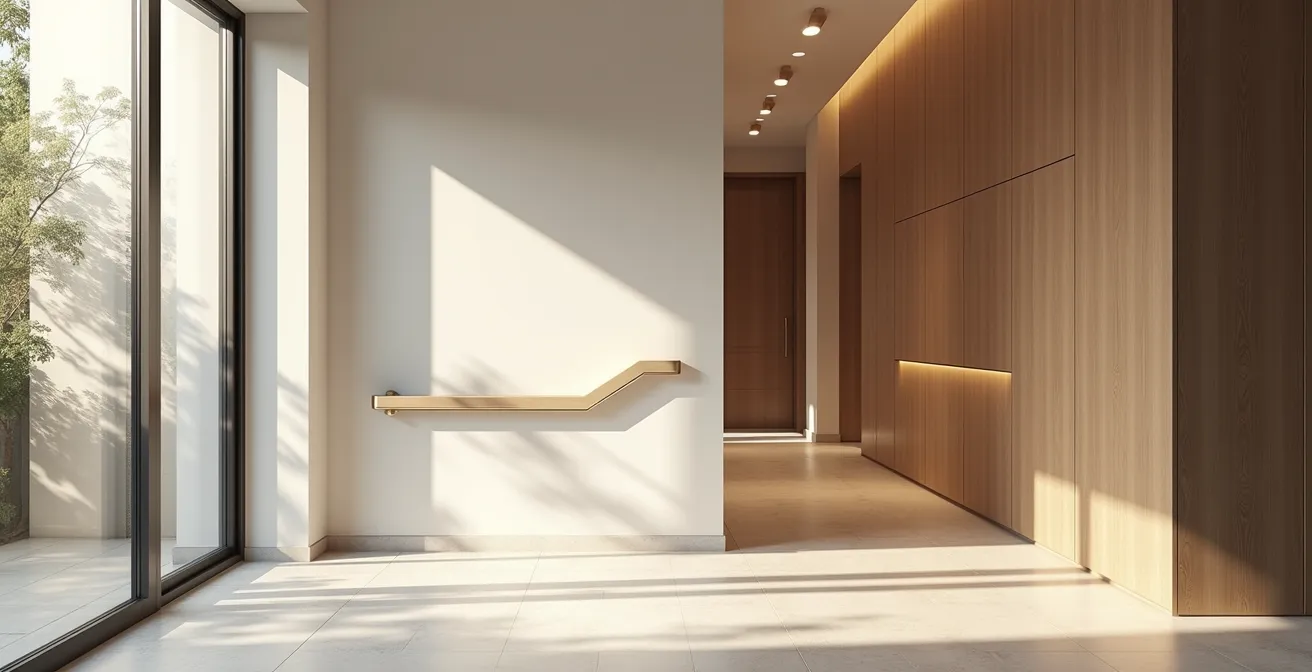
Strategic home modifications for seniors are not an expense, but a powerful investment that increases a property’s market value by creating universal, design-led appeal.
- Focus on “invisible accessibility”—features like zero-step entries and elegant bathroom updates that are stylishly integrated rather than clinical.
- Prioritize renovations with broad market appeal that benefit a young family with a stroller as much as a senior with a walker.
Recommendation: Hire a Certified Aging-in-Place Specialist (CAPS) during the initial planning phase to maximize both safety and your return on investment.
For many homeowners, the thought of adapting a home for senior living conjures images of sterile, hospital-like environments. The fear is that essential safety features like grab bars and ramps will inevitably clash with a home’s aesthetic, potentially decreasing its resale value. The conventional approach often presents a false choice: sacrifice style for safety, or risk comfort and well-being. This leads to piecemeal solutions—a temporary ramp here, a plastic shower chair there—that address immediate needs but fail to create a cohesive, desirable living space.
This approach overlooks a fundamental truth. The most valuable modifications aren’t just about bolting on safety equipment; they’re about thoughtfully redesigning spaces for everyone. But what if the key wasn’t simply to add accessible features, but to integrate them so seamlessly that they become invisible assets? The real strategy lies in “future-proofing” your property with universal design principles. These are changes that enhance usability and appeal for people of all ages and abilities, transforming a potential “cost” into a significant, market-expanding investment.
This article moves beyond the generic checklist of senior modifications. We will explore how to plan, finance, and execute renovations that are not only safe but also sophisticated and financially savvy. By focusing on design-led safety and marketable universality, you can create a home that is secure, comfortable, and more valuable than ever before. We will break down the process, from identifying critical risk zones and planning a timeline to understanding permits and choosing the right professionals.
To navigate this complex but rewarding process, this guide is structured to walk you through the essential considerations for a successful project. The following sections will provide detailed insights into each key aspect of your home modification journey.
Summary: Strategic Renovations for Safety and Property Value
- Why the Bathroom Is the Most Dangerous Room for Seniors Living Alone?
- How to Plan a Full Home Adaptation Timeline Over 12 Months?
- Certified Aging-in-Place Specialist vs. General Contractor: Who to Hire for Safety?
- The Ramp Slope Error That Makes Access Impossible for Wheelchair Users
- How to Integrate Smart Home Features Without Rewiring an Old House?
- How to Finance Structural Renovations Using Home Equity Products?
- What Does an Occupational Therapist Look For During a Home Visit?
- Structural Modifications for Accessibility: What Permits Do You Need Before Breaking Walls?
Why the Bathroom Is the Most Dangerous Room for Seniors Living Alone?
The bathroom is, statistically, the most hazardous area in any home for a senior. A combination of hard surfaces, water, and the need to navigate tight spaces while performing tasks that require balance and mobility creates a perfect storm for accidents. According to CDC data, a staggering 80% of bathroom injuries are caused by falls, often occurring when getting in or out of the tub or using the toilet. These are not minor incidents; they frequently result in fractures and head injuries that can severely impact a senior’s independence and overall health.
The risk is compounded by poor design choices common in older homes: high-threshold bathtubs, low-height toilets, and slick tile flooring. However, this high-risk environment also presents the highest-return opportunity for design-led safety. Instead of clinical-looking additions, a well-planned bathroom renovation can transform this danger zone into a spa-like sanctuary that is both safe and aesthetically pleasing. A zero-threshold shower with an integrated bench, stylish grab bars that double as towel racks, and slip-resistant, textured tile can dramatically reduce fall risk while simultaneously increasing the home’s market value.
Investing in the bathroom is not just about preventing a fall; it’s about building confidence. A senior who feels secure in the bathroom is more likely to maintain personal hygiene and independence. Therefore, addressing this room first is a strategic move that delivers an immediate, tangible improvement in quality of life and provides a significant return on investment through both safety and marketable universality.
How to Plan a Full Home Adaptation Timeline Over 12 Months?
A full-home adaptation can feel overwhelming, but a phased, 12-month approach breaks the project into manageable segments, minimizing disruption and aligning work with seasonal advantages. The key is to start with high-impact, low-disruption changes and progressively move toward more significant structural work. This strategic scheduling also helps manage cash flow and allows for adjustments based on the resident’s evolving needs.
A logical timeline prioritizes exterior work during warmer, drier months and interior renovations during the fall and winter, when contractors may have more availability. Here’s a sample seasonal strategy:
- Spring/Summer: This is the ideal time to schedule all exterior work. Focus on projects like installing ramps, creating zero-step entries, and modifying driveways or walkways. Good weather ensures concrete can cure properly and exterior construction is completed safely and efficiently.
- Fall/Winter: Shift focus to major interior renovations. This includes comprehensive bathroom and kitchen modifications. With the exterior sealed and secure, contractors can work indoors without weather-related delays.
Within this seasonal framework, the project can be broken down further by level of disruption:
- Months 1-3: Begin with non-invasive, high-impact changes. This includes installing smart lighting systems, replacing doorknobs with lever-style handles, and adding anti-slip treatments to floors.
- Months 4-9: Tackle medium-disruption projects. This is the time to install bathroom grab bars (ensuring they are anchored into studs), add handrails to stairways, and adjust countertop heights.
- Months 10-12: Complete major structural modifications. This phase is for wall removals, doorway widening, or full bathroom-to-wet-room conversions. It may require temporary relocation, so planning is crucial.

This phased approach, visualized above, transforms a daunting project into a structured, year-long plan. It ensures that the most critical safety needs are met early while allowing ample time for the planning and execution of more complex renovations, all while respecting the homeowner’s budget and daily life.
Certified Aging-in-Place Specialist vs. General Contractor: Who to Hire for Safety?
When embarking on a home modification project, one of the most critical decisions is who to hire. While a general contractor is essential for construction, their expertise is in building to spec. A Certified Aging-in-Place Specialist (CAPS), by contrast, is a professional trained specifically in the strategy, design, and implementation of modifications for senior living. Their role is to ensure the project is not just built correctly, but designed correctly from the outset to maximize safety, comfort, and, crucially, property value.
A CAPS professional understands the principles of universal design and knows how to create solutions that are both functional and aesthetically pleasing. They act as a visionary planner, translating an occupational therapist’s recommendations and a homeowner’s desires into a concrete architectural plan. A general contractor then executes this plan. Hiring a CAPS for the initial consultation and design phase is an investment in getting the project right the first time, avoiding costly mistakes and ensuring the final result enhances the home’s marketability to all potential buyers.
The following table, based on insights from organizations like Age Safe America which promotes home safety education, compares the distinct roles of these two professionals, highlighting why a CAPS is indispensable for strategic planning.
| Criteria | CAPS Professional | General Contractor |
|---|---|---|
| Universal Design Expertise | Specialized training in accessibility and aging-in-place principles | General construction knowledge |
| Property Value Focus | Designs modifications to appeal to all buyers | Focuses on completion to specification |
| Cost Range | Higher initial consultation ($500-2000) | Standard contractor rates |
| Best For | Strategic planning and design phase | Implementation and construction phase |
| ROI Understanding | Trained to maximize resale value | Limited focus on market appeal |
Ultimately, the choice isn’t “either/or” but about using the right expert at the right time. A CAPS should lead the design and planning phase to create a strategic blueprint. A qualified general contractor is then brought in to bring that vision to life, ensuring the structural integrity and quality of the work. This two-pronged approach is the cornerstone of a successful and financially sound aging-in-place renovation.
The Ramp Slope Error That Makes Access Impossible for Wheelchair Users
An access ramp is often the first modification that comes to mind for wheelchair accessibility, but it is also one of the easiest to get wrong. The single most critical error is an incorrect slope. A ramp that is too steep is not just difficult to use; it is physically dangerous, posing a tipping risk for wheelchair users and demanding immense upper-body strength for self-propulsion. It effectively renders the home as inaccessible as a flight of stairs. This mistake is often made by well-intentioned but unqualified contractors who underestimate the precision required.
The Americans with Disabilities Act (ADA) sets clear standards that have become the benchmark for safe ramp design. The golden rule is the 1:12 slope ratio: for every one inch of vertical rise, there must be at least twelve inches (one foot) of ramp length. For a 24-inch high porch, this means a ramp of at least 24 feet is required. Compromising on this ratio to save space or cost creates an unusable and non-compliant structure that will have to be torn out and rebuilt, wasting thousands of dollars.
Beyond the slope, other factors are equally critical for safety and usability, such as adequate landing space, proper handrails, and non-slip surfaces. A Certified Aging-in-Place Specialist (CAPS) will incorporate these standards into a design that integrates seamlessly with your home’s architecture and landscaping. In situations where a 1:12 slope is impossible due to space constraints, a specialist can recommend viable alternatives like a vertical platform lift, ensuring accessibility without compromising safety. Avoiding this common but costly error is a testament to the value of specialized expertise in the planning phase.
Your Ramp Design Non-Negotiables Checklist
- Verify the slope: Measure the vertical rise and ensure the ramp plan meets or exceeds the 1:12 slope ratio (e.g., 30 inches of rise requires a minimum 30-foot ramp).
- Assess landing space: Confirm the design includes a flat, clear landing of at least 60×60 inches at both the top and bottom of the ramp for safe maneuvering.
- Inspect handrail specifications: Ensure handrails are planned for both sides, with a height of 34-38 inches and a continuous gripping surface that is easy to hold.
- Check surface materials: Specify a slip-resistant material with a high coefficient of friction (at least 0.6) and ensure the plan includes adequate drainage to prevent water or ice buildup.
- Review the lighting plan: Confirm that the design integrates lighting that provides a minimum of 5 foot-candles of illumination along the entire ramp path for safe nighttime use.
How to Integrate Smart Home Features Without Rewiring an Old House?
Integrating smart home technology is one of the most effective ways to enhance safety and independence for seniors, yet many homeowners are deterred by the perceived need for expensive and disruptive rewiring. This is a common misconception. The evolution of wireless technology, particularly through protocols like Z-Wave and Zigbee, allows for the creation of a sophisticated and responsive smart home ecosystem without touching a single wire in the walls. This approach aligns perfectly with the principle of “invisible accessibility,” adding layers of safety that operate discreetly in the background.
This trend is becoming mainstream, with a report from the National Association of Home Builders indicating that 80% of remodeling companies now make aging-in-place improvements, many of which include these non-invasive tech solutions. The strategy involves using battery-powered sensors and devices that communicate wirelessly with a central hub. This hub then translates their signals into actions or alerts, such as turning on lights or sending a notification to a family member’s phone.
The implementation is surprisingly simple. Smart plugs can instantly convert any existing lamp into a voice- or schedule-controlled light source. Battery-powered motion sensors can be placed in hallways to automatically activate nightlights, preventing nighttime falls. Water leak sensors can provide early warnings of plumbing issues, while smart locks that retrofit over existing deadbolts can offer keyless entry and alerts about who is entering or leaving the home. These devices are the epitome of design-led safety: they are small, unobtrusive, and provide immense peace of mind without altering the home’s character.
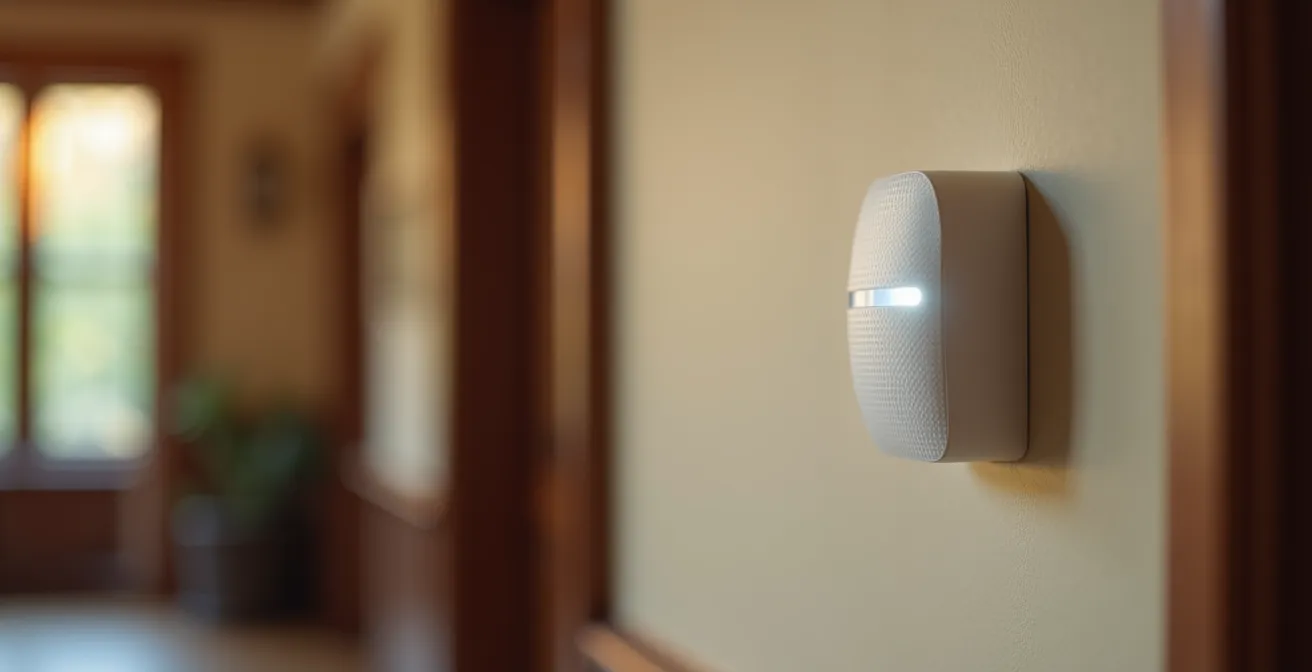
By leveraging these wireless technologies, homeowners can build a powerful safety net that is both affordable and scalable. You can start with a few key devices and expand the system over time, creating a truly smart and supportive environment that adapts to changing needs without the dust and cost of a major electrical overhaul.
How to Finance Structural Renovations Using Home Equity Products?
Significant structural renovations, such as adding a first-floor master suite or converting a bathroom into a full wet room, represent a substantial financial commitment. For many senior homeowners, the most logical and accessible source of funding is the equity built up in their property. Homeowners aged 62 and older hold a vast reservoir of wealth in their homes; according to the National Reverse Mortgage Lenders Association, an estimated $13.2 trillion in home equity is held by this demographic. Tapping into this asset through products like a Home Equity Line of Credit (HELOC) or a Home Equity Loan can make large-scale projects feasible without depleting retirement savings.
A Home Equity Loan provides a lump-sum payment with a fixed interest rate and a predictable monthly payment schedule. This makes it an excellent choice for a single, large project with a clearly defined budget, such as a major addition. You know exactly what your costs will be over the life of the loan, which is ideal for those on a fixed income.
In contrast, a Home Equity Line of Credit (HELOC) functions more like a credit card, offering a revolving line of credit that you can draw from as needed. This provides superior flexibility for a phased, 12-month renovation plan. You only pay interest on the amount you’ve actually used, which can significantly reduce costs if projects are spread out over time. The variable interest rate is a factor to consider, but for a well-planned, multi-stage adaptation, the flexibility is often invaluable.
Case Study: HELOC vs. Home Equity Loan for Phased Renovations
A financial analysis from AARP demonstrates the strategic uses of each product. For a year-long, phased renovation, a HELOC offers unmatched flexibility, allowing a homeowner to draw funds for the exterior ramp in the spring and the interior bathroom remodel in the fall, paying interest only on the drawn amounts. Conversely, for a single large project like a first-floor suite addition, a home equity loan provides stability with its fixed rates (averaging 3.95% at the time of analysis) and predictable payments, which is essential for retirees managing a fixed budget. The key is to match the financial product to the structure of the renovation project.
Choosing the right product depends entirely on the scope and timeline of your renovation. By understanding the distinct advantages of each, homeowners can unlock their property’s value to fund modifications that will enhance their quality of life for years to come.
What Does an Occupational Therapist Look For During a Home Visit?
An occupational therapist (OT) is a critical, yet often overlooked, member of the home modification team. While an architect or CAPS designs the space, the OT provides the “why.” Their role is to conduct a detailed, data-driven assessment of the individual’s functional abilities and how they interact with their current home environment. This evaluation is not a casual walkthrough; it is a clinical process that identifies specific “person-environment mismatches”—the precise points where the home’s design creates barriers to safety, independence, and daily living.
During a home visit, an OT uses a combination of standardized assessment tools, task observation, and physical measurements to create a comprehensive profile of the resident’s needs. They will measure grip strength with a dynamometer to determine the right type of door handles and faucets. They analyze transfer techniques—from bed to chair, or from sitting to standing on the toilet—to specify the exact placement and type of grab bars or lifts required. This level of detail is something a contractor or even an architect alone cannot provide.
This clinical data forms the foundation of a successful renovation. As noted by a leading expert in the field, this assessment is the bridge between healthcare and construction. Dr. Susan Stark of the Washington University School of Medicine explains the OT’s vital role:
The OT’s detailed written report becomes the foundational document for the architect or contractor, translating medical needs into actionable design requirements.
– Dr. Susan Stark, Washington University School of Medicine
An OT home visit will typically involve a methodical review of several key functional areas to build this report:
- Grip Strength Measurement: Using a dynamometer to determine the force a person can exert, which informs specifications for door handles, faucets, and other fixtures.
- Transfer Technique Analysis: Observing movements like getting out of bed or off a toilet to identify needs for support bars, lifts, or adjusted furniture heights.
- Functional Cognition Testing: Assessing the ability to safely perform multi-step tasks, such as using kitchen appliances, to identify needs for automated shut-offs or simpler controls.
- Endurance Assessment: Measuring the ability to complete activities of daily living (ADLs) without needing to rest, which can dictate the need for seating in showers or hallways.
- Environmental Barrier Identification: Using standardized tools like the I-HOPE or SAFER-HOME assessments to systematically identify physical obstacles in the home.
- Activity Performance Evaluation: Observing real-time task completion to pinpoint specific areas where the environment hinders or endangers the individual.
Engaging an OT at the very beginning of the process ensures that every dollar spent on renovation is directly targeted at a specific, identified functional need. This makes the project more effective, more personalized, and ultimately, a better investment in long-term independence.
Key Takeaways
- Universal design is key: Modifications that benefit everyone (e.g., zero-step entries) add more market value than specialized, medical-looking equipment.
- Hire a specialist first: Engaging a Certified Aging-in-Place Specialist (CAPS) for the planning phase ensures a strategic design that maximizes both safety and ROI.
- Phased planning is crucial: A 12-month, seasonally-adjusted timeline makes a full-home adaptation manageable, both logistically and financially.
Structural Modifications for Accessibility: What Permits Do You Need Before Breaking Walls?
Once the strategic plan is in place, the practicalities of construction come to the forefront, and chief among them is the need for building permits. Navigating local building codes can seem daunting, but it is a non-negotiable step for any project involving structural, electrical, or plumbing changes. A permit is not just bureaucratic red tape; it is a crucial form of quality control. It ensures that the work is performed to code by qualified professionals and inspected by a municipal official, guaranteeing the safety and integrity of the modifications.
Failure to obtain a required permit can have severe consequences. It can lead to fines, orders to tear out the completed work, and major complications when you eventually sell the home. Unpermitted work can void your homeowner’s insurance and makes you liable for any accidents that occur as a result of the faulty construction. A qualified general contractor or CAPS will be well-versed in local requirements and will manage the permitting process as part of their service.
It’s important to distinguish between major renovations that require a permit and minor updates that typically do not. Generally, any work that alters the home’s structure (moving walls), electrical systems (upgrading a panel), or plumbing (relocating a toilet) will require a permit. Cosmetic updates and minor installations, however, are often permit-free.
The table below provides a general guide to which common aging-in-place modifications typically require a permit versus those that are usually exempt. However, these rules can vary significantly by municipality, so always verify with your local building department before beginning any work.
| Requires Permit | Typically Permit-Free |
|---|---|
| Removing/moving load-bearing walls | Installing grab bars (into studs) |
| Adding/widening exterior doors | Replacing door hardware |
| Bathroom to wet room conversion | Installing toilet seat risers |
| Adding exterior ramps over 30 inches high | Threshold ramps under 30 inches |
| Electrical panel upgrades | Replacing light switches with rocker style |
| Plumbing line relocation | Faucet handle replacement |
Understanding these distinctions is essential for proper project planning and budgeting. Factoring in the time and cost for permits from the beginning ensures your project proceeds smoothly, legally, and safely, protecting your investment for the long term.
By approaching home modifications as a strategic investment in universal design, you can create a safe, comfortable, and beautiful environment that not only supports aging-in-place but also enhances your property’s value for all future occupants. The first step is to move from reactive fixes to proactive design by consulting a specialist who can help you build a comprehensive plan.