
An occupational therapy assessment is not an optional expense; it is clinical insurance against unsafe, mismatched, and ultimately more costly home renovations.
- It moves beyond generic safety checklists to perform a clinical diagnosis of the unique person-environment interaction.
- It is the only process designed to identify “invisible” cognitive and sensory risks that standard DIY or contractor audits invariably miss.
Recommendation: Mandate a functional capacity evaluation by a licensed occupational therapist *before* approving any contractor’s budget to ensure every dollar spent directly supports long-term safety and independence.
For homeowners planning modifications to support a loved one aging in place, the path seems clear: widen doorways, install grab bars, and build a ramp. These are the tangible, visible changes often recommended, undertaken with the best intentions to create a safe harbor. Yet, thousands are spent on renovations that fail to prevent falls or, in some cases, introduce new, unforeseen hazards. The common approach focuses on modifying the house, but it often overlooks the most critical variable: the specific functional capacity of the person living within it.
The fundamental flaw in a purely construction-based approach is its failure to ask the right questions. A contractor can tell you if a wall can support a grab bar, but can they determine the precise height and angle needed for an individual with decreasing grip strength and a history of rotator cuff injuries? This is where the process breaks down. The conversation shifts from a general solution to a personalized, clinical one. What if the most significant risk isn’t an obvious trip hazard, but the poor color contrast between a floor and a stair edge for someone with diabetic retinopathy? Or the cognitive load of a new, complex appliance for a person with mild cognitive impairment?
This is the critical gap that an Occupational Therapist (OT) fills. This article moves beyond generic checklists to explain why a professional OT assessment is not just a preliminary step but the foundational blueprint for any successful and safe home modification project. We will explore what an OT truly evaluates, how their clinical report translates into actionable plans for contractors, and how this diagnostic approach is fundamentally different from a standard safety check. Engaging an OT is an investment in certainty, ensuring that renovations are not just built correctly, but are clinically correct for the individual they are meant to protect.
This guide will walk you through the essential role of an occupational therapist in planning safe and effective home modifications. Discover why their clinical expertise is the key to creating a truly supportive environment that goes far beyond simple construction checklists.
Summary: Why an Occupational Therapy Assessment Is Your Most Important Pre-Renovation Step
- What Does an Occupational Therapist Look For During a Home Visit?
- How to Translate a Therapy Report into a Contractor’s To-Do List?
- Standard Safety Check vs. Functional Capacity Evaluation: Which Do You Need?
- The Risk of DIY Safety Audits That Miss 40% of Fall Hazards
- When to Schedule a Re-Assessment Following a Change in Medication?
- Why ‘Free’ Screenings Can Generate Unexpected Lab Fees?
- Certified Aging-in-Place Specialist vs. General Contractor: Who to Hire for Safety?
What Does an Occupational Therapist Look For During a Home Visit?
An occupational therapist’s home visit is not a simple walkthrough with a clipboard; it is a dynamic clinical evaluation. Unlike a contractor who sees building materials and dimensions, an OT sees the complex interplay between the person, their daily activities (occupations), and the physical environment. The core of this process is to identify points of friction where the demands of the environment exceed the individual’s functional abilities, leading to risk, fatigue, or an inability to perform essential tasks.
The assessment is guided by established clinical frameworks, most notably the Person-Environment-Occupation (PEO) model. This model systematically analyzes how to adjust the environment or introduce adaptive strategies to better support the person’s goals. An OT will observe the resident performing real-life tasks like getting out of a chair, preparing a simple meal, or navigating from the bedroom to the bathroom. This observation is key, as it reveals subtle deficits in balance, strength, endurance, or cognition that a simple interview would miss. They are looking for signs of instability, hesitation, or workarounds that indicate an underlying problem.
Crucially, an OT is trained to identify “invisible” risks. These are hazards not found on a standard checklist, such as poor lighting that causes glare for someone with cataracts, a floor pattern that creates visual confusion for a person with dementia, or the cognitive strain of managing multiple medications. They assess the entire sensory environment, including auditory cues (like smoke detectors) and tactile information. The goal is to create a holistic picture of functional capacity and environmental barriers, forming the evidence base for targeted, effective recommendations that go far beyond generic advice.
How to Translate a Therapy Report into a Contractor’s To-Do List?
One of the most valuable functions of an occupational therapist in the renovation process is serving as a bridge between clinical need and construction reality. A contractor understands blueprints and building codes, but they do not speak the language of medical diagnostics. An OT report is the professional translation device that turns a medical assessment into a clear, actionable work order.
The OT report is not a vague list of suggestions like “make the bathroom safer.” It is a detailed, evidence-based document. A recommendation for “improving toilet transfer safety for a client with left-sided weakness and a weight of 250 lbs” becomes a precise instruction for a contractor: “Install three heavy-duty, L-shaped grab bars around the toilet in the main bathroom. The rear bar to be 36 inches long, mounted horizontally 33 inches from the floor. The side bars to be 42 inches long, mounted horizontally at the same height, with reinforced wall blocking to support a minimum of 300 lbs of shear force.”
This “clinical blueprint” removes ambiguity and prevents costly errors. It ensures that modifications are not just installed, but installed in a way that is biomechanically optimal for the specific user. The therapist considers the individual’s height, reach, range of motion, and the progression of their condition. For example, the report might specify a zero-threshold shower with a built-in bench and a handheld showerhead on an adjustable slide bar, along with a recommendation for non-slip tiles with a specific Dynamic Coefficient of Friction (DCOF) rating to prevent slips even when wet.
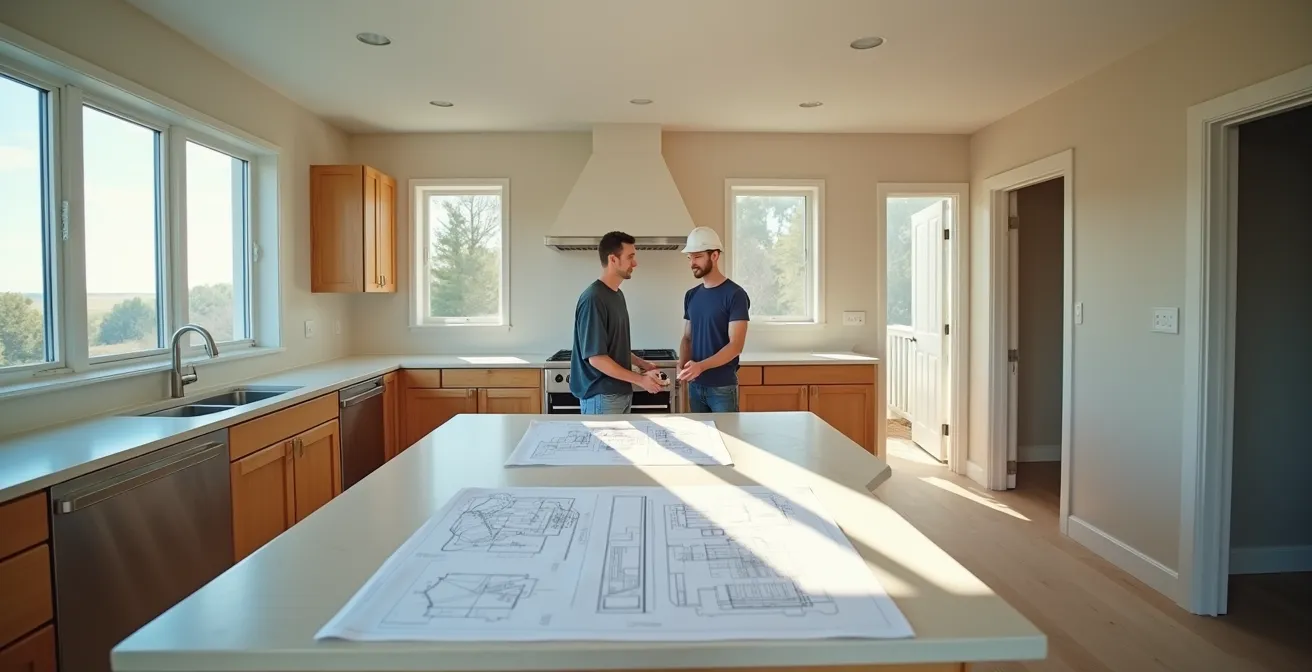
As the illustration depicts, this is a collaborative process. The OT provides the “why” and the “what” based on clinical reasoning, while the contractor provides the “how” based on construction expertise. This partnership ensures that the final result is a space that is not only safe according to building standards but is functionally safe and enabling for the person who will live in it every day.
Standard Safety Check vs. Functional Capacity Evaluation: Which Do You Need?
The terms “home safety check” and “functional capacity evaluation” are often used interchangeably, but they represent two vastly different levels of assessment. Understanding this distinction is critical for homeowners, as choosing the wrong one can lead to a false sense of security and wasted investment. A standard safety check is static; a functional capacity evaluation is dynamic and person-centered.
A standard safety check is typically a checklist-driven process. It asks, “Does this environment contain known hazards?” It will identify missing smoke detectors, loose rugs, and poor lighting. While helpful, it operates in a vacuum, assessing the house but not the person in it. It answers “Is there a grab bar?” but it cannot answer “Can *this person*, with their specific grip strength and balance issues, use this grab bar effectively in a moment of crisis?” It’s a snapshot of the environment, not an analysis of its interaction with a human being.
A Functional Capacity Evaluation (FCE), performed by a licensed occupational therapist, asks a much more sophisticated question: “Can *this person* safely and independently perform their necessary and desired daily activities in *this environment*?” It is an assessment of the person-environment fit. The OT observes the individual in action, measuring their abilities against the environmental demands. This clinical reasoning is what separates a professional assessment from a generic checklist.
The following table clarifies the fundamental differences between these two approaches:
| Aspect | Standard Safety Check | Functional Capacity Evaluation |
|---|---|---|
| Focus | Environmental hazards only | Person-environment interaction |
| Assessment Type | Static checklist (Is there a grab bar?) | Dynamic observation (Can THIS person use the grab bar effectively?) |
| Time Perspective | Current snapshot only | Predictive analysis for future needs |
| Professional Required | Any trained assessor | Licensed occupational therapist |
| Documentation | Basic hazard identification | Clinical rationale for interventions |
| Insurance/Legal Value | Limited | High – professional accountability |
As experts in the field note, the dynamic approach is considered the gold standard for comprehensive safety. According to a guide from OT and Me, a Canadian resource for occupational therapy, performance-based home safety assessments are more comprehensive because they focus specifically on how the individual interacts with their environment. This interaction is where the real risk lies, and it’s what only a functional evaluation can properly assess.
The Risk of DIY Safety Audits That Miss 40% of Fall Hazards
Relying on a do-it-yourself checklist or a contractor’s informal “safety audit” can be a dangerous and costly mistake. While these audits may catch the most obvious hazards like loose carpets or cluttered walkways, they systematically miss the more subtle, yet often more dangerous, person-specific risks. These “invisible” hazards are the primary domain of an occupational therapist and are often the root cause of serious falls.
Research consistently shows the superior effectiveness of OT-led interventions. For example, research published in the Journal of the American Geriatrics Society shows that in a group of older adults with a history of falls, those who received an OT-led home intervention experienced significantly fewer subsequent falls compared to a control group. This is because the OT addresses not just the environment, but the person’s interaction with it.
What do these “invisible” hazards include? They are factors a layperson is not trained to see:
- Poor Color Contrast: An all-white bathroom can be a major hazard for someone with low vision, as they may not be able to distinguish the toilet from the floor or the wall, leading to misjudgments and falls. An OT would recommend specific color contrasts to delineate key features.
- Inappropriate Floor Textures: A high-pile carpet that is perfectly safe for most can be a significant risk for someone with a shuffling gait, as it increases the chance of catching a toe. Conversely, a highly polished floor can be treacherous for someone using a walker.
- Cognitive and Sensory Load: A cluttered kitchen counter or a complex medication schedule can overwhelm an individual with mild cognitive impairment, leading to errors like forgetting to turn off the stove or taking the wrong pills. An OT assesses these cognitive demands and simplifies the environment and routines to match the person’s capacity.
These are the types of nuanced, functional risks that constitute a large percentage of true fall hazards in the home. Skipping a professional functional assessment in favor of a DIY checklist is akin to ignoring 40% of the problem. It addresses the obvious while leaving the resident exposed to the very risks that are most likely to cause a serious injury.
When to Schedule a Re-Assessment Following a Change in Medication?
A home modification plan is not a one-time fix. A person’s functional status is not static; it changes with their health. One of the most significant and often overlooked triggers for a change in functional capacity is a modification to their medication regimen. New medications, or even changes in dosage, can profoundly impact balance, cognition, and vision, rendering a previously safe environment suddenly hazardous.
This is why scheduling a re-assessment with an occupational therapist following a significant medication change is a critical component of a long-term safety strategy. Certain classes of drugs are well-known for their potential to increase fall risk. For example, antihypertensives can cause orthostatic hypotension (a sudden drop in blood pressure upon standing), making stairs or even getting out of a chair a moment of high risk. Sedatives can slow reaction times, affecting transfer safety, while anticholinergics can impact cognitive function, affecting the ability to manage tasks like cooking or remembering to take other pills.
An OT is trained to understand these connections. During a re-assessment, they will map the known side effects of the new medication to specific environmental risks within the home. They can provide the prescribing physician with invaluable real-world data on the medication’s functional impact, potentially leading to adjustments in the prescription. Furthermore, they can implement immediate, often low-cost, compensatory strategies to mitigate the new risks while the body adjusts to the medication. Waiting for a fall to happen is not a strategy; proactive re-assessment is.
Action Plan: Your Post-Medication Change Re-Assessment Checklist
- Wait 2-4 weeks after a significant medication change to allow for stabilization before scheduling an OT re-assessment.
- Map the risks of specific medication classes (e.g., antihypertensives) to environmental challenges (e.g., orthostatic hypotension near stairs) for targeted observation.
- Document any new sedative effects that could impact transfer safety, reaction times, and the ability to operate household appliances.
- Assess for any anticholinergic impact on cognitive function, which can affect critical tasks like stove use and medication management.
- Ensure the OT assessment report is shared with the prescribing physician, providing them with crucial data on the medication’s real-world functional impact.
Why ‘Free’ Screenings Can Generate Unexpected Lab Fees?
The cost of a professional occupational therapy assessment is a valid concern for homeowners. This often leads them to consider “free” safety screenings offered by various organizations or contractors. However, it’s vital to apply the principle of “caveat emptor” (let the buyer beware). A “free” screening is rarely as comprehensive and can sometimes lead to misguided, expensive, and ineffective renovations. The true value and cost-effectiveness of a professional OT assessment become clear when viewed as a medical necessity for high-risk populations.
An OT assessment is an investment in targeted, effective care. A UK-based, NIHR-funded study analyzed the cost-effectiveness of OT home assessments. The findings were nuanced and illuminating: while the assessments were more expensive than usual care, the study concluded that this additional cost may be justified for higher-risk populations, such as those previously hospitalized for a fall. In other words, for the very people who need it most, the upfront cost is a sound investment against the far greater future costs—both financial and human—of a subsequent major fall.
Furthermore, the success of any home modification plan depends on its implementation and acceptance by the resident. Recommendations are useless if they are ignored or rejected. Research highlights that the involvement of an OT is a critical factor in ensuring that modifications are not only appropriate but also adopted. A comprehensive review of barriers and facilitators published in a PMC journal found that “enhanced implementation of home recommendations has been observed in older adults with more complex medical conditions.” This is because the OT, through their clinical relationship and patient education, can secure the buy-in and agreement necessary for successful adoption. A “free” checklist handed out by a non-clinician lacks this crucial therapeutic alliance, often resulting in recommendations being ignored and money being wasted.
Certified Aging-in-Place Specialist vs. General Contractor: Who to Hire for Safety?
Navigating a home modification project involves a team of professionals, and understanding their distinct roles is crucial to avoid gaps in expertise and accountability. The three key players are the Occupational Therapist (OT), the Certified Aging-in-Place Specialist (CAPS), and the General Contractor. They are not interchangeable; they form a hierarchy of strategy and execution.
The Occupational Therapist is the clinical strategist. Their primary role is to answer the question “Why?” Why is a modification needed? What is the underlying functional deficit that needs to be addressed? Their expertise is in human function, medical conditions, and the progression of disease. They are accountable to a state-regulated healthcare license, which holds them to a high standard of clinical practice. The OT creates the “what”—the list of functional requirements for the home.
The Certified Aging-in-Place Specialist (CAPS) is the technical expert. They are often builders, designers, or architects who have received specific training from the National Association of Home Builders. Their role is to answer the question “How?” How can the clinical needs identified by the OT be met within the constraints of building codes, accessibility standards, and the existing structure? Their expertise lies in accessible design and construction techniques. They translate the OT’s “what” into a buildable plan.
The General Contractor is the builder. Their role is to execute the construction plan provided by the CAPS or designer, according to the specifications. Their primary expertise is in general construction, and their accountability is tied to building permits and codes. Hiring a general contractor without the preceding strategic input from an OT and a CAPS is like asking a pharmacist to write a prescription—they are an expert in their part of the process, but not the diagnostic part.
The following table outlines the clear division of roles and responsibilities:
| Professional | Primary Role | Expertise | Accountability |
|---|---|---|---|
| Occupational Therapist | Clinical strategist – determines WHY modifications needed | Human function, medical conditions, progressive disorders | State-regulated healthcare license |
| CAPS Specialist | Technical executor – knows HOW to build modifications | Building codes, accessibility standards, construction | Construction certification |
| General Contractor | Builder – executes construction plans | General construction, renovation | Building permits and codes |
Key Takeaways
- A professional OT assessment is a clinical diagnosis of the person-environment fit, not a generic environmental checklist.
- The OT’s role is to identify and mitigate “invisible” risks related to an individual’s specific cognitive, sensory, and motor functions.
- An OT’s report serves as a “clinical blueprint,” translating medical needs into precise, actionable instructions for contractors to prevent errors.
Which Home Modifications Increase Property Value While Ensuring Safety for Seniors?
A common concern for homeowners is that safety-focused modifications will result in a “clinical” look that could detract from the home’s aesthetic and resale value. However, when guided by the principles of Universal Design—a core concept in occupational therapy—modifications can enhance both safety and market appeal. Universal Design is the creation of spaces that are inherently accessible to all people, regardless of their age or ability. These features are not just for seniors; they are appreciated by young families with strollers, people with temporary injuries, and anyone who values convenience and comfort.
Investing in Universal Design features is a forward-thinking strategy that pays dividends in both current safety and future property value. A home that is beautiful, functional, and accessible to the widest possible range of people is simply a more valuable asset in the marketplace. An occupational therapist can help identify which universal design features will provide the greatest functional benefit for the current resident while also representing a wise long-term investment in the property.
Here are some examples of home modifications that align with Universal Design principles, ensuring safety while boosting property value:
- Curbless Showers: These are stylish, modern, and appeal to everyone from seniors who need roll-in access to families who can easily bathe children. They create a seamless, spa-like look.
- Lever-Style Door Handles: Easier to use for someone with arthritis, they are also more convenient for anyone carrying groceries or a child. They are a modern replacement for dated round knobs.
- Enhanced Task Lighting: Well-placed, bright lighting in kitchens and bathrooms benefits older eyes but is also a high-end feature coveted by home chefs and in design magazines.
- Wider Doorways: A 36-inch doorway accommodates a wheelchair, but it also makes moving furniture dramatically easier for any homeowner.
- Reinforced Bathroom Walls: Installing wood blocking for future grab bar installation during a renovation is inexpensive and invisible. It offers a huge safety advantage for the future without any current aesthetic compromise.
Therefore, the first and most critical step in your renovation journey is not to call a contractor, but to schedule a comprehensive functional assessment with a licensed occupational therapist. It is the only way to ensure your investment truly protects your loved one and enhances your home’s value for years to come.