
Facing life without a driver’s license can feel like a sentence of isolation, but it’s actually a transition to a new, powerful role: becoming the CEO of your own mobility. This guide reframes the challenge as a strategic opportunity. Instead of focusing on what’s lost, you will learn to build a resilient “social logistics” system using a mix of modern technology, smart scheduling, and proactive planning to maintain your independence and deepen your social connections.
The moment the car keys are hung up for the last time is a profound one. For many seniors, it represents more than the loss of transportation; it feels like the loss of independence, spontaneity, and connection to the world. The fear of becoming homebound, a burden on family, or disconnected from friends is real and deeply felt. Well-meaning advice often falls flat: “just use public transit” ignores physical challenges, while “ask friends for rides” overlooks the deep-seated desire not to impose.
These common suggestions fail because they treat the problem as a simple logistical gap, not what it truly is: a fundamental shift in your personal operational strategy. But what if the solution wasn’t just about finding individual rides, but about designing a comprehensive, new system for your social life? What if you adopted the mindset of a CEO—your own Personal Mobility CEO—tasked with managing your social logistics with purpose and creativity?
This strategic approach transforms you from a passive recipient of circumstances to an active architect of your social world. It’s about building a diverse portfolio of connection methods, from leveraging specialized tech services to mastering the art of “reverse hospitality.” This guide will provide you with the blueprint to audit your needs, deploy new tools, and proactively manage your schedule, ensuring that your social life doesn’t just survive, but thrives in this new chapter.
Throughout this article, we’ll explore the practical pillars of this new strategy. You’ll discover how to leverage senior-specific services, balance digital and real-world interactions, and re-engineer your home to be a hub of social activity. Let’s delve into your new mobility blueprint.
Summary: Your New Role as Mobility CEO: A Strategic Guide to Staying Social Without a Car
- Why Losing Transport Leads to a 30% Drop in Social Contacts?
- How to Use Rideshare Apps Specifically Designed for Seniors?
- Phone Calls vs. Video Chats: Which Better Sustains Emotional Bonds?
- The ‘I Don’t Want to Be a Burden’ Mindset That Isolates Seniors
- When to Host Gatherings to Accommodate Senior Energy Levels?
- How to Fold and Load a Rollator into a Car Trunk Alone?
- How to Start a Virtual Book Club for Seniors Using a Tablet?
- How to Remain Socially Active When Mobility Issues Limit Travel to Community Centers?
Why Losing Transport Leads to a 30% Drop in Social Contacts?
The transition away from driving is not just an inconvenience; it’s a statistically significant event that can shrink one’s social world with alarming speed. The numbers paint a clear picture of the challenge. Research confirms a stark reality: there can be up to a 30% reduction in social participation when older adults lose their driving ability. This isn’t just about missing a weekly coffee date; it’s a systemic erosion of the spontaneous, casual, and routine interactions that form the bedrock of a connected life.
Each year, around 600,000 older adults stop driving, and the ripple effects are immediate. Appointments are harder to make, grocery shopping becomes a major logistical operation, and attending social events requires extensive pre-planning. This sudden friction in daily life leads to a natural, often unintentional, withdrawal. The path of least resistance is to stay home, which quickly becomes a feedback loop of increasing isolation. Without the car as a tool for easy engagement, the default setting shifts from “going out” to “staying in.”
This logistical challenge is compounded by a social one. Over 40% of older and disabled adults come to rely on family, friends, and neighbors for transportation. While this support is often given with love, it fundamentally changes the dynamic of relationships. The feeling of independence is replaced by a sense of dependence, planting the seeds for the “burden mindset” that we will discuss later. Understanding this 30% drop isn’t about accepting defeat; for a Mobility CEO, it’s about defining the problem you are hired to solve. It’s the baseline metric you will work strategically to overcome.
How to Use Rideshare Apps Specifically Designed for Seniors?
A key part of your new social logistics toolkit is mastering modern transportation solutions. While standard apps like Uber and Lyft can seem intimidating, a new category of senior-focused rideshare services has emerged to bridge this gap. These companies act as a concierge layer, removing the need for a smartphone app and offering features tailored to the needs of older adults. Services like GoGoGrandparent allow you to request a ride by making a simple phone call to a live operator, 24/7. This immediately removes the technology barrier.
These services are designed with trust and safety in mind. They often allow a family member to set up the account, manage payments, and even monitor rides in real-time, providing peace of mind for everyone. Some, like SilverRide, go a step further by offering “door-to-door” assistance, meaning the driver will help you from your home to the car and from the car to your destination’s entrance. This transforms the service from a simple curb-to-curb ride into a genuine mobility partnership. To start, it’s wise to have a family member or trusted friend assist with the initial setup and a low-stress practice ride to a familiar place, like a local library or coffee shop.

As this image suggests, adopting this new technology can be a collaborative effort, strengthening intergenerational bonds. This is not about losing independence, but about strategically delegating the task of driving to a reliable service, freeing up your mental energy to focus on the social engagement at your destination. The table below compares some of the options available, helping you make an informed “executive” decision for your mobility plan.
This comparative data, based on a recent analysis of senior transportation options, highlights the key differences in booking and features.
| Service | Booking Method | Payment Options | Special Features |
|---|---|---|---|
| GoGoGrandparent | Phone call (no app needed) | Family account setup | 24/7 operators, ride monitoring |
| SilverRide | Phone or online | Direct billing or family pay | Door-to-door assistance, companion service |
| Standard Uber/Lyft | App required | Credit card on file | Uber Assist option available |
Phone Calls vs. Video Chats: Which Better Sustains Emotional Bonds?
As your social logistics plan takes shape, part of your strategy will involve remote connections. The modern Mobility CEO must build a “connection portfolio,” diversifying how they interact with loved ones. The two primary tools are the traditional phone call and the modern video chat. While both have their place, they serve different emotional purposes. The phone call, with its focus purely on voice, can foster a unique kind of intimacy. It encourages active listening and allows for conversations to happen anytime, anywhere, without the need to be “camera-ready.” It’s the reliable, low-friction tool for frequent, spontaneous check-ins.
Video chat, on the other hand, brings a different, vital dimension: visual cues. Seeing a grandchild’s smile, a friend’s new haircut, or the expression in a loved one’s eyes provides a layer of non-verbal communication that voice alone cannot capture. This visual connection helps to reduce feelings of distance and creates a stronger sense of shared experience. During the COVID-19 pandemic, the elderly community was forced to adapt, and video platforms like Zoom became essential lifelines. This period effectively broke down the technology barrier for many, proving that video calls could powerfully bridge a physical divide.
The strategic choice is not to pick one over the other, but to deploy them intentionally. Use phone calls for the quick, daily touchpoints that maintain a steady stream of connection. Reserve video chats for more significant, scheduled “visits”—sharing a virtual cup of tea, celebrating a birthday, or reading a story to a grandchild. This balanced approach creates a robust communication strategy that sustains different facets of your emotional bonds, ensuring your connection portfolio is both resilient and fulfilling. The key is to match the tool to the emotional goal of the interaction.
The ‘I Don’t Want to Be a Burden’ Mindset That Isolates Seniors
The most significant roadblock to a senior’s social life is often not logistical, but psychological. The “I don’t want to be a burden” mindset is a powerful, self-isolating force. It stops you from asking for a ride, from suggesting an outing, and from accepting offers of help. As a Mobility CEO, confronting this mindset is your most critical internal task. The first step is to reframe the dynamic: you are not asking for a favor; you are coordinating a shared activity that benefits everyone involved. Your friends and family want to see you, and your participation enriches their lives as much as it does yours.
A strategic approach to this is to move from spontaneous, guilt-ridden requests to structured, collaborative planning. This is where you put on your CEO hat. As one Licensed Social Worker from the LifeSTEPS Community Outreach Program notes when working with seniors, the process should be about empowerment. They emphasize that, for any plan, “We always begin with an assessment of strengths and daily-life needs.” This is your new mantra.
We always begin with an assessment of strengths and daily-life needs.
– Licensed Social Worker, LifeSTEPS Community Outreach Program
Instead of “Can someone please drive me to the store on Tuesday?”, try “I’d love to plan a grocery run for next week. Would Tuesday or Thursday work better for you to join me?” This small shift in language changes the interaction from a plea for help to a collaborative scheduling effort. Use a shared family calendar, whether it’s a physical one on the wall or a digital one, to map out availability. This makes transportation a predictable, integrated part of the family’s routine, not an emergency request.
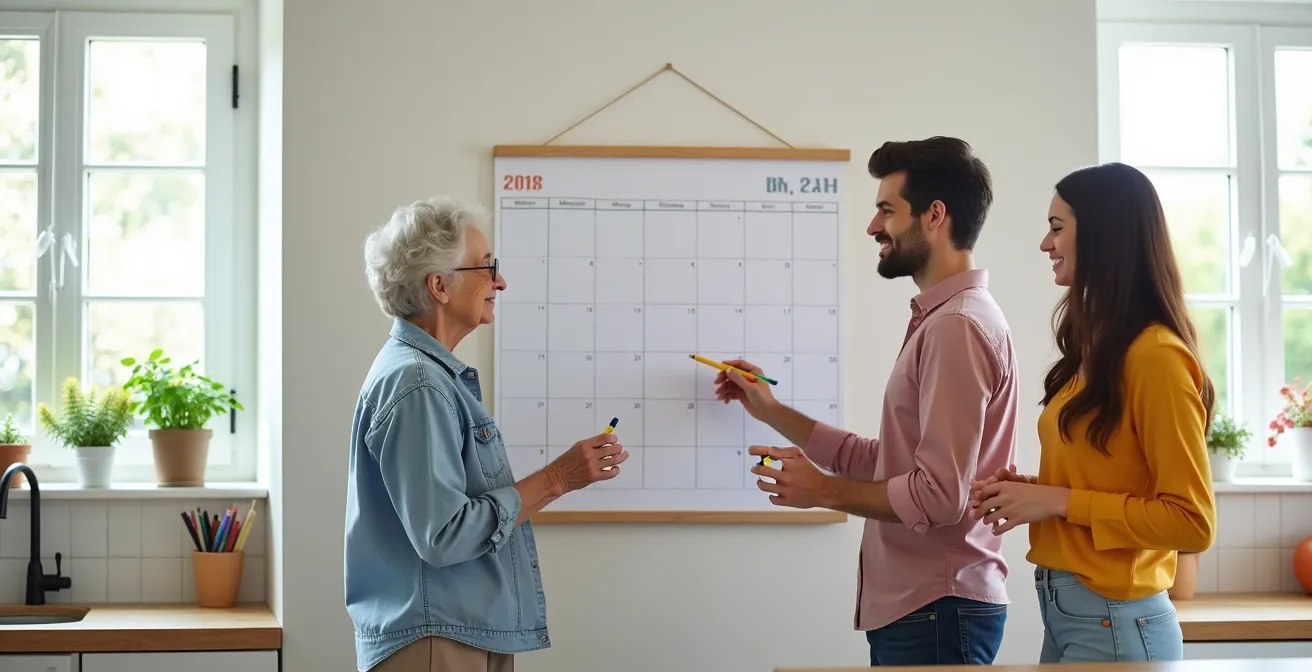
By scheduling ahead and presenting needs as opportunities for connection, you dismantle the “burden” narrative. You are no longer just a passenger; you are the social coordinator, the planner who brings people together. This proactive stance is the essence of being a Mobility CEO—it’s about taking control of the narrative and the logistics.
When to Host Gatherings to Accommodate Senior Energy Levels?
A core strategy for any Mobility CEO is “reverse hospitality”—if going out is a challenge, strategically bring your social world to you. However, successful hosting isn’t just about sending invitations; it’s about understanding and respecting your own energy patterns, or “chronotype.” Many seniors find their energy peaks in the late morning and early afternoon, making this the ideal window for social engagements. Research on senior energy patterns indicates that the period from roughly 11 AM to 2 PM is the peak social window for most, avoiding both morning stiffness and late-afternoon fatigue.
Instead of the traditional evening dinner party, consider new formats that align with this peak energy window. A “brunch and board games” morning, a “lunch and learn” where friends share a skill, or a simple “afternoon tea and chat” can be far more enjoyable and less draining. The goal is to create social opportunities that leave you energized, not exhausted. This requires a personal energy audit. For a week, take note of when you feel most alert, sociable, and engaged. This data is crucial for your strategic planning.
By scheduling events during your personal prime time, you ensure you can be fully present and enjoy the company of your guests. You are not just a passive host; you are curating an experience that is optimized for your well-being. This is strategic hosting. It communicates to your friends and family that while your mobility has changed, your desire for meaningful connection has not. You are simply changing the venue and the time to better suit your needs, a classic executive decision that prioritizes quality over outdated convention.
How to Fold and Load a Rollator into a Car Trunk Alone?
For the Mobility CEO, every tool must be manageable. If you are using rideshare services or getting rides from friends, being able to independently handle your own mobility aids, like a rollator, is a major confidence booster. The process can seem daunting, but with the right technique and equipment, it is entirely achievable. The key is to work smarter, not harder, by using leverage and proper body mechanics to avoid straining your back.
The “Lean, Pivot, and Slide” technique is a safe and effective method for loading a rollator. Before you begin, choose your equipment wisely. Not all rollators are created equal when it comes to portability. As a strategic planner, investing in a travel-friendly or ultra-light rollator can make a world of difference. These models are designed with one-hand folding mechanisms and weigh significantly less, drastically reducing the physical effort required. The following list outlines the step-by-step technique:
- Step 1: Park on level ground and ensure the car’s parking brake is engaged.
- Step 2: Fold the rollator, ideally using a one-hand release mechanism.
- Step 3: Lean the folded rollator against the car’s bumper at a 45-degree angle. This supports the weight for you.
- Step 4: Squat by bending your knees (never your back) and grasp the rollator at its central balance point.
- Step 5: Pivot your body toward the trunk and use the bumper as a lever to slide the rollator in horizontally.
- Step 6: If possible, secure it with a small bungee cord to prevent it from rolling around during transport.
The table below breaks down the features of different rollator types. This information is critical for making a strategic “procurement” decision that will support your long-term mobility and independence.
| Feature | Standard Rollator | Travel-Friendly Rollator | Ultra-Light Rollator |
|---|---|---|---|
| Weight | 15-20 lbs | 11-15 lbs | Under 11 lbs |
| Folding Mechanism | Two-hand operation | One-hand fold | One-hand quick-release |
| Folded Width | 10-12 inches | 7-9 inches | 6-7 inches |
| Price Range | $60-150 | $150-300 | $300-600 |
How to Start a Virtual Book Club for Seniors Using a Tablet?
Another powerful initiative in your social logistics plan is creating new social circles that are not dependent on physical travel. A virtual book club is a perfect example. It combines intellectual stimulation with regular social interaction, all from the comfort of your home. The main barrier is often technology, but with a structured onboarding process, it’s a hurdle that can be easily cleared. As the Mobility CEO, you can spearhead this project, either for yourself or a group of friends.
The key to success is a gradual and supportive introduction to the technology. Don’t try to learn everything at once. The “3-Session Technology Onboarding Method” provides a simple, pressure-free framework. The first session is just about setup: getting the tablet connected to Wi-Fi and installing the video call app with the help of a family member or tech-savvy friend. The second is a low-stakes practice call with one familiar person to test the audio and video. The third session can be the first “mini” book club meeting with 2-3 patient friends, discussing a short article or poem instead of a full book. This incremental approach builds confidence and digital literacy step-by-step.

Once established, a virtual book club becomes a reliable pillar of your social schedule. It provides a recurring event to look forward to and prepare for, creating structure and a sense of shared purpose. You are not just passively consuming content; you are creating and leading a community. This is an act of social entrepreneurship, a proactive step that builds new connections on your own terms, completely independent of transportation constraints.
Key Takeaways
- Shift Your Mindset: Transition from feeling like a passenger to acting as a “Personal Mobility CEO,” proactively designing your social life.
- Build a Diverse Toolkit: Don’t rely on a single solution. Combine senior-friendly rideshare apps, strategic hosting, and a mix of phone and video calls.
- Plan Proactively: Replace spontaneous, guilt-ridden requests with structured, collaborative planning using shared calendars to dismantle the “burden” mindset.
How to Remain Socially Active When Mobility Issues Limit Travel to Community Centers?
The final pillar of your strategic plan is to transform your home from a place of potential isolation into a vibrant social hub. When travel to external centers becomes difficult, you must engineer your own environment for connection. This is the ultimate “reverse hospitality” play. According to the National Institute on Aging, a significant number of community-dwelling older adults—about one in four—are considered socially isolated. By optimizing your home, you are directly combating this statistic and creating a welcoming space for others.
This transformation begins with a “Home Sociability Audit.” Just as a CEO would assess company assets, you must assess your home’s potential for fostering connection. This goes beyond simple tidiness. It involves intentionally designing your space to invite and facilitate interaction. For example, is your living room furniture arranged to encourage conversation, or does it all face the television? A simple rearrangement can change the entire dynamic of a room. Creating a dedicated, well-lit “video call station” with a comfortable chair makes digital interactions feel more intentional and less like an afterthought.
Even small changes can have a big impact. Keeping refreshments and snacks ready for an unexpected visitor, placing interesting photo albums or collections in plain sight as conversation starters, or even establishing “open door hours” where neighbors know they are welcome to stop by can all contribute to a more socially active home life. Meaningful activity can also be hosted, such as an intergenerational reading program where you read to children. The goal is to reduce the friction for social connection and make your home a magnet for it. The following checklist will guide you through your audit.
Your Home Sociability Audit Plan
- Points of Contact: Identify all channels for social interaction in your home. This includes the doorbell, your phone, a dedicated video call station, and even a welcoming front porch with seating.
- Collect Inventory: Take stock of your existing “social assets.” This means readily available items like photo albums, interesting books, a deck of cards, and having simple refreshments on hand for guests.
- Check for Coherence: Ensure your home’s layout aligns with your goal of sociability. Is furniture arranged for conversation? Is the entryway clear and welcoming? Adjust the environment to invite connection.
- Boost Memorability & Emotion: Create a welcoming atmosphere that makes a visit feel special. This could be good lighting, comfortable seating, or a designated space that feels cozy and ready for a chat.
- Create an Integration Plan: Implement concrete changes. Schedule and communicate “open door” hours to friends, set up your video call station, and rearrange the primary living space to prioritize face-to-face interaction.
You now have the complete blueprint. From mastering logistics and technology to shifting your mindset and optimizing your home, you have the tools to act as the CEO of your social life. The journey begins with the first strategic decision. Start today by choosing one area from this guide—whether it’s researching a rideshare service or rearranging your living room—and take the first, empowering step in executing your new mobility plan.